
 By Azzam Bilal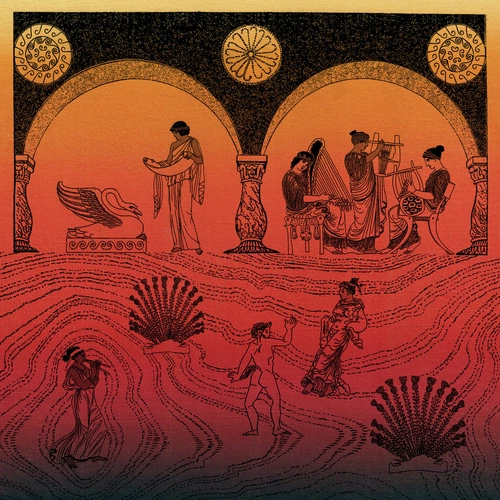
HangupsMusic.com – In the rapidly evolving landscape of contemporary electronic music, few artists manage to capture the zeitgeist of genre fluidity as effectively as Eden Samara. With the release of her latest project, Odyssey, Samara establishes herself not merely as a vocalist, but as a sonic architect capable of navigating the complex intersections of UK garage, jungle, R&B, and avant-garde pop. The album serves as a testament to the blurring lines between the underground club scene and polished experimentalism, offering a listening experience that is as emotionally resonant as it is rhythmically demanding. Samara’s work is a masterclass in versatility, presenting a protagonist who shifts shapes and tones with the ease of a seasoned traveler moving through disparate territories.
At the heart of Odyssey lies a fundamental tension between the organic and the synthetic. This is perhaps most evident in the album’s opening movements, where traditional musical elements like choral harmonies and delicate harp arrangements are thrust into the high-pressure environment of modern bass music. The track "Voyage" acts as a portal into this world, grounding the listener in a space that feels almost sacred. Its hymn-like structure and reverent vocal delivery evoke the atmosphere of a cathedral, yet the production quickly subverts expectations by anchoring these celestial sounds in a deep, subterranean low-end. It is a bold introduction that signals Samara’s intent: to take the listener on a spiritual journey that remains tethered to the physical reality of the dancefloor.
As the record progresses, Samara’s affinity for the UK’s rich electronic heritage becomes increasingly apparent. Tracks like "Punish Me" and "How to Let Go" bridge the gap between soulful R&B and the frenetic energy of UK Garage (UKG). In these moments, Samara’s vocals provide a smooth, melodic counterpoint to the scuttling, syncopated rhythms that define the genre. There is a specific kind of tension in these tracks—a push and pull between the vulnerability of the lyrics and the relentless forward motion of the percussion. By pairing R&B sensibilities with the "swing" of garage, Samara honors the history of the pirate radio era while updating it for a global, contemporary audience.
The versatility of the album is further highlighted by "Mystery," a track that leans more heavily into the tropes of house music. It possesses a certain kinetic elegance that makes it feel destined for the twilight hours of a club set. Critics have noted that "Mystery" shares a DNA with the sophisticated, groove-heavy selections often championed by DJs like Louise Chen. It is a track that prioritizes atmosphere and momentum, allowing Samara’s voice to float above a steady pulse, creating a sense of hypnotic immersion. It serves as a reminder that while Odyssey is an experimental work, it never loses sight of the communal joy found in house music’s four-to-the-floor rhythm.
One of the most striking departures on the album is "Up The Mountain, Down The Stairs." Here, the production takes a turn toward the cinematic and the eerie. The track features a glistening harp that feels almost out of place against a backdrop of thundering drums and metallic, industrial sound effects. The resulting atmosphere is one of high-stakes tension, drawing comparisons to the unsettling, tropical-noir aesthetic of a "White Lotus" soundtrack. It is a world inhabited by "metallic creatures" and shifting shadows, where the beauty of the instrumentation is constantly threatened by the aggression of the rhythm section. This track, perhaps more than any other on the record, encapsulates the "odyssey" of the title—a trek through a beautiful but dangerous wilderness.
The album’s intellectual depth is further explored in "Dorian Gray," a track that takes its cues from literary melodrama and camp. Referencing the aesthetic of Audrey Hobert, Samara leans into a theatrical delivery that manages to be both grand and self-aware. By invoking the myth of Dorian Gray, she touches on themes of vanity, identity, and the masks we wear—concepts that align perfectly with her "woman of many faces" persona. The track is a "winking" piece of art-pop that balances its heavy thematic weight with a sense of playfulness, proving that Samara is just as comfortable in the realm of high-concept performance as she is in the gritty reality of a basement club.
The energy peaks with "Oracle," a high-octane excursion into the world of jungle. For this track, Samara enlists the expertise of Tim Reaper and Comfort Zone, two figures synonymous with the modern revival of breakbeat hardcore and jungle. The result is an explosive collision of technical drumming and ethereal vocals. The breakbeats are propelled forward with a precision that honors the genre’s foundations in the 1990s, yet the integration of Samara’s voice adds a layer of "avant-pop" sophistication that feels entirely new. It is a masterclass in collaboration, showing how a vocalist can hold their own against the sheer power of jungle’s percussive assault without being overshadowed.
As the album nears its conclusion, "Unsatisfied" offers a fascinating look at Samara’s ability to reinterpret existing musical motifs. The track utilizes a melodic sample from the global hit "Mi Gente," but strips away its pop sheen to reveal something much more dub-oriented and atmospheric. The original’s rallying cry is transformed into something hazy and introspective, echoing through a space filled with delay and heavy bass. This "dubby" transformation is indicative of the album’s overall philosophy: nothing is static, and every sound is subject to reimagining. It is a moment of reflection that allows the listener to process the wild juxtapositions they have encountered throughout the record.
Despite the vast array of genres and moods present on Odyssey, the album remains remarkably cohesive. This is largely due to the consistent presence of Samara’s vocals, which act as a guiding light through the shifting soundscapes. Whether she is whispering over a minimalist beat or belting out a choral harmony, her voice provides the emotional connective tissue that binds the project together. The transitions between tracks feel like movements in a larger symphony; one moment the listener is submerged in a metallic, industrial underworld, and the next they are rising into a synthetic, neon-lit dawn.
Samara’s "Odyssey" is more than just a collection of songs; it is an invitation to get lost in a world where the boundaries of genre are irrelevant. It reflects a modern reality where listeners no longer consume music in silos, but rather through a prism of interconnected influences. By drawing from the past—be it the UKG of the 90s, the choral traditions of the church, or the literary tropes of the 19th century—and refracting them through a contemporary lens, Samara has created a work that feels both timeless and urgent.
In the end, the album succeeds because it refuses to play it safe. In an era where streaming algorithms often encourage artists to stick to a single, predictable lane, Eden Samara has chosen to take the scenic route, exploring every detour and side-street along the way. Odyssey is a bold statement of intent from an artist who is clearly just beginning to explore the limits of her creative potential. It is a record that demands multiple listens, as each pass reveals new layers of production and deeper nuances in Samara’s performance. For those willing to follow her into the flux, the rewards are immense, offering a glimpse into the future of pop and electronic music alike. As the final notes of the album fade, the listener is left with the sense that they have truly completed a journey—one that was as unpredictable as it was beautiful.
