
 By admin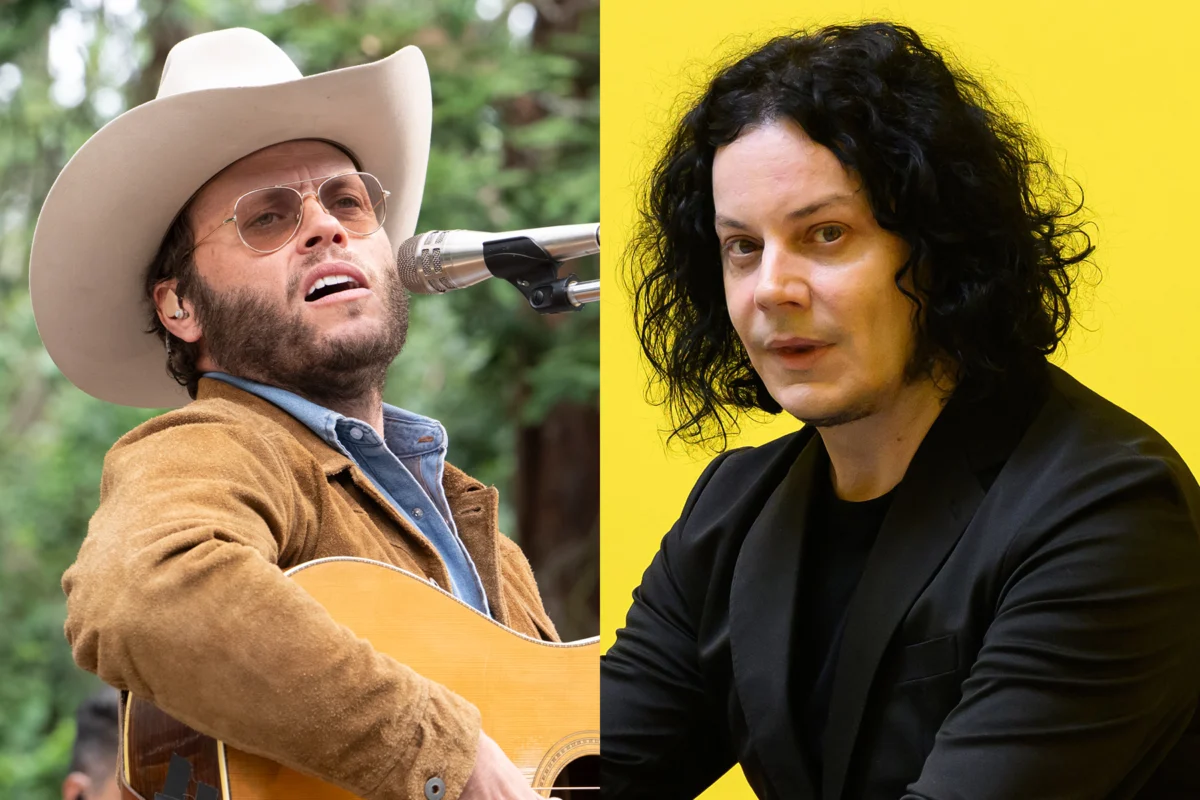
HangupsMusic.com – The usually harmonious soundscape of American roots music has been pierced by a discordant feud, as acclaimed country-blues troubadour Charley Crockett and rock icon Jack White find themselves embroiled in a public war of words. What began as a dispute over an opening act has escalated into a charged debate about artistic integrity, political authenticity, and the very definition of rebellion in music. The latest salvo, fired by Crockett, suggests this simmering conflict is far from over, drawing battle lines across genres and challenging the established narratives of two prominent figures.
The genesis of this unexpected spat can be traced back to Crockett’s "Age of the Ram" tour. He had initially enlisted the enigmatic duo Twin Temple, known for their distinctive "satanic doo-wop" sound, as an opening act. Twin Temple, comprised of husband-and-wife team Alexandra and Zachary James, quickly garnered attention for their unique blend of 1950s and early 1960s pop sensibilities with overt Satanic imagery and themes. Their performances are theatrical, featuring ritualistic elements, vintage aesthetics, and lyrics that playfully yet provocatively delve into themes of rebellion, empowerment, and the occult, with song titles like "I Am a Witch" and "Satanic Orgy" serving as clear indicators of their artistic direction.
However, the collaboration with Crockett was short-lived. Twin Temple publicly asserted that they were dismissed from the tour due to their controversial use of Satanic imagery. This claim ignited a firestorm, drawing immediate attention from across the music world. Alexandra James, in an interview with Rolling Stone, elaborated on their artistic philosophy, stating, "To us, Satan is a metaphor for exploring all of these things in our art. It’s the images that have always resonated with us. And Satan’s the original outlaw, right? He’s a rebel angel. He’s the one who questioned authority, fought for himself, refused to bow down or conform, and was like non serviam. That was a metaphor that resonated very strongly with me." This explanation highlights a long tradition in music, from blues to rock ‘n’ roll, where provocative or "dark" imagery is employed not necessarily for literal worship, but as a symbolic representation of anti-establishment sentiment, individual freedom, and a rejection of societal norms.
The narrative took a significant turn when Jack White, a musician renowned for his idiosyncratic vision and fierce independence, entered the fray. A champion of unique and often unconventional artists, White extended an invitation to Twin Temple to join his own tour, supporting his album Frozen Charlotte. This move was widely interpreted as an act of solidarity with the duo and a subtle rebuke of Crockett’s decision. White’s endorsement provided Twin Temple with a much larger platform and implicitly validated their artistic choices in the face of controversy.
Crockett, a musician often lauded for his "real deal" authenticity and deep roots in country and Americana, did not take kindly to White’s intervention. He publicly accused Twin Temple of fabricating the controversy for publicity, suggesting they had "dragged him by a rope real good." More pointedly, Crockett declared that he had lost "respect" for White, challenging the rock legend’s judgment and, by extension, his artistic credibility. This was a bold statement, given White’s towering status in contemporary music.
White’s initial response, delivered with his characteristic enigmatic flair, was not a direct counter-argument but a symbolic gesture. He posted the complete lyrics to Shawn Brown’s "Rappin’ Duke," a humorous 1980s novelty song parodying actor John Wayne. The choice of "Rappin’ Duke" was seen by many as a classic Jack White move: dismissive, unconventional, and designed to sidestep direct engagement while subtly asserting a sense of detached amusement. It served as a rhetorical shrug, implying that Crockett’s accusations were beneath a serious response, or perhaps, a playful jab at Crockett’s perception of authenticity by invoking a pop-culture parody.
However, Crockett was not deterred by White’s cryptic response. On a recent Wednesday, the "Clovis singer" escalated the conflict with a lengthy, fiery takedown, reportedly "the size of a CVS receipt," which he posted online before it was later removed. In this impassioned missive, Crockett directly challenged White’s perceived political and social bona fides. He reportedly referred to White as "Mr. Suzy Cream Puff," an epithet suggesting softness or a lack of genuine grit, and invoked a quote from rapper Jay-Z, likely implying a disparity between White’s public persona and his private life or past actions.
Crockett’s criticism honed in on what he perceived as White’s hypocrisy. He wrote, "I don’t care what you said in your [sic] songs. I’m talking about your public statements back when it was on the line in 2003. Look up my first record A Stolen Jewel. I been about it." This was a direct challenge to White’s history of activism and political engagement, suggesting that White’s commitment was performative or inconsistent when compared to Crockett’s own, deeply ingrained principles, as evidenced by his early work. "A Stolen Jewel," released in 2015 but perhaps referenced here for its thematic content or early establishment of Crockett’s ethos, serves as a touchstone for his self-proclaimed authenticity.
The most potent critique from Crockett came in his accusation that White’s perceived progressive stances were superficial. "Lemme guess, you got Che Guevara and Malcolm X on your shelf, maybe even Fred Hampton, but at the end of the day you get in the Lamborghini and put your kids in private school," Crockett wrote. This highly charged statement taps into a prevalent discourse about "champagne socialism" or "limousine liberalism," where individuals with outwardly progressive ideals are accused of failing to live up to those ideals in their personal consumption and lifestyle choices. Crockett, who often sings about working-class struggles and a life lived on the margins, positioned himself as the authentic voice of the people, contrasting his perceived reality with White’s affluence.
The feud highlights a recurring tension within the music industry: the delicate balance between artistic freedom, commercial viability, and the authenticity demanded by an increasingly scrutinizing public. Twin Temple’s use of Satanic imagery, while provocative, falls within a long lineage of musicians who have used religious or occult symbolism to challenge conventions, from Robert Johnson’s alleged deal with the devil to Black Sabbath’s pioneering heavy metal. For artists like White, supporting such acts is a testament to their commitment to artistic expression, regardless of popular appeal.
For Crockett, however, the issue seems to transcend mere artistic expression, touching on deeper questions of integrity and principle. His accusations against Twin Temple, suggesting they manufactured controversy, and his subsequent attack on White’s "respect," underscore a concern for what he perceives as genuine vs. opportunistic behavior in the music world. His latest broadside against White’s political authenticity suggests a fundamental disagreement over what it means to be a "rebel" or a "man of the people" in the modern era. Is it about symbolic gestures and curated imagery, or is it about lived experience and consistent political action?
As of now, White has not publicly responded to Crockett’s latest, highly personal attack. Crockett, however, appears to be digging in his heels, concluding his now-deleted post with a defiant challenge: "If you want the smoke, I’m your man," accompanied by a boxing glove emoji. This indicates a readiness to continue the fight, suggesting that he views this as a genuine ideological battle rather than a fleeting disagreement.
The music world watches on, as this unconventional feud unfolds. It forces a re-evaluation of what constitutes authenticity in an age of carefully crafted public personas and challenges musicians to defend not just their art, but their very ethos. Whether White will take the bait and directly engage with Crockett’s accusations remains to be seen, but one thing is clear: the stage for this particular drama is set, and the next act promises to be as unpredictable as the first. The echoes of this clash will likely resonate beyond the immediate protagonists, sparking broader conversations about the role of artists as social commentators, the responsibilities that come with influence, and the ever-present tension between perception and reality in the public eye.
