
 By Azzam Bilal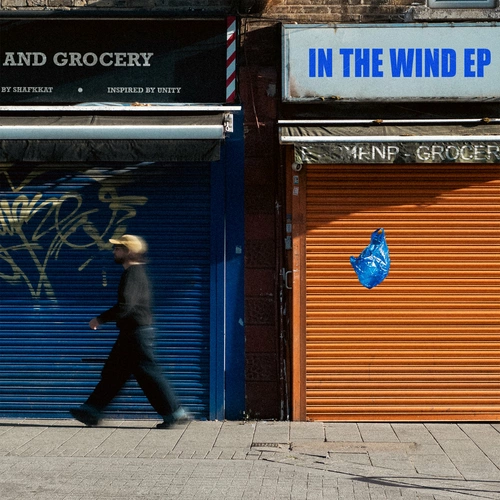
HangupsMusic.com – London, The British capital has long served as a pressure cooker for electronic music innovation, a city where the borders between genres are as fluid as the crowds that frequent its storied clubbing districts. It is within this vibrant, high-pressure environment that Shafkkat has emerged as a producer capable of distilling the city’s chaotic energy into a cohesive, albeit eclectic, sonic palette. With the release of his latest self-published project, The Wind EP, Shafkkat demonstrates an almost voracious appetite for the various subcultures that define the London underground, seamlessly weaving together elements of UK garage, bass, UK funky, and disco. However, what sets this collection apart from a mere exercise in genre-hopping is the producer’s commitment to emotional resonance. Rather than relying solely on the technical prowess of his beats, Shafkkat anchors his production in a sense of feeling, ensuring that even the most high-octane moments are tempered with a human touch.
The EP opens with "Girly," a track that immediately signals Shafkkat’s intention to celebrate the more exuberant side of house music. Described as a loopy and excitable number, "Girly" utilizes the kind of pitched-up vocal manipulation that has become a hallmark of contemporary dance music, yet it avoids the pitfalls of cliché. There is a palpable sense of euphoria here, reminiscent of the bright, high-definition production style popularized by artists like salute. The track moves with a relentless, infectious energy, its loops building a sense of tension and release that feels tailor-made for the peak hours of a summer festival set. By leaning into the "greedy" nature of his influences, Shafkkat allows "Girly" to function as both a nod to the past and a modern interpretation of the "euphoric house" aesthetic. It is a track that demands attention not through aggression, but through an overwhelming sense of joy.
As the EP progresses into its title track, "In The Wind," the atmosphere shifts toward something more intricate and introspective. Here, the production becomes more tightly woven, showcasing a meticulous attention to detail that suggests a producer comfortable with the technical complexities of sound design. "In The Wind" introduces a touch of synth psychedelia, with layers of sound that seem to shimmer and swirl around the listener. This psychedelic edge is grounded by a melancholic undertone in the vocal delivery—a "nagging" quality that provides a necessary contrast to the track’s rhythmic precision. This duality is perhaps where Shafkkat is at his most effective; he understands that the most compelling dance music often exists in the space between happiness and sorrow. The track feels like a late-night journey through the city, capturing the quiet, reflective moments that occur once the lights have dimmed but the adrenaline has yet to fade.
The collaborative spirit of the EP comes to the fore on "Tides," featuring the vocal talents of Jess Young. This track is a masterclass in balance, juxtaposing "body-first" bass-heavy foundations with delicate, sparkling arpeggios. The imagery of "sunlight on water" is an apt description for the track’s melodic components, which provide a shimmering top layer to the deep, resonant low-end. Jess Young’s contribution is vital, offering a melodic anchor that allows the production to drift into more experimental territories without losing its accessibility. "Tides" feels like an evolution of the UK funky sound, stripping away some of the genre’s more frenetic percussion in favor of a smoother, more atmospheric approach. It is a track that emphasizes texture as much as rhythm, proving that Shafkkat is just as interested in the "feel" of a sound as he is in its placement within a bar.
The closing track, "Untitled String Song," serves as a triumphant finale that brings the EP’s various threads together. It is a "fist-pumping" anthem that leans heavily into the garage-house tradition, utilizing a circular looping structure that creates a hypnotic effect on the dancefloor. However, Shafkkat adds further depth to the arrangement by incorporating elements of ravey acid and swooning string sections. The inclusion of acid synths—a staple of the UK’s rave history—provides a gritty, industrial edge that contrasts beautifully with the elegance of the strings. This juxtaposition of the raw and the refined is a recurring theme throughout The Wind EP, but it is perhaps most successfully realized here. The track manages to be both physically demanding and emotionally evocative, a combination that is often difficult to achieve in the world of club-focused electronic music.
One of the most impressive aspects of The Wind EP is its status as a self-released project. In an era where many artists feel the need to align themselves with established labels to find an audience, Shafkkat’s decision to release this music independently speaks to a high level of confidence in his artistic vision. This independence allows for a degree of creative freedom that is evident in the EP’s "scattered" yet "classy" nature. While a traditional label might have encouraged the producer to narrow his focus or stick to a single genre for the sake of marketability, Shafkkat instead chooses to embrace the full spectrum of his influences. The result is a record that feels authentic to the producer’s experience of London—a city that is itself a patchwork of different cultures, sounds, and histories.
The "classy hooks" mentioned by critics are the glue that holds The Wind EP together. Despite the diversity of the genres on display, there is a consistent melodic sensibility that runs through every track. Shafkkat has a knack for creating phrases—whether vocal or instrumental—that linger in the mind long after the music has stopped. This ability to write memorable hooks is what elevates the EP from a collection of well-produced tracks to a significant body of work. It suggests that Shafkkat is not just a beat-maker, but a songwriter who happens to use the tools of electronic music to tell his stories.
In the broader context of the UK electronic scene, The Wind EP arrives at a time when the revival of garage and bass music is reaching a fever pitch. However, rather than simply riding the wave of nostalgia, Shafkkat is contributing to the evolution of these sounds. By infusing his tracks with disco sensibilities and house-inflected euphoria, he is helping to push the "London sound" into new territories. The EP is ambitious, certainly, but it is an ambition backed by the technical skill and emotional intelligence required to pull it off.
Ultimately, The Wind EP is a testament to the power of eclecticism. It is a record that refuses to be boxed in, choosing instead to explore the various facets of the producer’s musical identity. From the sun-drenched arpeggios of "Tides" to the acid-flecked energy of "Untitled String Song," Shafkkat takes the listener on a tour of the sounds that define his city. It is a project that feels both deeply personal and universally accessible, anchored by those "emotional anchors" that elevate the raw ingredients of the tracks into something truly special. As Shafkkat continues to carve out his niche in the global electronic landscape, The Wind EP will undoubtedly be remembered as a pivotal moment in his development—a bold, self-assured statement of intent from a producer who is clearly just getting started. The EP’s success lies in its ability to be many things at once: it is a dancefloor tool, a headphone journey, and a love letter to the multifaceted musical culture of London.
