
 By admin
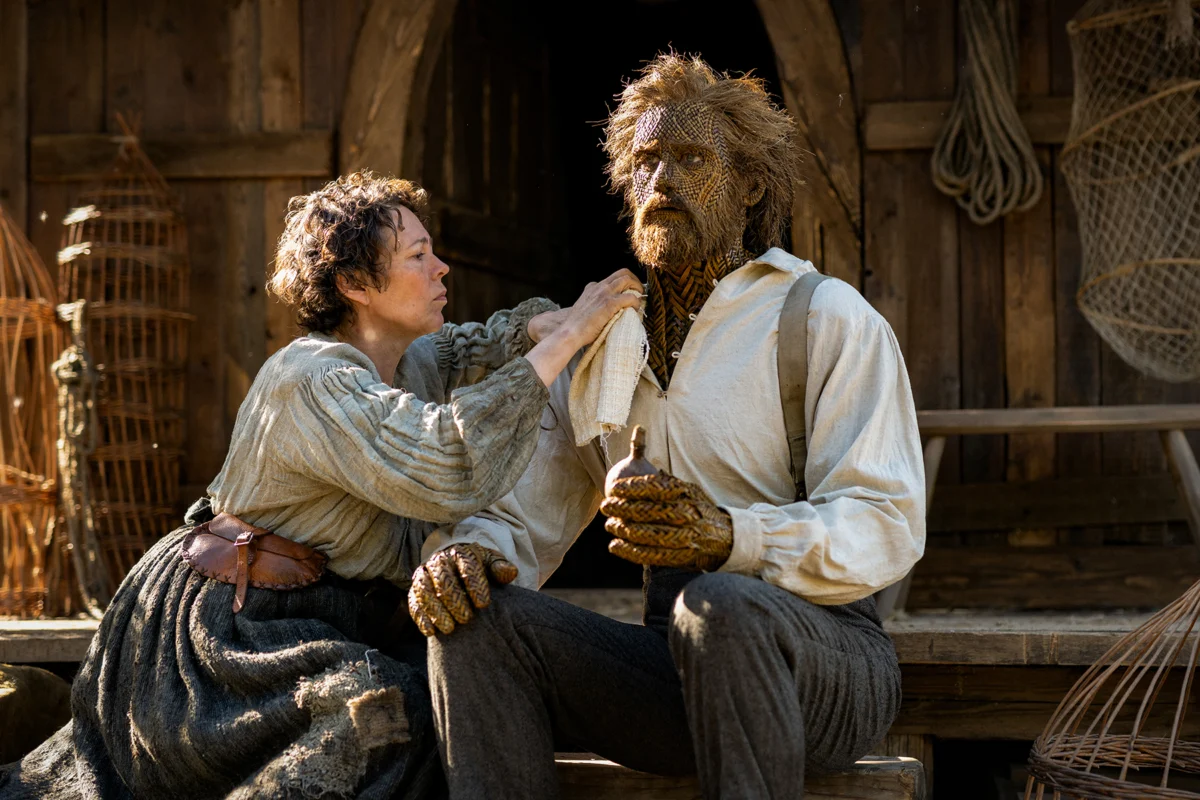
*HangupsMusic.com – New York City, The cinematic landscape is often predictable, but every so often, a film emerges from the fringes to challenge conventions, capture the zeitgeist, and create an utterly unique cultural moment. Such is the case with Wicker*, the low-fantasy romance starring Olivia Colman and Alexander Skarsgård, which has transcended its indie roots to become a surprising sensation, particularly through its groundbreaking 4DX theatrical run. What began as a playful social media query—a meme-fueled desire to experience the film’s more… intimate moments with environmental effects—blossomed into a genuine phenomenon, selling out theaters nationwide and sparking conversations about the future of interactive cinema and the evolving desires of romance audiences.
When Black Bear, the independent distributor, first unveiled the trailer for Wicker, the internet erupted. Adapted from Ursula Wills-Jones’s whimsical short story, The Wicker Husband, the film introduces viewers to a secluded fishing village where a lonely fisherwoman, portrayed with poignant vulnerability by the incomparable Olivia Colman, commissions a local basket weaver (Peter Dinklage in a nuanced performance) to construct her a companion from reeds and branches. The resulting creation, brought to life with an arresting blend of physicality and otherworldly charm by Alexander Skarsgård, becomes her husband. The trailer’s most talked-about sequence, depicting Colman and her arboreal spouse engaging in such passionate lovemaking that their bed literally splinters beneath them, instantly became fodder for online discourse. The question echoed across platforms: "Could this possibly be available in 4DX?" A joke, perhaps, but one steeped in a palpable yearning for a truly immersive and uninhibited cinematic experience.
To the astonishment and delight of its burgeoning fanbase, this audacious wish was granted. On October 28, Black Bear launched Wicker in 4DX for a special, one-night-only engagement. This premium format, known for its moving seats and environmental effects—including wind, water, snow, and scent—promised to elevate the film’s already unique narrative. For Wicker, it meant audiences could literally feel the sway of the fishing village, the rustle of the wicker, and, crucially, the kinetic energy of its most notorious scenes. The demand was unprecedented. Tickets vanished at an astonishing rate, prompting theaters to extend showings for an entire week, until November 5. What was conceived as a niche, absurd offering quickly transformed into a communal, raucous event that, according to many attendees, illuminated a deeper, often unmet craving within the romance genre.
The scramble for tickets was akin to a modern-day gold rush. Robert Belpasso, a 32-year-old New Yorker, recounted the digital battlefield. "Initially, it was impossible to get tickets," he shared, comparing the experience to "fighting like a Ticketmaster war." Showings would appear on ticketing platforms only to evaporate the moment he attempted to click "purchase." This frantic online pursuit underscored the fervent anticipation surrounding the film’s experiential debut. Another New Yorker, Leen Dweik, 29, and her companions initially faced the prospect of a 30-to-45-minute trek to a suburban New Rochelle theater, demonstrating their unwavering determination. Fortunately, seats eventually materialized at a more convenient Regal in Times Square, but the willingness to journey outside the city was a testament to the film’s magnetic pull.
Dweik herself admitted to a general disinterest in 4DX’s sensory bombardments. "I’ve never seen anything in 4DX before—I’m not necessarily interested in having things sprayed at me," she explained. Yet, Wicker proved to be the exception. "But it did feel like if there was ever a film to try it for, I wanted to try it for this one. It was so clear that everybody who was there really wanted to be there. Some people even made merch." This collective enthusiasm and shared sense of purpose fostered an atmosphere unlike any typical movie screening.
From Kansas, Tia Burkett, 33, gathered a group of friends, drawn in by the viral trailer. She described her surprise at the film’s underlying earnestness, a quality juxtaposed dramatically with the aggressive motion of her seat during certain sequences. "There was one point where I was like, ‘Oh, my gosh, I’m about to fall.’ That first sex scene truly felt like we were on a roller coaster and none of us were expecting it. I’ve never laughed that hard in my life," Burkett recounted. The desire to be part of the "getting wicked down" phenomenon was a powerful motivator, blending humor with genuine curiosity.
The film’s marketing, which unapologetically leaned into the premise of a woman’s carnal relationship with her wicker husband, undeniably played a significant role in drawing audiences. Wicker revels in its intricate sound design, featuring the subtle creaks of twigs, the rustle of woven branches, and the symbolic growth of "wood-like appendages." This blend of the fantastical and the tactile naturally piqued widespread interest. Karen Turner, 36, a loyal follower of Olivia Colman’s work, found her curiosity further ignited by the film’s technical audacity. "It’s utterly ridiculous," she mused. "How are you supposed to have sex with a wicker dick? That doesn’t make sense anatomically. So I had questions going in. I wanted to see."
This collective desire for "boots-on-the-ground journalism" extended to the film’s most titillating mystery: the question of "full wick." Molly S., 32, who attended with Robert Belpasso, vividly described the online "rumor mills" regarding censored versus uncensored versions. "Everyone went in [to] do boots-on-the-ground journalism. That was just hysterical." Belpasso, with a confirming nod, asserted, "And there was full-frontal wick." Molly clarified, "Very tiny—from far away." Belpasso, however, offered a counterpoint: "Well, quite large." This playful debate among attendees perfectly encapsulated the film’s cheeky spirit and the audience’s active engagement.
The post-COVID era has seen a gradual resurgence in cinema attendance, with 4DX experiences notably gaining traction. Traditionally, this immersive format has been reserved for action blockbusters, promising audiences the visceral thrills of car chases, explosions, and combat. Wicker‘s foray into 4DX, however, marks a significant departure, demonstrating the format’s untapped potential for genre films outside the action-adventure mold. While its global box office earnings of $13 million against a $10 million production budget might seem modest in Hollywood terms, it represents a considerable success for an independent feature. More importantly, the film’s rapidly growing cult status online, significantly amplified by its 4DX experiment, suggests a burgeoning audience demand that both theatrical exhibitors and filmmakers may have critically underestimated.
Gracie D., a 26-year-old self-proclaimed enthusiast of unconventional romances, has long critiqued what she perceives as a "chemistry problem" in traditional Hollywood romantic fare. She finds herself "very invested" in narratives featuring sentient objects, a subgenre she notes is far from new. "I’ve been reading the genre for years. It’s not new. There are books about sentient doors and lamps. I read one about a polyamorous romance between a woman and a pair of Crocs," she revealed, highlighting the expansive and often overlooked landscape of niche romance. For Gracie, Wicker‘s appeal lies in its refreshingly self-aware silliness. "The big appeal for Wicker is that it’s silly and it doesn’t take itself 100 percent seriously."
The crossover appeal of "romantasy"—a fusion of romance and fantasy elements—is undeniable, consistently ranking as a top-selling book genre. Wicker‘s box office performance is a clear cinematic translation of this literary trend. Yet, while the 4DX demand undeniably capitalized on the film’s titillating elements, its true enduring strength, according to many viewers, resides in its nuanced exploration of female desire and agency. The film deftly uses the unconventional romance between Colman’s character and her wicker husband to subtly critique the rigid societal assumptions about women’s wants and needs within her small community.
"In romance films recently, Hollywood [is] throwing two hot people at the screen and expecting you to believe it when they take their clothes off," Gracie observed, articulating a common frustration. "Wicker is presenting itself initially as something horny and weird, but what makes it so enjoyable and popular is that it also has these themes of women wanting to be respected in their partnerships." Leen Dweik echoed this sentiment, emphasizing the film’s thematic depth. "I think that there’s something really profound in the explorations of romance between woman and other," she added. "Wicker was committing to the concept of being freaky and horny. People just want more freak shit." This "freak shit," it seems, also offers a surprisingly profound commentary on human connection and self-actualization, wrapped in an unforgettable, immersive cinematic package. The unexpected triumph of Wicker in 4DX theaters serves as a compelling case study, demonstrating that audiences are not only open to, but actively seeking, bolder, more imaginative, and truly experiential narratives that resonate on both a visceral and emotional level.
