
 By admin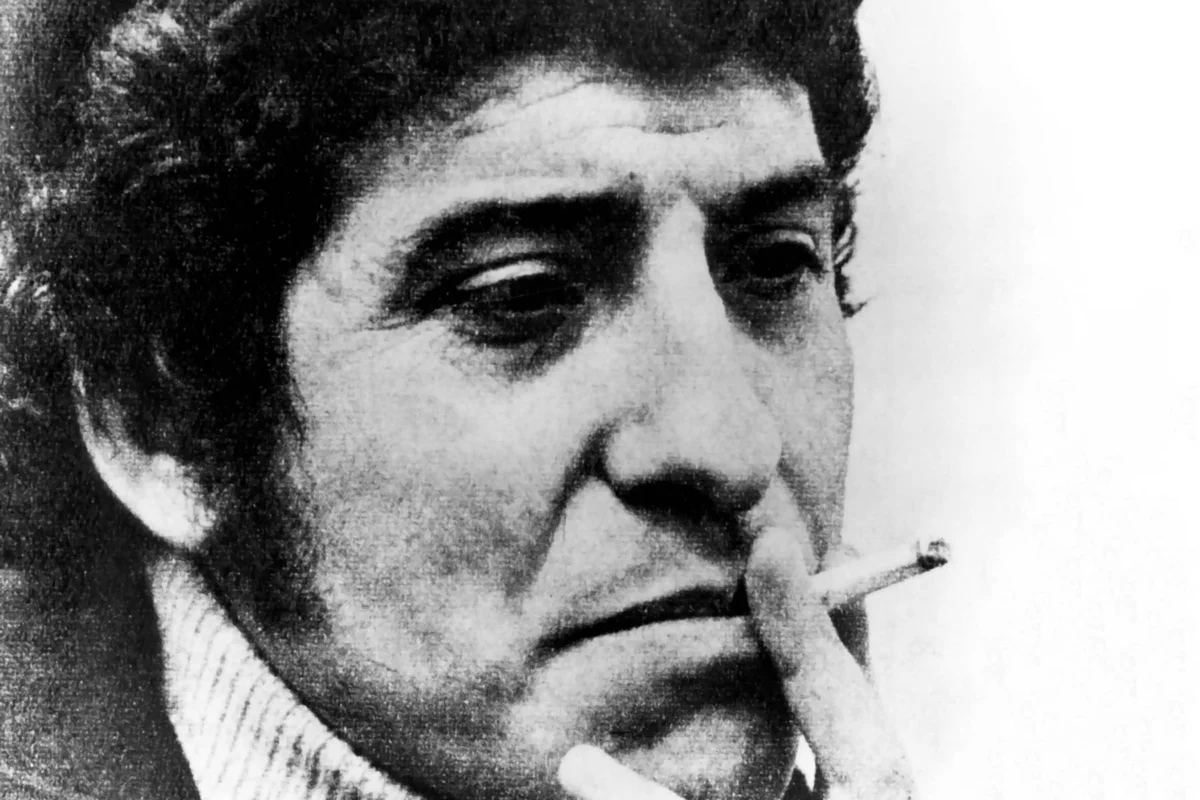
HangupsMusic.com – New York, International law specialist Christina Hioureas illuminates the profound and enduring lessons embedded within resistance music across the decades, revealing how art becomes a formidable weapon against oppression and an enduring force in the pursuit of justice. Her insights, drawn from extensive work in human rights law, underscore a fundamental truth: while authoritarian regimes strive to silence dissent, the melodies of protest often echo louder and longer than the decrees of tyrants.
One of the most poignant examples of music’s indomitable spirit hails from Chile in the aftermath of the brutal military coup of September 11, 1973. The revered folk singer and guitarist, Víctor Jara, a powerful voice for the working class and a symbol of democratic aspirations, was among the thousands swept up in the regime’s dragnet. Detained and transported to Santiago’s Estadio Chile, which had been transformed into a macabre detention center, Jara endured unimaginable torment. His captors, in a chilling act of symbolic cruelty, systematically shattered his hands, then paraded him before fellow prisoners, mockingly challenging him to play his guitar. This savagery was intended to sever the connection between the artist and his instrument, to break his spirit and, by extension, the spirit of the masses who drew strength from his art. Yet, even in his final moments, Jara’s defiant spirit resonated, ultimately leading to his execution. His torturers sought to extinguish a flame, but instead, they forged an unquenchable beacon.
Jara’s music, far from being silenced, transcended the stadium walls. Carried by clandestine recordings, cherished memories, and the vibrant solidarity of communities both within Chile and across the globe, his songs refused to fade. Today, the very stadium where he met his tragic end proudly bears his name, a permanent monument to his legacy. Generations later, his anthems of hope and resistance continue to be performed by a diverse array of artists, from the legendary Joan Baez and rock icon Bruce Springsteen to contemporary global sensation Bad Bunny, testament to their timeless power and universal appeal.
The wheels of justice, particularly in the wake of overthrown authoritarian regimes, often turn agonizingly slowly. In Jara’s case, accountability remained elusive for decades. However, the pursuit of truth never ceased. Years after the Pinochet dictatorship crumbled, the former lieutenant directly responsible for Jara’s torture and murder was located in Florida, having fled Chile. Collaborating with the Center for Justice and Accountability, Christina Hioureas and her legal team initiated a groundbreaking civil case in the U.S. District Court for the Middle District of Florida. This action, brought under the Alien Tort Statute and the Torture Victim Protection Act, sought justice for arbitrary detention, torture, extrajudicial killing, and crimes against humanity. The successful verdict in the U.S. case served as a critical step, establishing a legal record of the atrocities and paving the way for further proceedings in Chile. While the arrival of justice may be delayed, the enduring power of music undeniably plays a role in inspiring societies to confront their past, reject tyranny, and ultimately demand accountability, pushing them towards transitional justice.
The history of authoritarian rule is replete with examples of regimes’ deep-seated fear of artistic expression, particularly music. From outright bans on performances to imprisonment, forced exile, torture, and even death, despotic governments have consistently targeted musicians whose work dares to transform collective grievances into a shared, potent language. Across continents and through the annals of history, the response of authoritarian powers to protest music has exhibited a striking and disturbing consistency.
During the dark days of apartheid in South Africa, the iconic singer Miriam Makeba was forced into decades-long exile after her powerful voice condemned the racist regime. Her music, a vibrant tapestry of African rhythms and defiant lyrics, was prohibited within her homeland, yet paradoxically, it gained immense international reach, becoming an anthem of the anti-apartheid movement worldwide. Similarly, in 1960s Greece, under the iron fist of military rule, the compositions of Mikis Theodorakis were outlawed by decree, and the revered composer himself suffered imprisonment and exile for his staunch opposition. In Cold War Czechoslovakia, musicians operating outside state-sanctioned artistic norms faced severe repression; underground artists were stripped of their licenses, subjected to arrest, and relentlessly harassed for refusing to conform to the regime’s narrow aesthetic dictates.
More recently, the pattern persists. Artists like the Kurdish singer Nûdem Durak in Turkey, the Uyghur pop sensation Ablajan Awut Ayup in China, and the Russian punk collective Pussy Riot have faced severe legal repercussions. They have been prosecuted under broadly defined national security laws, detained for lyrics deemed subversive, or branded as extremists for performances that directly challenge official narratives. In each instance, the state’s aggressive reaction betrays a shared anxiety: authoritarian power thrives not only on fear but also on the fragmentation of its populace. Protest music, by its very nature, performs the opposite function, weaving a vibrant and unifying soundtrack of resistance that binds communities together.
Regimes react with such vehemence because music, especially during periods of intense repression, acts as a profound power multiplier. It fosters unity among disparate communities, encourages critical thinking in the face of propaganda, galvanizes opposition against injustice, and inspires individuals to take action. This potent effect has been vividly demonstrated in recent times. Consider Bad Bunny’s impactful halftime performance, a powerful statement promoting unity and love in direct response to issues like ICE raids, the complexities of colonization in Puerto Rico, and divisive rhetoric against Latin America. The contemporary resurgence of classic resistance anthems further illustrates this enduring power. Rage Against the Machine’s "Killing in the Name," a visceral indictment of institutionalized racism and police brutality stemming from the Rodney King verdict, continues to resonate with chilling relevance today. The Cranberries’ "Zombie," a potent anti-war anthem born from the conflict in Northern Ireland, finds new meaning amidst global conflicts. System of a Down’s "B.Y.O.B. (Bring Your Own Bomb)," a fierce protest against the Iraq War, speaks to ongoing critiques of military intervention. Even older classics like Crosby, Stills, Nash, and Young’s "Ohio," memorializing the Kent State shootings, and Creedence Clearwater Revival’s "Fortunate Son," decrying the class disparities in wartime conscription, have unfortunately gained renewed poignancy, reflecting ongoing atrocities against innocent civilians worldwide and tragic extrajudicial killings at home. These songs, though rooted in specific historical moments, possess an adaptable resonance, becoming powerful commentaries on contemporary injustices.
While regimes relentlessly attempt to silence artists, history reveals a persistent irony: the more aggressively a regime attacks music, the more indelible and enduring its message often becomes. Few narratives illustrate this more clearly than that of Víctor Jara. Decades after his murder and years following the collapse of the Pinochet dictatorship, the legal system intervened—not as a replacement for music, but as a vital instrument to prevent the erasure of truth. In a U.S. federal civil action, a jury found the former Chilean military officer liable for Jara’s torture and killing, awarding damages to his family and meticulously creating an authoritative record of the atrocities committed. Utilizing the evidence meticulously gathered in these proceedings and by Chilean authorities, Lieutenant Pedro Pablo Barrientos Núñez is now set to face trial before Chilean courts. While accountability arrived late, it arrived with an unimpeachable record and a definitive finding of responsibility. The outcome is a profound legal acknowledgment that what transpired mattered deeply, and continues to matter.
Music alone cannot deliver legal accountability, but the law possesses the unique capacity to ensure that violence and oppression do not vanish into denial or historical amnesia. Legal processes meticulously compel the presentation of evidence, systematically assign responsibility, and transform deeply personal testimonies into a verifiable historical record. What authoritarian regimes strive desperately to erase, the law diligently preserves. In cases involving persecuted artists, legal accountability unequivocally affirms that cultural repression is not a mere incidental byproduct of authoritarianism; it is, in fact, central to its very operation. These critical cases recognize that attacks on artists are, at their core, attacks on collective expression itself – on the fundamental human right to voice, to share, and to imagine a different future.
Authoritarian regimes attack artists precisely because they intuitively grasp their immense power. What these regimes consistently fail to comprehend, however, is the concept of resonance. A gunshot may reverberate once, a fleeting sound of violence, but a song—a carefully crafted melody with potent lyrics—echoes across generations, permeating cultures and inspiring future movements. Songs persist because they are inherently designed for repetition and dissemination. They can be sung quietly as a personal solace, or loudly as a public declaration; performed in private spaces of sanctuary or in public squares of protest. Lyrics originally composed for one specific struggle possess an uncanny ability to animate an entirely different one decades later. This remarkable continuity explains why protest songs from earlier eras frequently resurface and regain powerful relevance in moments of contemporary political strain and social unrest.
Music teaches people a profound lesson: how to perceive themselves as integral components of something far greater than their individual selves; how to cultivate the spirit of resistance. The law, in its methodical way, teaches the world how to remember—how to codify memory, to formalize historical truth, and to acknowledge injustice. Together, through the powerful synergy of artists, lawyers, and judges, voices are transformed into concrete rights, into public recognition, and ultimately, into the pursuit of justice. In this symbiotic relationship, music endures as the shared, vibrant soundtrack to humanity’s unending journey of resistance.
Christina Hioureas is a New York-based lawyer specializing in international law, arguing cases before international courts and tribunals. She is also a Visiting Professor of Law at both the UCLA School of Law and the USC Gould School of Law, where she teaches courses on human rights law. She acted as legal counsel to the widow and daughters of the late Chilean folk musician, Víctor Jara, securing a historic judgment against the lieutenant responsible for his torture and execution during the Pinochet dictatorship.
