
 By admin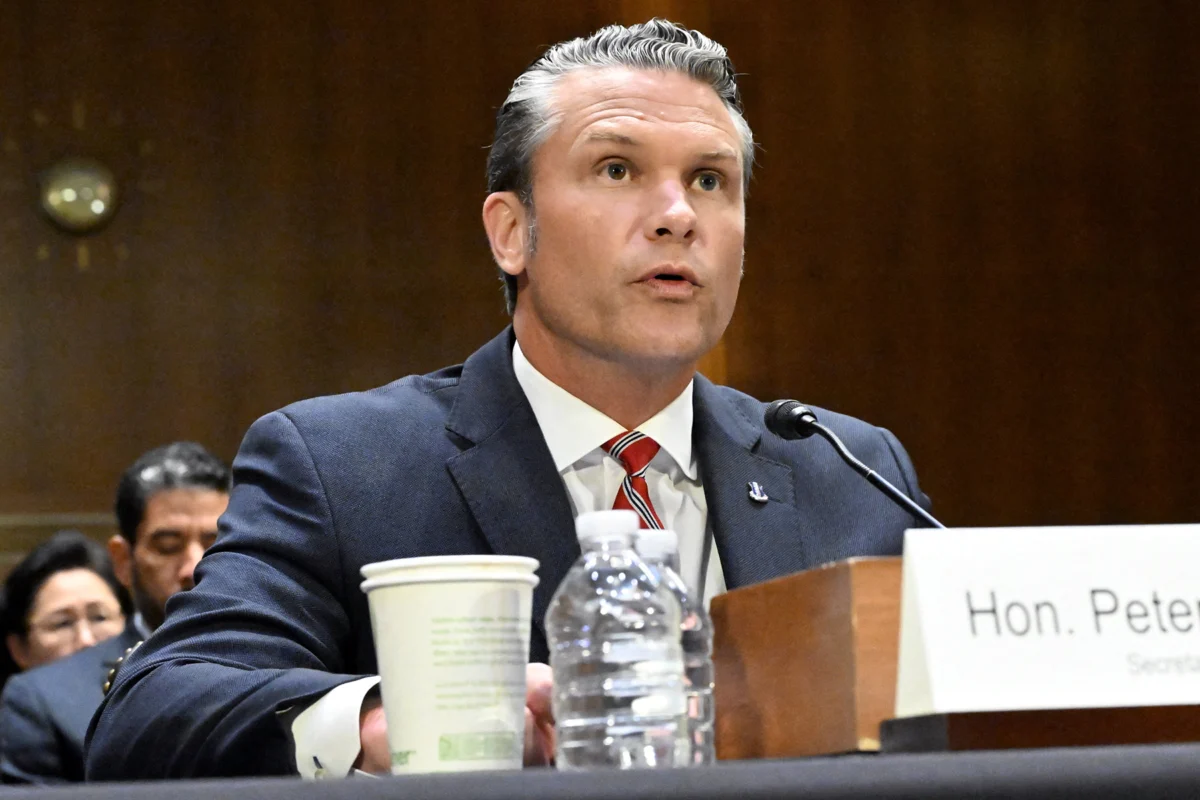
HangupsMusic.com – Washington, D.C., The halls of Capitol Hill vibrated with tension this past Tuesday as Defense Secretary Pete Hegseth faced a skeptical Senate, presenting an audacious request for a staggering $1.5 trillion in departmental funding. This colossal sum, described by Hegseth as indispensable for national security, comes five months into a contentious and costly military engagement in Iran, initiated by President Donald Trump. The ongoing conflict, which has drawn widespread international condemnation and domestic dissent, formed the volatile backdrop to Hegseth’s impassioned, yet often challenged, testimony before the Senate Appropriations Committee. His appearance underscored a deepening chasm between the administration’s aggressive foreign policy and a growing chorus of lawmakers, economists, and citizens demanding accountability for the escalating human and financial toll of the "forever war."
The hearing opened with Hegseth launching into a vigorous defense of the administration’s military actions, which have plunged the U.S. into a devastating, open-ended war in Iran since their inception five months prior. Despite fierce criticism from across the political spectrum regarding the conflict’s legitimacy and its severe global ramifications, Hegseth positioned President Trump as a figure deserving of commendation. "President Trump deserves the kind of praise he should get for undertaking this effort," Hegseth asserted to the committee, his voice unwavering. He framed the military intervention as a necessary and courageous preemptive measure, stating, "Having the courage to ensure that crazy Islamists can’t have a nuclear weapon to hold us at issue." This rhetoric, echoing long-standing fears about nuclear proliferation in the Middle East, aimed to justify the conflict as a vital safeguard against an existential threat.
However, the Senate Appropriations Committee was far from convinced by the Defense Secretary’s celebratory tone. Senator Jack Reed, a Democrat from Rhode Island and a prominent voice on national security matters, immediately interjected, his skepticism palpable. "Excuse me," Reed began, his voice cutting through the committee room’s murmurs, "so he should be praised for starting a war without authority? For creating a situation in which the world economy is suffering tremendously?" Reed’s sharp questioning highlighted key criticisms that have dogged the Trump administration’s Iran policy: the apparent circumvention of congressional war powers and the severe economic fallout, which has seen global oil prices surge, supply chains disrupted, and international trade relations strained, impacting everything from consumer goods to humanitarian aid efforts. The senator’s challenge underscored the deep constitutional concerns regarding the executive branch’s unilateral declaration of hostilities and the far-reaching economic consequences of military action without broad international consensus.
The contentious atmosphere inside the hearing room was further amplified by repeated disruptions from anti-war protesters. Throughout Hegseth’s testimony, individuals holding banners and chanting slogans interrupted the proceedings, providing a stark reminder of the widespread public opposition to the conflict. One protester, brandishing a banner emblazoned with "NO WAR ON IRAN," shouted, "Your hands are bloody with 17 Americans!" before being forcibly removed by law enforcement. The poignant reference to American casualties underscored the human cost of the war, a detail the administration had frequently been accused of downplaying. Moments later, another voice rose from the gallery, asserting, "Stop bombing our children in Iran and Palestine, this is illegal!" This broader accusation linked the ongoing conflict in Iran to long-standing grievances regarding U.S. foreign policy in the wider Middle East, particularly concerning Palestine, and highlighted accusations of war crimes and disregard for civilian lives. Several more interruptions punctuated Hegseth’s remarks, each one a testament to the passionate and deeply held objections to the military campaign.
At the core of Hegseth’s appearance was his primary mission: to persuade the Appropriations Committee to endorse the administration’s gargantuan funding request, ostensibly to sustain and escalate President Trump’s military objectives in Iran. "Not funding this department at $1.5 trillion, I believe, is the greatest threat our nation faces," Hegseth declared, employing a common tactic of framing budget requests as matters of dire national security. This immense sum, representing a significant portion of the entire federal discretionary budget, raised immediate alarms among fiscal conservatives and progressive lawmakers alike, who questioned the prudence and necessity of such an expenditure amidst pressing domestic needs.
When pressed by senators for specific details regarding the allocation of this unprecedented budget, Hegseth offered only vague assurances and rhetorical deflections. He broadly indicated that a substantial portion of the funds would be directed towards dismantling and "overturning Biden’s ‘woke’ military policy." This ambiguous critique, a frequent talking point within conservative circles, typically refers to initiatives promoting diversity, equity, and inclusion within the armed forces, as well as reforms aimed at addressing social issues within military culture. Critics argued that such language served to obscure the true financial mechanisms of the Pentagon’s budget, diverting attention from concrete programmatic details to politically charged cultural debates. Senator Dick Durbin highlighted the lack of financial accountability, pointing out, "It’s my understanding that this whole supplemental funding request is $87.6 billion. We are told the Department of Defense still has $75 billion in unobligated funding from last year’s reconciliation package. Is that true?" Hegseth’s laconic reply, "Roughly," only intensified concerns that the Pentagon was requesting new funds without fully utilizing previously allocated resources, suggesting potential inefficiencies or a lack of genuine need for the requested supplemental budget.
Hegseth further championed the current state of the U.S. military, boasting that it was "no longer run by bureaucrats," but was "instead led by combat tested veterans and world class business leaders who are running the department like a business." This characterization, intended to project an image of efficiency and strategic acumen, drew sharp criticism from those concerned about the increasing privatization of warfare. If the Pentagon were truly operating as a business, critics contended, it appeared to be an unprofitable one, functioning less as a lean, effective enterprise and more as a "taxpayer subsidized feast for defense contractors and Silicon Valley." This model, they argued, allows private corporations to excessively profit from American defense systems, often through lucrative no-bid contracts and inflated costs, while taxpayers bear the burden. The financial drain on public resources, funneled into a seemingly bottomless pit of budget requests with minimal accountability, directly impacts other vital sectors. Funds that could otherwise support crucial public health initiatives, educational programs, infrastructure development, or social services are instead diverted, creating a system where corporate interests thrive at the expense of societal well-being.
Beyond the dollar signs and the intricate debates of Washington, D.C., the human toll of the Iran conflict continues to mount. For months, Iranian civilians have endured the devastating consequences of sustained military action, suffering widespread casualties, displacement, and the destruction of vital infrastructure. But the war’s grim reach has also extended to American servicemembers. In a somber development over the past few days, at least three more U.S. personnel were killed in retaliatory Iranian strikes, bringing the total reported American fatalities to 17 since the conflict began. Reports from the New York Times indicate that the Pentagon has consistently withheld comprehensive information regarding U.S. casualties from the public throughout the duration of the war, fostering an environment of distrust and limiting public understanding of the true cost of the conflict. This lack of transparency has drawn parallels to past military engagements where information control became a contentious issue, further exacerbating public anxiety and frustration.
Amidst the growing dissent and mounting casualties, President Trump remained defiant. On Tuesday afternoon, he utilized his preferred social media platform, Truth Social, to post a concise, almost cavalier, comparison of the Iran conflict to previous U.S. military engagements. His post listed several historical wars—including Iraq, Afghanistan, Korea, and Vietnam—alongside his current undertaking: "Iran Military Conflict: 4 months, 18 DEAD." The implication was clear: his war was, by this metric, less costly and therefore perhaps more justifiable. However, this simplistic comparison failed to account for the profound differences in scale, duration, and strategic objectives of these conflicts. The previous wars listed had concluded, or at least significantly wound down, after years or even decades of fighting and hundreds of thousands of casualties. Trump’s war in Iran, by contrast, was merely four months old, its ultimate trajectory and potential for escalation entirely unknown. The comparison, critics argued, was a dangerous oversimplification that minimized the gravity of the ongoing conflict and the profound human suffering it has already caused. Unlike the "ended" wars on Trump’s list, his war in Iran threatens to persist, potentially lasting much longer yet, further entrenching the nation in another "forever war" with untold consequences.
