
 By Rose Miami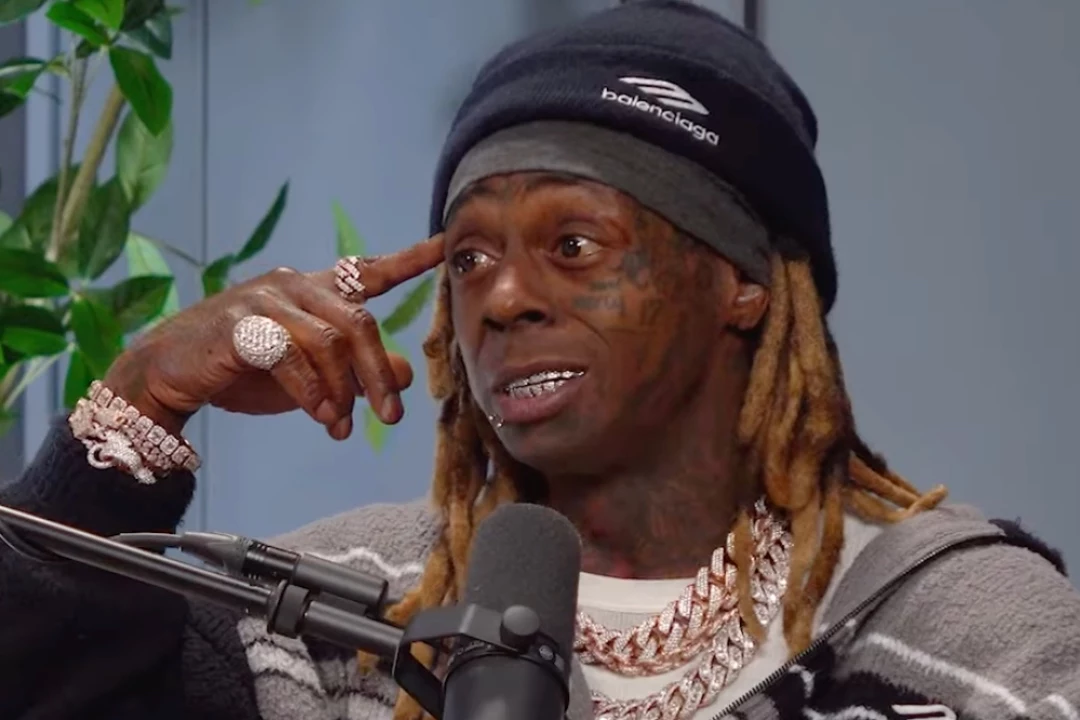
HangupsMusic.com – In a candid conversation that delved into the evolving landscape of music creation, hip-hop icon Lil Wayne has firmly asserted his belief that artificial intelligence, despite its rapid advancements, can never truly replicate the authentic artistry and inimitable essence of a human performer like himself. Speaking on the "Not Just Football with Cam Heyward and Hayden Walsh" podcast, the New Orleans-bred legend, affectionately known as Tunechi, expressed a confident defiance against the notion that algorithms could ever supplant the soul and experience embedded in his prolific career.
The discussion, which explored various facets of Wayne’s journey from the streets of Hollygrove to global superstardom, inevitably turned to the burgeoning presence of AI in the music industry. While acknowledging the technological marvel, Wayne framed it not as a threat, but as an opportunity to underscore his own unique standing. "It’s a challenge," he stated, his voice carrying the familiar gravitas that has defined his decades-long reign. "I love that AI is what it is. ‘Cause, man, I love to be able to stand right next to whoever AI is—he, she, whatever AI is—stand right next to them and say, ‘I’m still better.’" This declaration is more than just bravado; it’s a testament to the profound connection he feels with his craft, a connection forged through years of lived experience, raw emotion, and a distinctive lyrical prowess that has captivated millions.
Wayne recounted how close associates had expressed concerns about AI’s growing capabilities, particularly its ability to mimic established artists’ styles. "My friends were a little worried," he admitted. "They were like, ‘They got this AI stuff. You can ask [AI] to give you a verse like Lil Wayne.’" Intrigued, Wayne decided to put the technology to the test himself. "And so, I did it: ‘Let me hear a verse like Lil Wayne.’ It gave me her best shot. I did it on a couple devices… They all… You suck. So, we gon’ be OK.’" This playful yet pointed dismissal of AI-generated verses highlights Wayne’s conviction that the intangible qualities of his performance—the inflections, the emotional weight, the spontaneous bursts of genius—are beyond the reach of even the most sophisticated algorithms.

Co-host Cam Heyward, a professional athlete himself, echoed this sentiment, recognizing that a digital imitation, however convincing, could never capture the true spirit of an artist. Wayne concurred wholeheartedly, emphasizing the irreplaceable nature of human creativity. "No, not at all," he affirmed, leaving no room for doubt. His response speaks to a deeper understanding of what makes art resonate: it’s not just about the arrangement of words or notes, but about the human story, the passion, and the lived reality that informs it.
The proliferation of AI in creative fields, including music, has become a significant topic of discussion within the industry. As AI tools become more accessible and capable of generating original content, concerns about intellectual property, authenticity, and the future of human artistry have grown. In response to this evolving landscape, major platforms are beginning to implement measures to ensure transparency. Apple Music, for instance, recently introduced AI Transparency Tags, a system designed to flag content that has been generated or significantly altered by artificial intelligence. This initiative aims to provide the music industry with the necessary data and tools to develop informed policies regarding AI’s role in music creation. Apple’s statement underscored the importance of this step, noting, "Proper tagging of content is the first step in giving the music industry the data and tools needed to develop thoughtful policies around AI. And we believe labels and distributors must take an active role in reporting when the content they deliver is created using AI."
The scale of AI-generated music is staggering. Earlier this year, the French streaming service Deezer reported a daily influx of approximately 60,000 fully AI-generated songs. This sheer volume underscores the rapid pace of development and the potential for AI to saturate the music market. However, as Lil Wayne’s confident stance suggests, the human element remains a crucial differentiator. The emotional depth, the nuanced storytelling, the raw vulnerability, and the sheer charisma that an artist like Lil Wayne brings to his work are qualities that transcend mere technical replication. His legacy is built not just on his prolific output, but on his ability to connect with listeners on a profound, emotional level—a connection that is inherently human.
Lil Wayne’s perspective offers a valuable counterpoint to the often-hyped narrative of AI’s imminent dominance. While acknowledging the technological advancements, he anchors his argument in the enduring power of human expression. His willingness to engage with the concept of AI, even to test its limits against his own artistry, demonstrates a forward-thinking approach. Yet, his ultimate conclusion is one of unwavering self-assurance, rooted in the understanding that true artistry is a complex tapestry woven from experience, emotion, and an inimitable individual spirit—elements that even the most advanced AI may never be able to fully replicate. The question for the music industry, then, is not whether AI can create music, but what role it will play alongside, rather than in place of, the human artists who have long shaped its sound and soul.
