
 By admin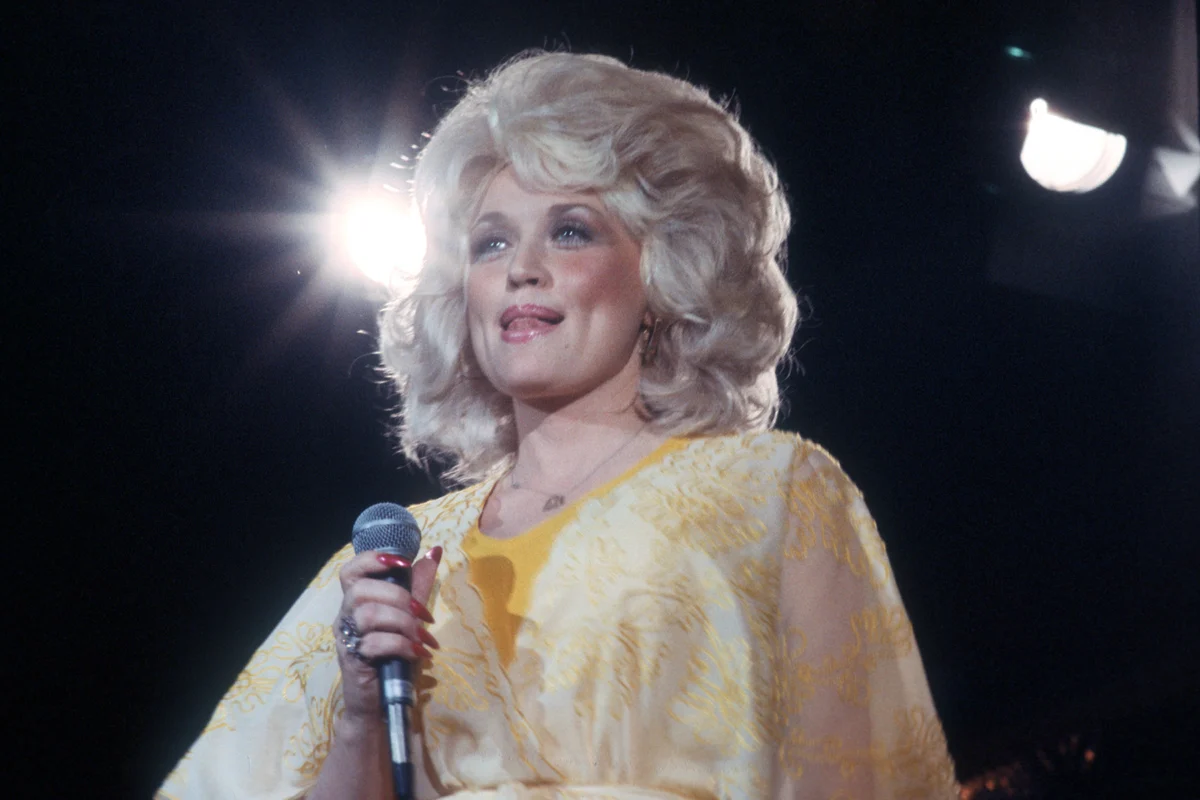
HangupsMusic.com – Nashville, Tennessee – The world recently paused in collective sorrow at the news of Dolly Parton’s passing on August 25, at the age of 80. Yet, even in grief, there’s an acknowledgment that her departure, though profoundly felt, cannot diminish the incandescent light of her legacy. Parton, a figure who not only understood her immense adoration but meticulously cultivated it, crafted a destiny from the humble, often harsh, conditions of her childhood in the Tennessee Smoky Mountains. Her ascent from Appalachian poverty to global icon was no mere twist of fate; it was a deliberate, lifelong ambition, a narrative she wove into the very fabric of American music. She embodied the spirit of country, gospel, and pop, becoming arguably the most universally cherished musical artist the nation has ever produced – a glittering superstar whose formidable talent as a songwriter was matched only by her captivating persona. "I was always telling my own stories, speaking my own feelings," Parton reflected in a 1975 interview with Rolling Stone, adding with characteristic candor, "I’m a pretty bold person."
This innate boldness and authenticity explain why the news of her passing resonated so deeply. Just days before, Parton had been playfully deflecting rumors about her health with her signature wit, making it almost impossible to reconcile her vibrant spirit with the finality of death. A world without Dolly Parton’s physical presence is hard to conceive, but thanks to the vast and indelible catalog of her music, her spirit will forever echo.
Audiences were captivated by her "Backwoods Barbie" aesthetic and her larger-than-life charm. Beneath the shimmering rhinestones and voluminous wigs, however, resided one of music’s most resilient and profound lyricists. Parton battled tirelessly to establish herself as a woman in the male-dominated Nashville music scene, channeling her experiences into masterpieces of raw emotion and intricate storytelling. Songs like the haunting "Jolene" or the desolate "Down from Dover" showcase a lyrical genius comparable to visionaries such as Aretha Franklin, Brian Wilson, or Stevie Wonder – artists who pushed the boundaries of American music with boundless imagination. The collective mourning for Dolly isn’t just for a star; it’s for a symbol of the very best within us, a testament to resilience, joy, and artistic integrity.
"I’m a workhorse that looks like a showhorse," Parton famously quipped to Rolling Stone‘s Chet Flippo in 1975, still under 30. This declaration perfectly encapsulated her dual identity: the tireless creator hidden behind the dazzling entertainer. She fiercely guarded her artistic autonomy, even as a young artist with everything at stake. "I realized in my teenage years how seriously I was taking myself as a songwriter," she once stated. "My songs are like my kids, and I expect them to support me when I’m old – and some of them are. I feel that way about it because when I write a song, I’ve left something in the world today that wasn’t there yesterday. It’s something that will live on."
No other American songwriter articulated the stark realities of poverty with such unvarnished honesty and vivid detail. Parton’s lyrics often honed in on specifics: the raw, calloused hands of her father after a day’s labor, or the eerie sound of wind-whipped snow seeping through the flimsy walls of a child’s home. She refused to dilute the narratives of deprivation, heartbreak, stillbirth, and, repeatedly, the plight of women betrayed by trusting men. The hardships depicted in her compositions consistently weighed heavier on her female characters, a truth Parton unflinchingly presented to her listeners.
Her upbringing deeply informed her work, yet she never romanticized the past. This refusal to sentimentalize shines through in songs like "In The Good Old Days (When Times Were Bad)," a title that itself carries a potent, shocking irony. Parton carved out her niche as a preeminent female singer-songwriter in a Nashville landscape where she and Loretta Lynn stood as titans. "I didn’t want to be domestic," she declared in her 1977 Rolling Stone cover story. "I wanted to be free. I had my songs to sing, I had an ambition and it burned inside me. It was something I knew would take me out of the mountains. I knew I could see worlds beyond the Smoky Mountains."
In the digital age, a charming myth took root: that Dolly penned both "Jolene" and "I Will Always Love You" on the very same day. Initially, Parton would gently correct interviewers, stating her memory differed. However, ever the shrewd businesswoman, she eventually embraced the delightful narrative, recognizing its appeal. By 2017, she was telling the story herself, a testament to her understanding of how a good tale, even if embellished, enhances her legend. The public’s eagerness to believe this anecdote speaks volumes about what they sought from Dolly: a strong, ever-smiling country queen who could conceal layers of pain and rage behind her sparkling attire, channeling them into profoundly personal compositions.
Dolly Parton never required a "comeback." She existed in a state of perpetual relevance, constantly discovered by new generations while simultaneously maintaining a core following who cherished her well-known hits and countless "buried treasures" on her albums. Her artistic depth was seemingly limitless; the more one explored, the more there was to find.
"Jolene" rightly stands as her most celebrated creation, a poignant plea from one woman to another to spare her man. A country chart-topper in 1973, it possessed an immediate, timeless quality, as if it had always existed. Its raw emotion and stoic sense of heartbreak harked back to her formative years in the unforgiving Smoky Mountains. Over the decades, "Jolene" has transcended genre, inspiring reinterpretations by artists as diverse as Beyoncé, Miley Cyrus, and Jack White, whose early 2000s rendition with The White Stripes captured the song’s unflinching spirit.
Parton embodied the quintessential star who belonged to everyone. Her visibility was a constant throughout her life, even back to her school days. "I had a lotta stories told on me, a lotta lies, just because I looked the way I did," she recounted in 1977. "I always was big in the boobs, small in the waist and big in the butt. I just grew up that way and I had that foxy personality, too."
Mainstream media frequently fixated on her image, often perceiving her primarily as a lovable entertainer rather than the fiercely driven "songteller" she was. Yet, Parton never denied her affection for the glitz and glamour; it was an intentional artistic creation. "The flashy clothes and jewelry and all the gaudy appearance. I guess I did invent that part of me," she explained. "I was always fascinated with fairytale images. Half of a show is the lighting and the shine and the sparkle. Stars are supposed to shine and maybe I just want to be a star."
Despite her exuberant public persona, a thread of lonesomeness ran through her spirit, audible in the vulnerability of her voice. "I mean, I was real outgoin’, real friendly, I think it was scary to people," she observed. "But I never felt I belonged. Never belonged in my whole life, even as a little kid. I was just different and so I never really found my place till I moved to Nashville and got in the music business. That was my real place, so I fit in. I was born restless, I really was."
From her earliest days, Dolly yearned for her songs to be sung by all, and indeed they were, often as quickly as she could compose them. Patti Smith performed "Jolene" during her Horses tour. Tina Turner delivered a searing rendition of "There’ll Always Be Music" in 1974. Stevie Nicks covered her tunes in the nascent days of Buckingham Nicks. Merle Haggard imbued her songs with a biting edge, particularly his bitter take on "In The Good Old Days (When Times Were Bad)."
Jerry Garcia, a surprising early admirer, kept her 1969 minor hit "Tomorrow Is Forever" in The Grateful Dead’s first-set rotation for years. In a 1970 Playboy interview, a surprised reporter heard Garcia laud her as "my favorite girl singer," then insisted on playing him a Dolly record – The Fairest of Them All (1970). By Side Two, Garcia, Robert Hunter, and the reporter were reportedly all moved to tears in Garcia’s living room by the album’s profound emotional depth, especially the final triptych of "Mammie," "Down from Dover," and "Robert."
"Coat of Many Colors" was her personal favorite, a tender narrative about a mother stitching a coat from rags. She famously composed it on Porter Wagoner’s tour bus, using his dry-cleaning receipt as her canvas (a receipt Wagoner later had framed). While Parton often portrayed long-suffering maternal figures, she also introduced characters with a mischievous edge. In "Travelin’ Man," from the same album, the narrator plans to elope with a handsome salesman, only for him to abscond with her mother instead. The humorous, yet biting, punchline: "The travelin’ man was a two-time lover – he took my love and he took my mother!"
"I Will Always Love You" was a beloved standard even before Whitney Houston’s iconic interpretation, which she discovered through a Linda Ronstadt recording. Once Houston made it her own in The Bodyguard, its global reach became undeniable. The film itself cleverly weaves in its country roots, with Kevin Costner’s character hearing a version by John Doe of the L.A. punk band X on a jukebox. This seamless integration of diverse musical styles is a quintessential Dolly paradox.
Parton remained remarkably current across decades. In the 1980s, she exchanged makeup tips with Boy George, telling Rolling Stone, "I love the way he does his eyes. And he loves how I do mine." Her sultry duets with longtime friend Kenny Rogers, such as "Islands in the Stream," captured a playful intimacy that resonated deeply with audiences. Their bond endured, culminating in their 2013 duet "You Can’t Make Old Friends." As Rogers noted in 2014, "We just flirted with each other and loved every minute of it."
Her 1980 smash hit "9 to 5" became an instant anthem, but Parton expanded its themes into the deeply intriguing (and often overlooked) concept album 9 to 5 and Odd Jobs. This album served as her artistic exploration of class struggle and anti-capitalist sentiment. She covered Woody Guthrie’s "Deportee" (addressing immigrant workers), Merle Travis’s "Dark as a Dungeon" (about coal miners), and Mel Tillis’s "Detroit City" (depicting the assembly line). She capped it off with a feminist reinterpretation of "House of the Rising Sun," reminding listeners of the song’s enduring message about impoverished women and societal exploitation. It was her own joyful Sandinista!, delivered with an unwavering smile.
The 1990s saw Parton returning to her roots, notably with her acclaimed 2001 bluegrass album, Little Sparrow. However, one of her most memorable hits from that era was the cheeky and humorous "Romeo," a 1993 line-dance track featuring Billy Ray Cyrus (as Romeo) alongside Nashville luminaries Pam Tillis, Mary Chapin Carpenter, Kathy Mattea, and Tanya Tucker. Despite being godmother to Billy Ray’s newborn daughter Miley, Dolly’s playful flirtation in "Romeo" was legendary. She famously growled, "I’m old enough to be that boy’s lover!" In the video’s conclusion, walking off arm-in-arm with Cyrus, she quipped, "I am so flattered that you would choose me over all these young beautiful girls. But after all, it’s only right – I am paying for this video."
Beyond her music, Parton built Dollywood, a uniquely American shrine and a living testament to her extraordinary journey. The author of this article once spent a week there, finding it, "bizarrely or not – one of the happiest places I’ve ever been." She acquired vast tracts of land in the Smoky Mountains, the very landscape of her impoverished youth, transforming it into an amusement park that celebrated her life. Every detail of the park radiated Dolly’s essence. The "Thunder Road" thrill ride, for instance, was inspired by the 1950s Robert Mitchum thriller, a nod to the first movie she ever saw as a child.
The park’s omnipresent piped-in music was, naturally, all Dolly. It was there that the author first heard her rendition of "In the Pines," a song previously learned from Kurt Cobain. The Parton Family Singers performed on various stages near a meticulously recreated replica of her childhood shack. A museum proudly displayed her actual "coat of many colors" (or a cunning reproduction). The entire town became a monument to the local girl who made good. A plaque in the local park declared it built by Dolly for children to play. The local radio station was WDLY, playing, predictably, only her music. From another celebrity, such a monument might seem self-aggrandizing, but with Parton, it radiated her boundless warmth and generosity.
Dollywood stood in stark contrast to Graceland, Elvis Presley’s nearby estate in Memphis. It was as if Parton observed Graceland’s aura of tragedy and posthumous fame and consciously decided to create her own triumphant version – a celebration of life, built with her own wealth, during her lifetime. It is a vibrant palace erected by a woman who rose from nothing to achieve everything she desired, inviting visitors to celebrate her escape from hardship, her myriad accomplishments, and the incredible woman she became. There is truly no other place like it.
Exiting the Dollywood parking lot, visitors pass under an arch bearing the inscription: "I Will Always Love You. – Dolly." One suspects no one ever drives beneath that arch without believing every word.
Parton remained consistently in the public eye, whether recording an album of rock classics (including a noteworthy "Stairway to Heaven") or performing a duet with Miley Cyrus at the Grammys, with BTS dancing enthusiastically to "Jolene" in the audience. A quintessential Dolly moment occurred at the 2006 Oscar ceremony. Nominated for Best Song, "Travelin’ Through," from the pioneering transgender documentary Transamerica, she famously cheered and smiled when Three Six Mafia won instead for "It’s Hard Out Here for a Pimp," later sending them a note congratulating them for winning it for Tennessee.
It speaks volumes about Dolly Parton that her final public appearance was not on a grand stage or television screen, but at a truck stop on I-65 in June, near Nashville. She attended the renaming of the Tennessean Travel Stop in her honor, a business where she naturally had a stake, selling her "Cup of Ambition" coffee brand. "I could not be prouder," Parton told the assembled crowd. "I’ve spent my whole life traveling down the road."
Dolly traversed that road her entire life – often a challenging and solitary journey. Yet, she transformed it into a welcoming path for all, never shying away from the difficult truths she encountered. Through her music, she meticulously constructed an America where countless individuals could truly feel at home.
