
 By Azzam Bilal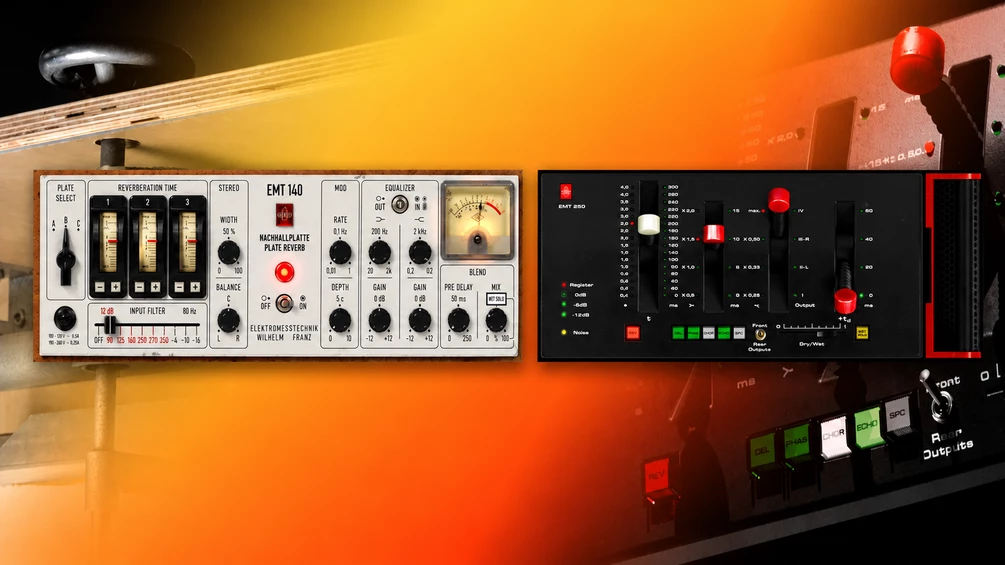
HangupsMusic.com – Scotts Valley, California, marks a significant milestone in the evolution of digital audio workstations as Universal Audio (UA) expands its native software library with the release of two of the most revered reverberation units in recording history. The UAD EMT 140 Classic Plate Reverberator and the UAD EMT 250 Classic Electronic Reverb have officially transitioned from hardware-dependent DSP effects to native plug-ins, allowing producers and engineers to run these iconic sounds directly on their computer’s CPU without the need for specialized Apollo or UAD-2 hardware.
For decades, the name EMT (Elektro-Mess-Technik) has been synonymous with the gold standard of artificial space. By bringing these emulations to the native format, Universal Audio is effectively lowering the barrier to entry for high-end studio sonics. This move is part of a broader strategic shift for the California-based company, which has spent the last several years porting its legendary library of analog emulations to the UAD Spark subscription service and individual native purchase options, catering to a new generation of bedroom producers and professional mixers who prioritize portability and streamlined workflows.
The EMT 140 Classic Plate Reverberator is a meticulous recreation of the world’s first plate reverb system. Introduced in 1957, the original hardware was a behemoth, consisting of a massive, heavy metal plate suspended in a steel frame, housed in a wooden crate that weighed approximately 600 pounds. Despite its cumbersome physical footprint, the sound it produced was ethereal—a lush, dense, and silky texture that became the defining characteristic of vocal tracks and drum rooms throughout the 1960s and 70s.
Universal Audio’s plug-in version captures the distinct personalities of three different plates formerly housed at The Plant Studios in Sausalito, California. Each plate offers a unique decay profile and harmonic response. Plate A provides a bright, shimmering quality often favored for pop vocals; Plate B offers a more balanced, versatile frequency response; and Plate C delivers a darker, more vintage-voiced resonance. The digital recreation includes the mechanical damper controls found on the original units, allowing users to adjust decay times with surgical precision while maintaining the organic, non-linear behavior of vibrating metal.
In contrast to the mechanical nature of the 140, the UAD EMT 250 Classic Electronic Reverb pays homage to the dawn of the digital age. When it debuted in 1976, the EMT 250 was a marvel of engineering, often referred to as the "Space Heater" due to its vertical, industrial design and the significant amount of heat generated by its early digital components. It was the world’s first commercial digital reverb, and only 250 units were ever produced, making it one of the rarest and most sought-after pieces of outboard gear in existence.
What set the EMT 250 apart—and what UA has painstakingly preserved—is its unique algorithm. Despite the primitive bit-depth and sampling rates of the mid-70s, the 250 possessed a clarity and "air" that many modern digital reverbs struggle to replicate. The UAD version utilizes the exact same mathematical algorithms found in the original hardware, ensuring that the modulation and tail characteristics are identical to the physical unit. Beyond reverb, the EMT 250 plug-in is a multi-effects powerhouse, featuring five additional programs: delay, phasing, chorus, echo, and "Space" (a specialized low-frequency reverb). This versatility makes it an essential tool for adding movement and depth to synthesizers, guitars, and background vocals.
The cultural impact of these two units cannot be overstated. The EMT 140 was a staple at Abbey Road Studios, appearing on nearly every seminal British rock record of the 1960s, including the transformative works of Pink Floyd. Meanwhile, the EMT 250’s lush modulation and futuristic echoes became a signature of the 1980s, utilized extensively by Prince at Paisley Park and appearing on the atmospheric textures of Radiohead’s more experimental eras. By making these sounds available as native plug-ins, Universal Audio is providing creators with the exact tonal palette used by the architects of modern music.
Bill Putnam Jr., the CEO of Universal Audio, emphasized the importance of accessibility in his announcement. He noted that while the hardware originals are museum-grade rarities, their sonic fingerprints are timeless. The goal of the native release is to ensure that "some sounds never go out of style" and that the legacy of EMT continues to inspire new musical compositions regardless of whether a producer owns a proprietary hardware interface.
The technical shift to native processing is a major win for the user base. Traditionally, UAD plug-ins required the onboard Digital Signal Processing (DSP) of an Apollo interface or a UAD Satellite to function. While this offloaded the processing strain from the computer, it also limited the number of instances a user could run based on their hardware’s "chip count." The native versions of the EMT 140 and 250 remove these shackles, allowing users to utilize as many instances as their computer’s RAM and CPU can handle. This is particularly beneficial for complex mix sessions where multiple plate settings might be required for different instrument groups.
In terms of compatibility, both plug-ins are optimized for the latest operating systems, including macOS and Windows, supporting VST, AU, and AAX formats. This ensures seamless integration into major DAWs such as Ableton Live, Logic Pro, Pro Tools, and FL Studio. To celebrate the launch, Universal Audio has introduced an aggressive pricing strategy. Both the EMT 140 and the EMT 250 are currently available at an introductory price of $79 each, a significant discount from their standard retail price of $149. Furthermore, both titles have been added to the UAD Spark subscription library, which offers a curated collection of UA’s best native plug-ins for a monthly fee.
This release follows a string of successful software launches from the company. Earlier this year, Universal Audio surprised the industry by offering a free "Lagniappe" bundle that included eight popular plug-ins, such as the Pure Plate Reverb and the 1176 Classic Limiter. They also recently ventured into the world of virtual instruments with Anthem, an analog-inspired synthesizer designed to compete with the industry’s top soft-synths. These moves suggest that UA is no longer just a hardware company that makes software; they are positioning themselves as a dominant force in the software-only market.
The inclusion of the EMT 250’s modulation effects—specifically the chorus and phasing—adds a layer of value that transcends simple reverberation. In the modern production landscape, where "vibey" and "lo-fi" textures are highly prized, the slightly grainy, characterful digital artifacts of the EMT 250 are more relevant than ever. Similarly, the EMT 140’s ability to sit "behind" a vocal without washing it out remains the benchmark for professional mixing.
As the music production industry continues to move toward a "mobile-first" and "laptop-heavy" environment, the transition of legacy gear into the native digital realm is inevitable. Universal Audio’s commitment to high-fidelity modeling ensures that the transition does not come at the cost of sonic integrity. By meticulously analyzing the electrical components and acoustic properties of the EMT originals, they have bridged the gap between the massive steel plates of the 1950s and the high-speed processors of today.
For professionals and hobbyists alike, the arrival of the native EMT 140 and 250 represents an opportunity to own a piece of history. Whether it is the dense, shimmering decay of a physical plate or the quirky, modulated charm of an early digital processor, these tools offer a level of sophistication that can elevate a production from a simple demo to a polished, radio-ready master. With the removal of hardware requirements and the introduction of accessible pricing, the legendary "EMT sound" is now closer than ever to the fingertips of the global creative community.
