
 By admin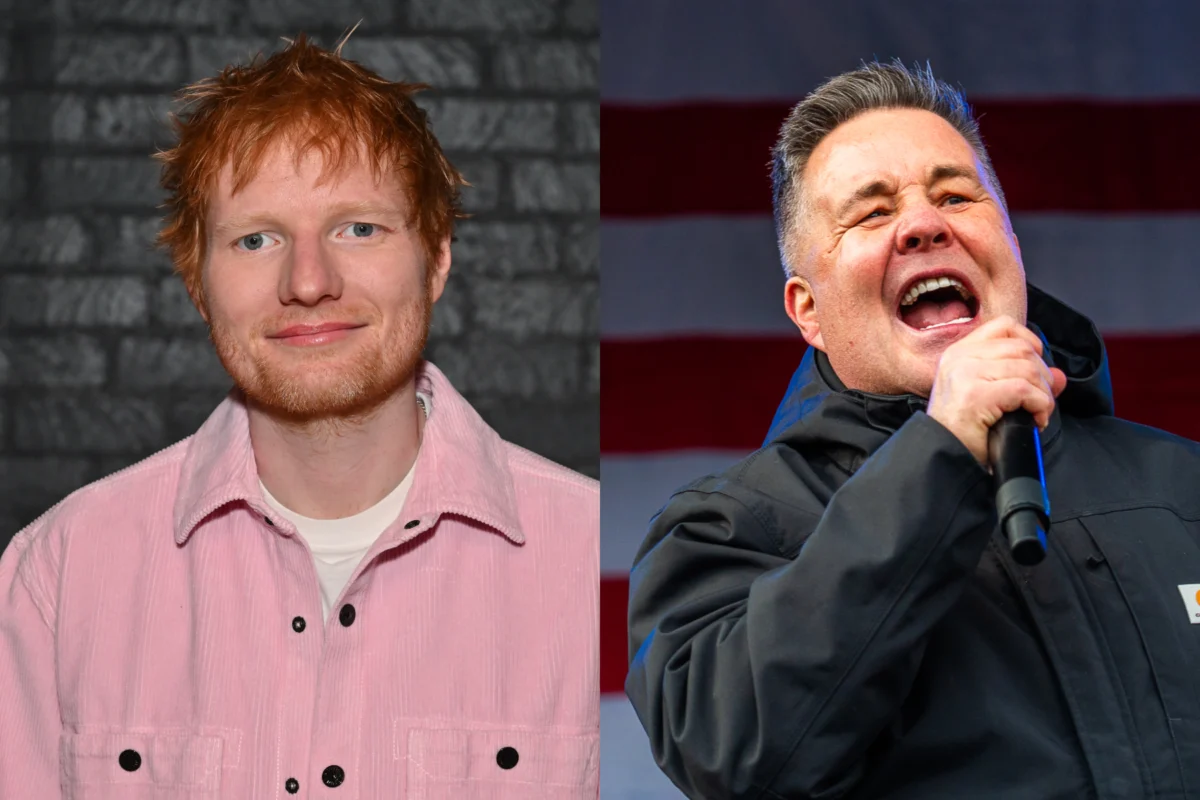
HangupsMusic.com – Boston, The often-unspoken tenets of touring solidarity and artistic integrity have been thrust into the spotlight by Ken Casey, the outspoken frontman of Boston’s revered Celtic punk outfit, Dropkick Murphys. Casey recently voiced a potent critique of the music industry’s handling of Macklemore’s controversial removal from Ed Sheeran’s "Loop Tour," following the rapper’s public expressions of support for Palestinians and his criticism of Israel’s military actions in Gaza. Casey’s comments, delivered during an interview with Boston Public Radio, resonated deeply, touching upon the fundamental bonds that, in his view, should define the relationship between artists sharing a stage.
The controversy ignited when Macklemore, known for his socially conscious lyrics and willingness to tackle sensitive subjects, used his platform during Sheeran’s tour to address the escalating humanitarian crisis in Gaza. His onstage remarks, which included calls for a ceasefire and solidarity with the Palestinian people, swiftly drew attention and, subsequently, consequences. Within a short period, reports emerged that Macklemore had been taken off the remainder of the "Loop Tour," a development that sparked widespread debate across the music world and beyond, raising questions about freedom of expression, corporate pressure, and the responsibilities of headlining artists.
For Ken Casey, a veteran of three decades in the music scene, the incident cut to the core of what he perceives as an inviolable code among musicians. "For thirty years, whenever Dropkick Murphys has embarked on a tour, the selection of opening acts has been a sacred process," Casey explained. "It’s about more than just booking talent; it’s about forging a brotherhood, a sisterhood, a family. When you bring artists onto the road with you, they become your people. You navigate the triumphs and challenges of the road together, living or dying by that shared commitment." This sentiment, steeped in the gritty realities of life on tour, underscores a profound expectation of mutual support that Casey believes was conspicuously absent in Macklemore’s situation.
Casey’s most direct criticism was aimed at the perceived inaction of Ed Sheeran, the tour’s headliner. "The fact that Ed Sheeran, irrespective of the political nuances of the cause, appeared to capitulate and not stand shoulder-to-shoulder with his fellow touring artist, simply doesn’t align with my principles," Casey asserted, his voice reflecting a mix of disappointment and conviction. He continued, "That’s not the operational ethos of Dropkick Murphys." The powerful imagery of "taking a knee" used by Casey metaphorically suggested a surrender of responsibility and solidarity, a stark contrast to the defiant spirit often associated with independent and punk rock movements. The immediate and audible applause that followed Casey’s statement during the radio broadcast served as a testament to how deeply his message resonated with many listeners, reflecting a broader sentiment within segments of the music community.
The official narrative surrounding Macklemore’s departure was complicated by Sheeran’s subsequent statement, which clarified that the decision to remove the rapper was not his own. Instead, Sheeran attributed the action to Messina Touring Group, the promoter, citing additional pressure from various venues. However, Casey was quick to challenge this deferral of responsibility, arguing that the ultimate authority and moral compass should reside with the performing artist, not external commercial entities. "The promoter," Casey contended, "is not the reason people purchase tickets and fill arenas. They come for the artists, for the message, for the experience created by the musicians."
To illustrate his point about artistic autonomy and the courage to face consequences, Casey recounted a past experience involving Dropkick Murphys. The band, known for its unwavering progressive political stance, has frequently used its stage as a platform for social commentary. During a performance at the Rocklahoma Festival in Oklahoma, a state with a predominantly conservative political landscape, Casey and his bandmates openly criticized the then-Trump administration. "We articulated our perspectives onstage, as we do every night," Casey recalled, acknowledging the immediate backlash. "Approximately half the audience chose to walk out." The immediate aftermath brought warnings from organizers. "I was informed shortly thereafter that our comments had deeply displeased the site owner, and I fully expect that invitation will not be extended again," he noted. This anecdote served as a powerful, real-world example of an artist choosing conviction over commercial expediency, a principle Casey passionately advocates.
For Casey, the integrity of an artist’s beliefs is inextricably linked to the authenticity and enduring value of their music. "All the artists I admired during my formative years, regardless of their genre or style, shared one fundamental trait: they stood unequivocally by the principles they espoused in their songs," he reflected. "Once you abandon that commitment, once you compromise your convictions, then, in my estimation, the very worth of your music begins to erode." This philosophy resonates particularly strongly within the punk and folk traditions from which Dropkick Murphys draws its inspiration, where authenticity and a direct connection to social issues are often considered paramount.
Macklemore, it appears, subscribes to a similar ethos of unwavering conviction. Following his removal from the tour, he not only doubled down on his pro-Palestinian stance but elevated his commitment through tangible action. The rapper publicly pledged to donate an impressive $1 million to various Palestinian support organizations, effectively transforming his vocal advocacy into a significant humanitarian contribution. He then issued a direct challenge to Robert Kraft, the billionaire owner of the New England Patriots and a prominent figure in philanthropic circles, urging him "to match" his donation. Kraft, a staunch supporter of Israel and a significant donor to various causes, swiftly responded with a statement claiming that Ed Sheeran had personally called him. According to Kraft, Sheeran had requested his commitment of "$2 million to match his donation to aid in the region to fight this humanitarian crisis." The inclusion of Sheeran’s alleged involvement added a complex layer to an already multifaceted narrative, implying a more active role from the headliner than initially suggested. However, a representative for Sheeran did not immediately respond to Rolling Stone‘s request for comment regarding Kraft’s statement, leaving the full extent of Sheeran’s engagement in this philanthropic challenge ambiguous.
The entire episode – from Macklemore’s initial statements and subsequent removal to Casey’s passionate defense and the ensuing charitable pledges – highlights a pivotal moment in the intersection of music, politics, and commercial interests. It underscores the increasing pressure on artists to navigate a complex geopolitical landscape, where taking a public stance can carry significant professional repercussions. Casey’s intervention, drawing on decades of experience and a deep-seated belief in artistic solidarity, serves as a powerful reminder of the unwritten codes of loyalty and integrity that many within the music community hold dear. It provokes essential questions about the true cost of silence versus the enduring value of conviction, challenging the industry to reflect on the responsibilities that come with the power of the stage. As the debate continues, the incident stands as a stark illustration of the delicate balance artists must strike between their platforms, their principles, and the commercial realities of their craft.
