
 By admin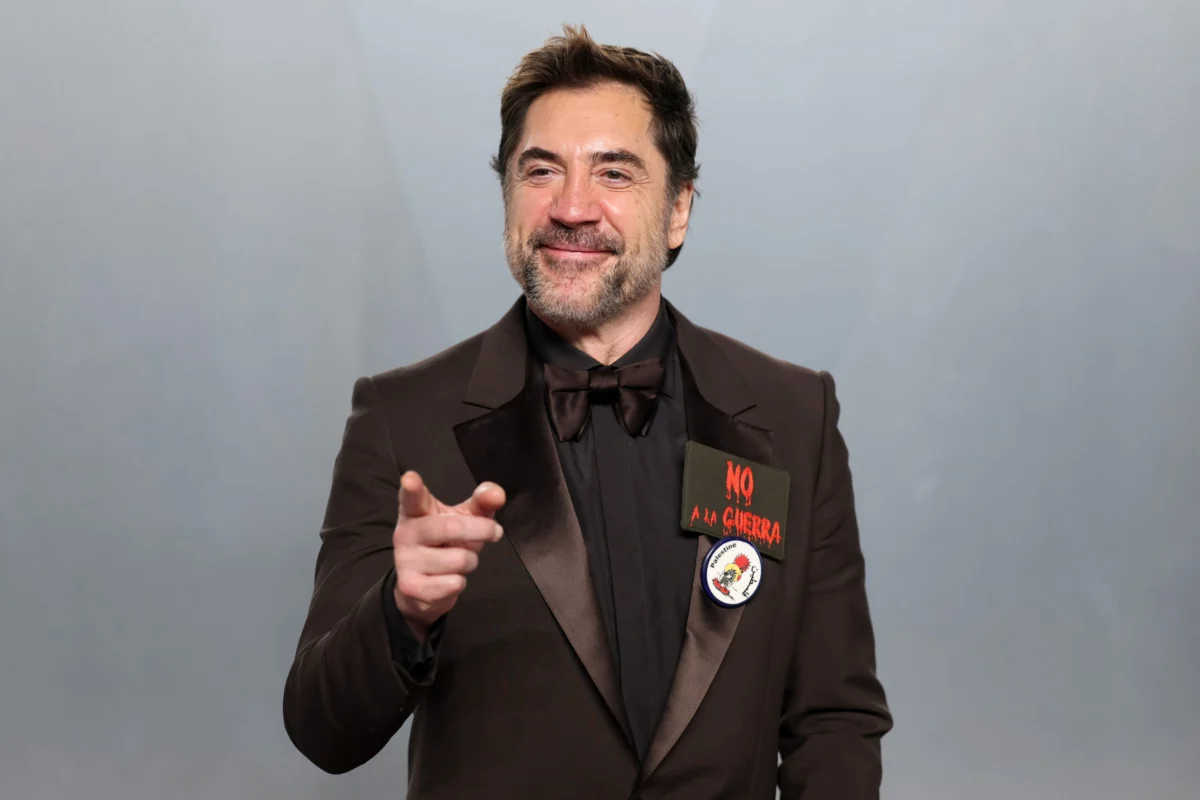
HangupsMusic.com – Los Angeles, The annual Academy Awards ceremony, typically a glittering showcase of cinematic achievement and sartorial splendor, unfolded this year with its customary blend of emotion and spectacle. While the evening generally steered clear of overt political declarations, with only subtle political undertones peppered host Conan O’Brien’s opening remarks, one prominent figure leveraged his moment at the podium to convey a strong political message. Veteran actor Javier Bardem, known for his compelling performances and often intense screen presence, utilized his platform as a presenter to voice a powerful two-part statement: a rejection of conflict and a plea for Palestinian liberation.
As he stepped forward to present the coveted Oscar for Best International Film, Bardem uttered a concise, yet potent declaration, proclaiming, "No to war and free Palestine." The impact of his words was amplified by a small, yet significant detail: a "No a la Guerra" (No to War) patch prominently displayed on his lapel. This emblem was not a new addition to his activist wardrobe; Bardem later revealed it was the very same patch he had prominently displayed at the Goya Awards in Spain back in 2003, a poignant echo across two decades.
In the more relaxed, yet equally scrutinized, environment of the Vanity Fair post-Oscars party, Bardem elaborated on the motivations behind his public stance. Speaking to reporters on the red carpet, he drew a stark parallel between the present conflict and the 2003 Iraq War. "I’m wearing a pin that I used in 2003 with the Iraq war, which was an illegal war," Bardem explained, emphasizing the continuity of his anti-war convictions. He then linked the past to the present with a forceful assertion: "And we are here, 23 years after, with another illegal war, created by Trump and Netanyahu with another lie." This direct accusation underscored his belief that the current geopolitical situation in the Middle East was founded on similar deceptive premises as the earlier conflict.
Bardem’s decision to speak out at the Academy Awards was, for him, a matter of civic duty and moral imperative. In an interview with Variety, he articulated the importance of artists recognizing their dual roles. "I think it’s important to understand, to bring awareness, that you can do both," he stated, referring to the ability to simultaneously engage in the artistic community and act as a responsible citizen. He continued, "You can be part of the movie-making community, which is an important community, and also be a citizen that uses this huge [platform] to denounce what one thinks is injustice. In this case, it’s the genocide in Palestine that is still going on." This declaration firmly positioned his intervention as a conscious act of leveraging global visibility for a humanitarian cause.
The acclaimed actor further detailed the specific grievances driving his protest. He cited the alarming statistic of 600 fatalities in Palestine subsequent to the declared ceasefire, highlighting what he perceived as ongoing violence despite supposed de-escalation efforts. Beyond the immediate casualties, Bardem brought attention to the "abuse" he observed in the West Bank. He spoke passionately about "the ethnic cleansing that’s happening in the West Bank," describing it as "horrible" and lamenting the insufficient global discourse surrounding these events. His words aimed to compel a deeper examination of the conflict’s human cost and alleged systematic violations.
Bardem’s explicit political commentary stood in notable contrast to the general tone of the evening. The majority of Academy Award recipients opted for acceptance speeches that refrained from direct political commentary, choosing instead to focus on gratitude, artistic inspiration, and personal anecdotes. This collective restraint made Bardem’s outspokenness all the more distinctive and impactful, carving out a moment of pointed advocacy amidst the traditional celebrations of filmmaking.
However, Bardem was not entirely alone in offering a politically charged message. David Borenstein, the director behind the victorious documentary Mr. Nobody Against Putin, delivered perhaps the most politically inclined speech among the winners, albeit with a broader, more philosophical scope. His film, he explained, delves into "the poignant narrative of a nation’s gradual decline." Borenstein’s acceptance speech elucidated how such a decline occurs "through countless small, little acts of complicity." He elaborated on this theme, asserting that societal erosion begins "when we act complicit when a government murders people on the streets of our major cities, when we don’t say anything when oligarchs take over the media and control how we can produce it and consume it." His powerful reflection on collective responsibility concluded with an empowering thought: "we all face a moral choice. But luckily, even a nobody is more powerful than you think." While not directly addressing the Israel-Palestine conflict, Borenstein’s message resonated with themes of civic engagement, accountability, and the individual’s capacity to challenge systemic injustice – principles that undoubtedly underpin Bardem’s own activism.
The presence of such direct and indirect political statements at a high-profile event like the Academy Awards invariably sparks debate about the role of artists and celebrities in political discourse. For Bardem, his actions underscore a belief that the immense visibility afforded by such platforms carries an inherent responsibility to speak truth to power, especially when humanitarian crises unfold. His steadfast commitment to wearing the "No a la Guerra" patch for over two decades signifies a consistent anti-war stance, transforming a simple accessory into a symbol of enduring protest.
In an era increasingly shaped by global connectivity and the rapid dissemination of information, public declarations from influential figures like Javier Bardem serve multiple purposes. They can galvanize supporters, provoke critical thought, and force uncomfortable conversations that might otherwise be sidestepped. By invoking terms like "genocide" and "ethnic cleansing," Bardem consciously amplified the severity of his concerns, aiming to pierce through potential indifference and spur greater awareness and action. His Oscar night intervention, therefore, was more than just a fleeting moment of celebrity outspokenness; it was a deliberate act of using a global stage to advocate for human rights and challenge prevailing narratives, reminding the entertainment world and its vast audience that the pursuit of justice often requires a voice as loud and clear as any cinematic triumph.
