
 By admin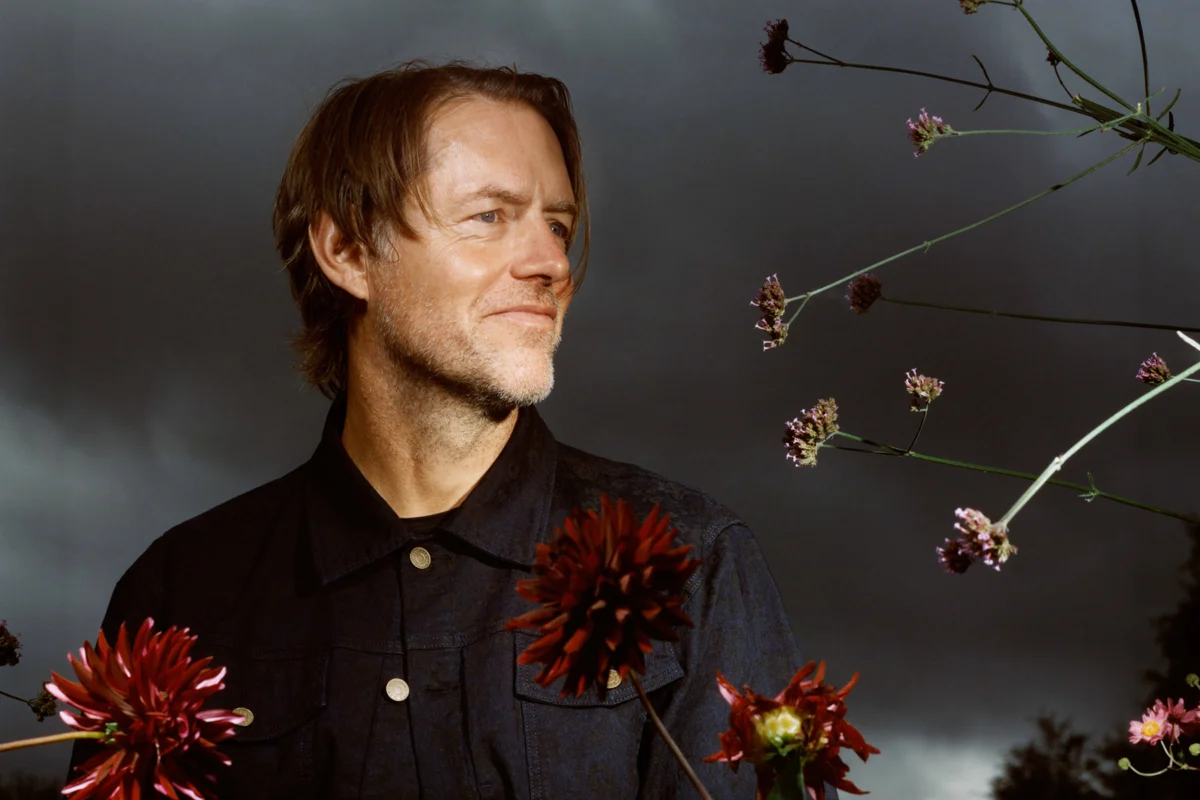
HangupsMusic.com – Wales, As dusk descends upon the ancient, rolling hills of Wales, painting the landscape in deepening shades of indigo and slate, Ed O’Brien concludes his evening constitutional. Logging onto a video call, the acclaimed musician, known globally as a cornerstone of Radiohead, reflects on the tranquil scene. "It’s a very dark, still night," he muses, his voice imbued with a thoughtful calm that mirrors the deepening twilight. He speaks of the "lovely walk" he’s just taken, observing the last vestiges of light fade over the rugged terrain. While the transition from winter to spring often brings a pervasive mud underfoot, O’Brien finds a profound connection in it. "It’s earthy," he affirms, a gentle smile playing on his lips. "There’s healing in this land." This deep communion with nature has become a vital thread in his life, particularly in recent years, shaping not only his personal journey but also his artistic output, culminating in his forthcoming solo album, Blue Morpho.
At 57, O’Brien exudes a serene warmth and an understated intellectual depth, qualities that have long characterized his integral role in Radiohead’s genre-defining sound. For decades, as a founding member of the iconic British quintet, his contributions on guitar and backing vocals have been indispensable, enriching tracks from the haunting introspection of "Street Spirit (Fade Out)" to the intricate sonic tapestries of "Weird Fishes/Arpeggi." His place is firmly etched in music history, recognized by his induction into the Rock and Roll Hall of Fame, inclusion in Rolling Stone‘s esteemed list of the Greatest Guitarists of All Time, and, perhaps most importantly, in the hearts of millions of fans worldwide. Yet, it is on Blue Morpho, slated for release on May 22, that O’Brien truly lays bare his soul, venturing into realms of personal candor previously unexplored.
While Blue Morpho technically marks O’Brien’s second solo venture, following 2020’s Earth (released under the moniker EOB), its profoundly intimate tone and bold artistic explorations imbue it with the raw, revelatory spirit of a debut. The narrative behind its creation, which he now shares publicly for the first time in an extensive, revealing conversation, is a testament to a period of intense personal struggle and subsequent rebirth. Reflecting on the completed album, O’Brien expresses a quiet satisfaction. "It felt honest," he states, a conviction in his voice. "And at the end of the day, that’s the most important thing for me."
The genesis of Blue Morpho spans more than four years, commencing shortly after the April 2020 debut of Earth. As the global pandemic cast its shadow and societies grappled with unprecedented lockdowns, O’Brien and his family initially found a tranquil refuge in their Welsh home. "It was spring, it was summer, it was novelty," he recalls of those early days. However, the respite proved fleeting. By the following year, after a second lockdown spent in the urban confines of London, a profound sense of dislocation and unease began to settle over him. He variously describes this period as a "midlife crisis" or, more evocatively, "my dark night of the soul," drawing a parallel to the spiritual desolation described by the 16th-century Spanish mystic, St. John of the Cross. Regardless of the label, the depth of his suffering during this time is unmistakably clear.
"I went into a deep depression," O’Brien confesses with a disarming directness. "It was the first time in my life that I had to stop." This forced cessation, he realized, brought with it an uncomfortable reckoning. "What I realized was that I’d been keeping busy, like a lot of people do, running from these ghosts of my past, particularly from my childhood." The relentless pace of his life had, for decades, served as an unwitting shield against these unresolved specters.
O’Brien’s journey into the music world began precociously at just 17 in 1985, when he and four schoolmates from an Oxfordshire boys’ school formed the band that would evolve into Radiohead. By their mid-twenties, they were already a sensation in the U.K., and their ascent to global renown accelerated at a breathtaking pace. "From 1990 or ’91 through to 2018, when we stopped touring and went on hiatus, it was pretty much nonstop," he recounts. This demanding lifestyle, while immensely rewarding, proved to be a double-edged sword. "It’s all-encompassing and it demands your full attention, and it’s addictive in that way. But it’s not necessarily healthy, because you just keep going, keep going, keep going. And then when you stop, suddenly the ghosts catch up."
With the sudden expanse of time on his hands, O’Brien found his mind drifting back to his formative years in late 1970s Britain, a generation still grappling with the lingering shadows of the Second World War. It was an era, he reflects, where emotional expression, particularly for children, was often stifled. "There was no therapy for children. Emotions weren’t talked about," he explains. He recounts the dissolution of his parents’ marriage when he was young, an event he views as ultimately beneficial, but one that left emotional scars due to the lack of open communication. "No one ever asked my sister and I, ‘How are you?’ No one ever said, ‘Are you OK?’" This unspoken emotional landscape of his youth returned with a potent force in his adult crisis.

Despite the profound personal challenges he faced in 2021, O’Brien was acutely aware of the extraordinary privilege and good fortune that had defined his life as a member of what many consider to be one of the most significant rock bands of the modern era. "I know I’ve won the fucking golden ticket," he states, acknowledging the immense success. "If you told my 14-year-old self, ‘You’re going to be in this band with these incredible people and you’re going to make this music’ — it does not get better than that." Yet, the haunting question persisted: "So how come I felt like that wasn’t enough?"
A persistent phrase from his childhood school reports echoed in his mind: "Could do better." While such feedback can be a powerful motivator in youth – "It’s like a rocket up your arse," he says, recalling the drive that propelled Radiohead from OK Computer to Kid A – it becomes a burden in later life. "The problem is, when you get into your fifties, it’s fucking unsustainable." This relentless internal pressure, coupled with the sudden cessation of his band’s demanding schedule, plunged him into a deep, pervasive gloom. "It was really hard," he recalls. "Some days you just didn’t want to get out of bed. I thought, ‘Will this be with me forever?’"
Rejecting conventional paths of medication or traditional therapy, O’Brien sought solace and recovery through an unconventional, deeply personal approach. His "therapy," as he describes it, lay in the solitary act of creating new music, liberated from any predefined goals or pressures. He would spend a significant portion of each day immersed in his guitar, finding a structured escape. "My therapy was literally locking myself in a room for three hours in the morning whilst the kids were homeschooling and my wife was working," he explains. Even in his darkest moments, a primal urge to create persisted. "I was in such a dark place, but I knew that I had to get up each day, get out of bed, and do this thing."
Equally crucial to his emotional resurgence was a reconnection with the natural world, a process he characterizes as "a deep spiritual awakening" intrinsically linked to the ancient, mystical landscape of Wales. Accompanied by his dog, Ziggy, O’Brien embarked on long walks, drawn to places of profound spiritual significance – ancient monasteries, abbeys, majestic mountains, and cascading waterfalls. "I was drawn to these places, and through that, I healed," he recounts, the sense of rejuvenation palpable in his voice.
These Welsh hills, he discovered, resonated with unexpected echoes of musical and literary history. "It’s uncanny," he notes, how the landscape evokes the sounds of Led Zeppelin and the mythical realms of J.R.R. Tolkien. He cites the presence of Robert Plant having once resided on the far side of a nearby mountain and Tolkien’s own vacations in the region, lending credence to the area’s creative potency. The spirit of artists like Kate Bush, too, seemed to weave through the air. In this revitalized state, he began inviting his friend, keyboardist Luke Mullen, to his music room. "Me on guitar, him on Rhodes. We’d light a fire and just play and jam," he describes, creating an atmosphere of spontaneous musical alchemy.
Gradually, O’Brien felt a profound shift – lighter, unburdened, and more creatively engaged. He speaks with palpable excitement about the songwriting process, describing it as "the most challenging bit, and the bit that I find fascinating and full of mystery." The magic, he explains, lies in discovering a single guitar phrase that unlocks an entire composition. "You get so excited seeing this one little thing you can play on the guitar, you suddenly hear this whole piece… Music and magic, five letters, they share the same three."
One of the first compositions to emerge from this fertile period was "Incantations," the gorgeous, slowly unfolding opener of Blue Morpho. The song reflects his earlier period of profound disorientation. "When I was in this dark place, I felt like I was lost in a labyrinth," he explains, referencing the Greek myth prominently featured in the artwork for Radiohead’s 2001 masterpiece, Amnesiac. The path out, he realized, was akin to Theseus following Ariadne’s thread. "The thread is your gut feeling; it’s small moves, because you can’t see ahead of you, and you have to slay the Minotaur on the way. Maybe that’s the ego, this persona and all these fears you have. You have to slay the beast."
Another track, the loose and funky "Teachers," draws inspiration from a psilocybin trip O’Brien experienced with close friends in England’s Dartmoor National Park. "Every year, we’ve had three days in the woods and sat around the fire and we’ve done mushrooms," he shares. A particularly profound moment occurred when he ventured alone. "I had a very profound experience one night when I left everyone and went walking. The things I saw, it was almost like the veil was removed." Over the track’s distinctive burbling bass, courtesy of Yves Fernandez, O’Brien subtly references the opening lines of Dante’s Inferno: "Midway through life, I’ve just lost my way." He confirms, "That was exactly it. I did lose my way."

The recording of Blue Morpho progressed into 2022 in London, under the guidance of producer Paul Epworth, renowned for his work with artists like Adele and Paul McCartney. O’Brien meticulously assembled a collective of highly accomplished backing musicians, many with jazz backgrounds, including guitarist Dave Okumu and flautist Shabaka Hutchings, who introduced him to the calming properties of instruments tuned to the 432 Hz frequency. The album’s ethereal, swirling string arrangements were crafted by Estonian composer Tõnu Kõrvits, while Radiohead’s own Philip Selway contributed drums on two tracks. A temporary pause in recording allowed O’Brien to support his 18-year-old son through his A-level exams, before returning to the project. The final mixes for Blue Morpho, named after the resplendent butterfly species he encountered during his family’s time in Brazil in the early 2010s, were completed almost precisely a year ago. "It’s been a really beautiful journey," he reflects, his voice tinged with satisfaction. "This record has taken a long time, but I wouldn’t change it, because there’s been so much life in the record, and that has added to the richness."
As O’Brien put the finishing touches on Blue Morpho in early 2025, the music world was already abuzz with fervent speculation about a potential resurgence from his other band. These rumors culminated gloriously last fall when Radiohead re-emerged for a series of 20 triumphant concerts across five European cities. The profound impact of these shows was widely felt, with artists like Harry Styles publicly recalling the sheer exhilaration of seeing them perform in Berlin, an experience he credited with inspiring his own return to the stage.
O’Brien confirms that the camaraderie and renewed connection among the five long-standing friends who comprise Radiohead were equally potent backstage. "That tour was very, very emotional, very profound. We all felt that," he shares. "We’d look at one another on that stage, like, ‘This is amazing.’ I feel like I’m the luckiest person on the planet, and I’m not just saying that."
This deep gratitude wasn’t always present. Following Radiohead’s previous tour in the summer of 2018, O’Brien admits he was ready for a definitive break from the band that had consumed his entire adult life. "I was done with Radiohead," he states plainly. "It had got to a place where I just wasn’t enjoying it. I just didn’t resonate with it anymore, and I wanted to do my own thing… I think we’d run out of road. We’d run out of inspiration." He reveals that the recording sessions for 2016’s A Moon-Shaped Pool had been particularly arduous, and he had been reluctant to commit to the subsequent two years of touring. "The others said they wanted to tour," he recalls. "I didn’t really want to tour, and they knew that. But I did it and I’m glad I did. I saw it through to the end."
The ensuing long hiatus was uncharted territory, and initially, a source of trepidation. "It was kind of scary at first," O’Brien confesses. "I really thought that was it on Radiohead. Actually, I sort of got off on that. I was just, ‘I’m done with it. I want another life.’" However, the years spent wandering the Welsh hills and pouring his soul into Blue Morpho profoundly altered his perspective. In 2024, he joined Thom Yorke, Jonny Greenwood, Colin Greenwood, and Philip Selway in a rehearsal room to explore the possibility of a reunion. "We hadn’t played together for six years," he recounts. "We’re like, ‘How do we know if we’re going to be any good?’ And the chemistry was there from the very beginning. I think we always knew that if we got the love between us right, then it all flows from there."
Addressing the burning question on every Radiohead fan’s mind since the reunion, O’Brien offers a definitive answer: more shows are indeed on the horizon. "It’s definitely happening," he confirms without hesitation. He outlines a thoughtful, sustainable touring model: "What we’re going to do is, every year we’re going to do a different continent, and we’re going to do 20 shows each year. No more, no less." He indicates plans to resume the tour starting in 2027 ("We won’t do anything this year, but we’ll do something next year"), with target destinations including North America, South America, and Asia/Oceania. The limited 20-show format, which proved highly successful in Europe, is designed to ensure peak performance and genuine engagement. "We want to give absolutely everything each night," he explains. "We do not ever want it to be like we’re going through the motions or we’re having to run on empty. We’ve got to be able to do it. And you know what? We’re not spring chickens anymore."
In the immediate future, O’Brien is focused on conceptualizing the live presentation of Blue Morpho. He feels that a traditional rock show wouldn’t capture the essence of the material, and is instead envisioning a more fluid, jazz-inflected performance, potentially featuring collaborators like Shabaka Hutchings when available. "We’re dreaming it up at the moment," he says, his eyes sparkling with creative anticipation.
It has taken years, but O’Brien has unequivocally conquered the self-doubt that once plagued his solo endeavors. "I’ve had so much insecurity about my own songwriting," he admits. This is perhaps an understandable struggle for an artist emerging from a band as singularly unique and creatively potent as Radiohead. "You come from this place of extraordinary musicianship and extraordinary songwriting, so there is a comparison," he acknowledges. "But what was so beautiful about this record was, I sort of let go and I just didn’t fucking care. Because the process of it, I love it so much." A broad smile now graces his face, reflecting a profound sense of peace and purpose. "I’m going to do this until the day I die."
