
 By admin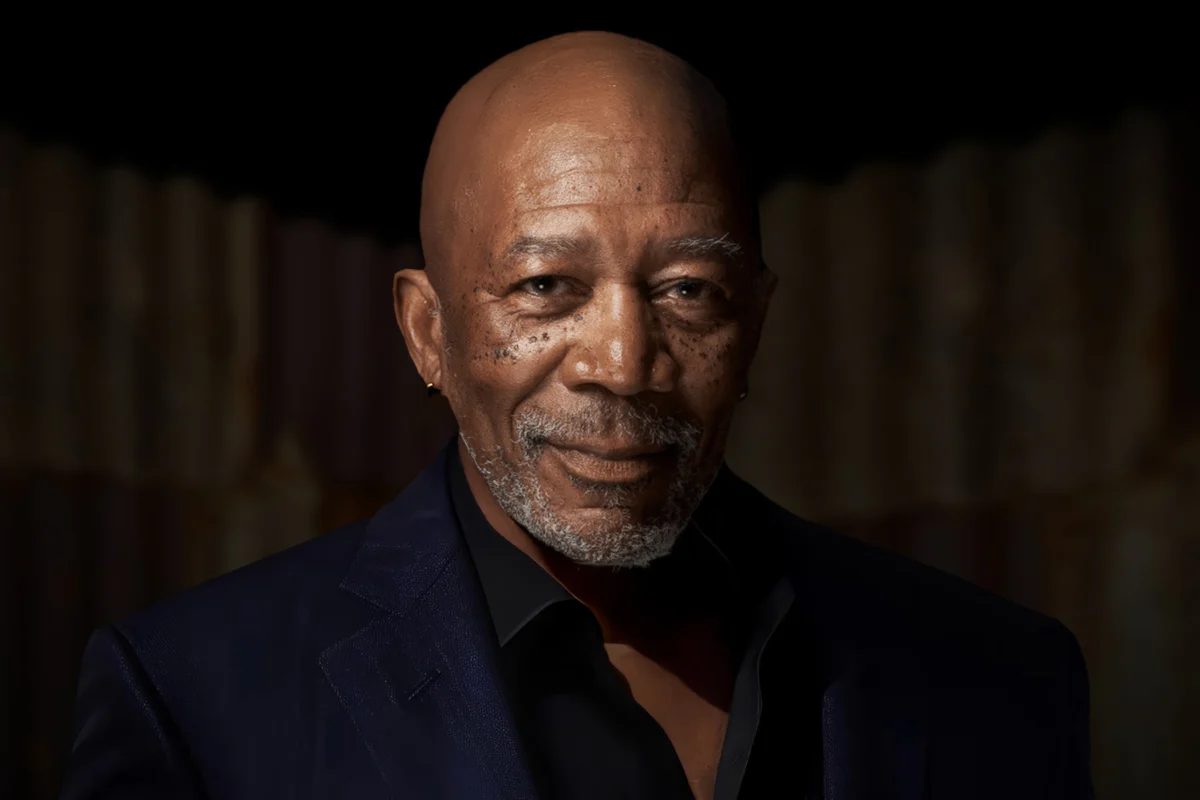
HangupsMusic.com – Morgan Freeman, an actor whose voice is as iconic as his on-screen presence, has spent over five decades embodying figures from the technologically astute Lucius Fox in Batman’s world and multiple U.S. Presidents to the revered Nelson Mandela and even the Almighty. Yet, since 2001, a lesser-known facet of his profound impact has been his stewardship of the blues, specifically as co-founder of Ground Zero Blues Club in Clarksdale, Mississippi. This venture, rooted in the very birthplace of the Delta blues, sprang from a simple yet profound realization: visitors flocking to the legendary crossroads where Robert Johnson purportedly sold his soul had no authentic venue to experience the very music they sought. Now, that commitment culminates in a new album, Morgan Freeman’s Symphonic Blues Experience, a project that not only celebrates the genre but also elevates it with an unprecedented orchestral grandeur.
The recently released album is a testament to its title, masterfully weaving the raw essence of blues standards with sophisticated orchestral arrangements provided by London’s esteemed Chineke! Orchestra. This groundbreaking collaboration breathes new life into classic tracks, featuring a stellar lineup of contemporary blues luminaries. Taj Mahal lends his seasoned voice to a stirring rendition of Son House’s "Death Letter Blues," while Keb’ Mo’ electrifies Albert King’s "Cadillac Assembly Line." Shemekia Copeland delivers a powerful reimagining of Robert Johnson’s "Traveling Riverside Blues," subtly acknowledging the track’s reinvention by Led Zeppelin. Beyond the musical performances, Freeman himself provides evocative historical narration, grounding the symphonic journey in the rich tapestry of blues heritage. Crucially, the album serves a philanthropic purpose, with proceeds benefiting the Ground Zero Arts Foundation, the charitable arm of the Clarksdale club. This studio endeavor evolved from a successful touring live show of the same name, which saw local orchestras performing alongside Ground Zero’s resident musicians, all enhanced by Freeman’s pre-recorded narration.
In a recent virtual conversation with Rolling Stone, the venerable 89-year-old actor, looking resplendent in a dashiki from his home, was joined by Eric Meier, his co-owner and CEO of Ground Zero. The discussion delved into Freeman’s unexpected journey into music, a candid confession of a mild professional envy for Denzel Washington, and his resolute stance against retirement.
Freeman’s earliest encounter with the blues dates back to his formative years in Mississippi. He recounts fragmented, yet vivid, memories from the age of three or four: the pungent aroma of fried fish mingling with the sweet, illicit scent of moonshine poured from Mason jars. He recalls accompanying his grandmother to fish in local ponds or creeks with simple cane poles. Amidst these bucolic scenes, a striking image persists: a man with gleaming gold teeth on his grandmother’s porch, strumming a guitar, the notes of an unseen melody drifting through the humid air as he sipped his moonshine. It was simply "music-ing," a part of the atmosphere rather than a specific draw for the young Freeman.
By the age of five, his musical palate had broadened significantly. The pervasive sounds were those of the big band era – Glenn Miller’s iconic "Tuxedo Junction" and "Five O’Clock in the Afternoon," alongside the sophisticated rhythms of Count Basie. These were the popular tunes emanating from Philco radios, fixtures in countless homes, shaping the soundscape of his early childhood. The blues, while present, hadn’t yet captured his distinct attention.
Moving to Chicago in the 1940s further distanced him from the emerging urban blues scene. Freeman describes the South Side of Chicago during that period as a "jungle," a challenging environment where "hoodlum-ism was one of the easier choices to make." The raw, electric blues that was beginning to define the city’s musical identity was not a part of his personal experience growing up.
Despite not being a blues devotee, Freeman did harbor musical aspirations in his youth. In high school, he was an active member of the glee club, transitioning from tenor to bass when his fellow bass singers struggled. He also played the alto saxophone in the school band. However, at 16, a severe bout of pneumonia and pleurisy, which resulted in a lung abscess, forced a doctor’s recommendation to cease playing wind instruments. The doctor also predicted it would prevent him from joining the Air Force. Ironically, Freeman did enter the Air Force, and a subsequent examination revealed no lingering marks on his lung, suggesting he could have potentially continued his saxophone career.
The topic of his musical inclinations resurfaced during the production of The Shawshank Redemption, one of his most revered films. Director Frank Darabont envisioned a scene where Freeman’s character, Red, would play the harmonica given to him by Tim Robbins’ character, Andy Dufresne, at the film’s conclusion. Freeman, however, declined. He viewed it as a "Yes, boss man" moment, feeling it lacked genuine narrative sense for his character. His decision ultimately contributed to one of cinema’s most enduring and poignant finales, a testament to his discerning artistic judgment, which he fully embraces.
Freeman’s active engagement with the blues began not out of personal passion for the genre, but from a tangible need. While working in Mississippi, he encountered young tourists who asked a simple yet unanswerable question: "Where can we hear some blues?" There was no established venue, no dedicated space. This void sparked the idea that led to Ground Zero. "We bought the building," Freeman recalls, "Turned it into a juke joint." Thus, Ground Zero Blues Club was born, filling a critical cultural gap.
Eric Meier elaborated on the genesis of the Symphonic Blues Experience album. He drew inspiration from observing the Australian hip-hop group Hilltop Hoods perform with a symphony orchestra. This innovative crossover concept resonated, prompting Meier to envision a similar fusion for the blues. Unusually, the project reversed the typical album-to-tour cycle. "Normally, you do an album and then you go tour," Meier explained. "We did the reverse here." The success and positive reception of the live symphonic blues shows led them to decide to "memorialize it with a project like this."
Despite his deep involvement with Ground Zero and the new album, Freeman remains candid about his personal relationship with the blues. He doesn’t consider himself a "blues specialist or aficionado." His musical preferences lean towards the timeless crooning of Frank Sinatra and the soulful gospel of Al Green. For Freeman, the blues project, particularly Ground Zero, was born of "necessity," a response to a clear cultural demand rather than a fulfillment of his personal musical passion. This pragmatic approach, however, has proven to be incredibly effective in preserving and promoting the genre.
The discussion touched upon the vital issue of the blues’ evolving identity, particularly in the context of its African American origins. Meier brought up Christone "Kingfish" Ingram, a young, critically acclaimed Black blues musician from Clarksdale, who has encountered surprise from white fans regarding his genre choice. This speaks to a broader "divorce of this music from its roots," a cultural disconnect that the Symphonic Blues Experience aims to bridge. Meier affirmed Kingfish’s deep connection to Ground Zero, noting his regular performances and enthusiasm for the symphonic project. This initiative, therefore, serves as a crucial reminder and reconnection to the authentic history of the blues.
Freeman expresses profound enjoyment in his role as narrator for the project. He likened the experience to a captivating journey, where "at every curve there was something useful or delightful that you encounter." He highlighted a symbiotic benefit: the project not only elevates the blues but also invigorates symphony orchestras, offering them "another reason to go" and a "little pick-me-up." Meier added that the project extends the reach of Ground Zero beyond Clarksdale, making the blues accessible to wider audiences. "You can’t always get to Clarksdale," he stated. "So we just said, ‘Look, let’s come to you.’"
When asked about his approach to narration, particularly distinguishing between narrating as himself versus a character, Freeman revealed a seamless integration. He perceives no significant difference, explaining that when a script calls for a character’s narration, he simply "steps into it as a role." His legendary voice, instantly recognizable and imbued with unparalleled gravitas, effortlessly serves both factual exposition and fictional storytelling.
At 89, Freeman shows no signs of slowing down. Correcting the interviewer’s slight miscalculation of his age, he emphatically stated, "I don’t wanna lose a year, though!" His schedule remains robust with new acting projects and now this album. Retirement, he firmly asserts, is not on his horizon. He draws inspiration from Clint Eastwood’s enduring philosophy: "Don’t let the old man in." For Freeman, the key is simply to "keep moving."
Reflecting on his prolific career, Freeman shared a rare glimpse into a professional regret. Despite the vast array of roles he has masterfully portrayed, he laments being "too old for what I would hope to do," citing physical limitations that preclude him from the "action stuff that would be required." His career truly took off around the age of 50, meaning he missed the window for many physically demanding roles. He openly admits to envying Denzel Washington, whose career path has included numerous action-oriented performances. Freeman, a self-described "child of the movies" who spent his non-school days in cinemas, always harbored a desire for those high-octane roles. While he is immensely grateful for the opportunities that came his way, he acknowledges the different trajectories their careers took.
Through the Symphonic Blues Experience, Morgan Freeman not only reinforces the legacy of Ground Zero Blues Club but also creates a bridge between genres and generations. His pragmatic dedication to preserving and presenting the blues, coupled with his iconic narrative voice, ensures that this quintessential American art form continues to resonate, reaching new ears and reminding the world of its profound cultural significance. It’s another chapter in a remarkable life, proving that even at 89, the legendary actor is still forging new paths and enriching the cultural landscape.
