
 By Azzam Bilal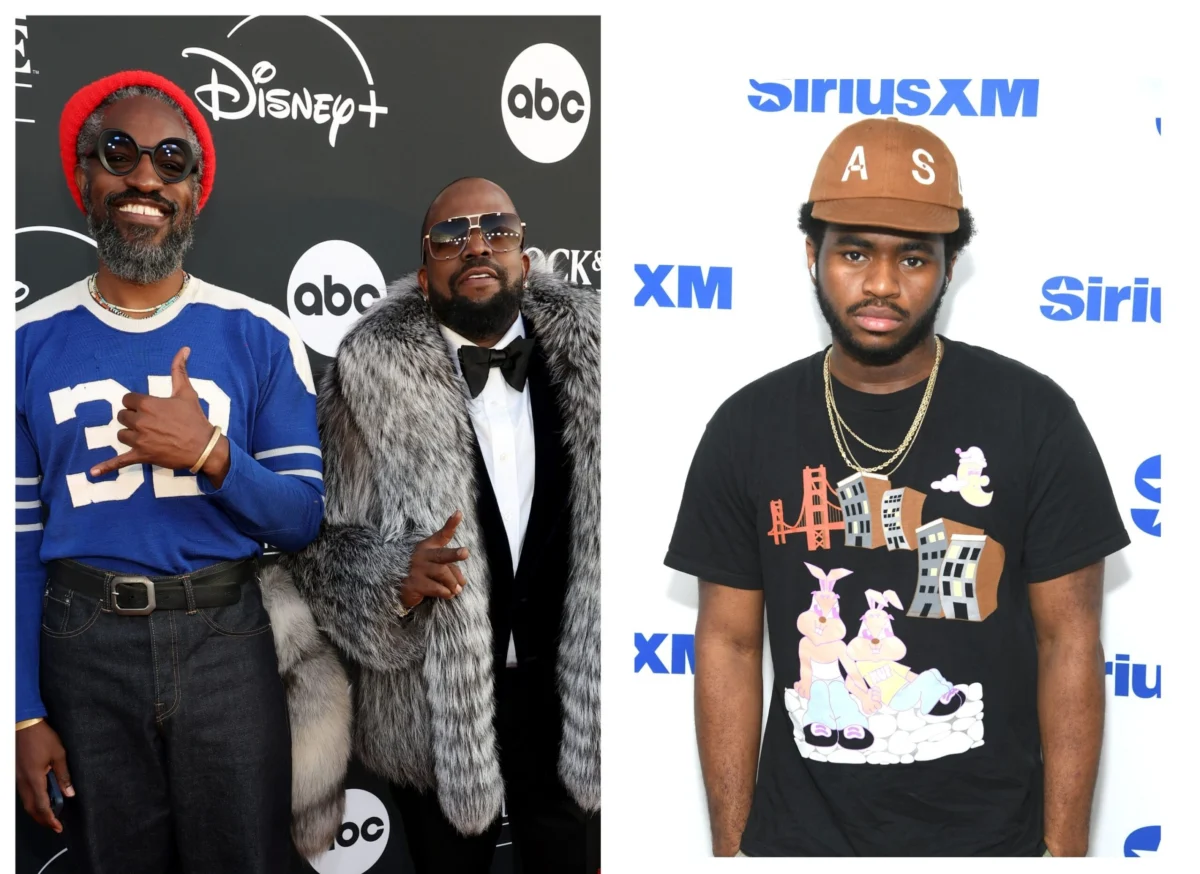
HangupsMusic.com – Atlanta, the legendary hip-hop duo Outkast, comprised of the visionary André 3000 and the versatile Big Boi, has officially entered a high-stakes legal battle to protect the sanctity of their brand. The Grammy-winning icons, who were recently inducted into the Rock & Roll Hall of Fame, have filed a lawsuit against the rising Oakland-based rapper and producer Silas Wilson, better known by his stage name, Ovrkast. The legal action, which was formally lodged in a Georgia court on September 16, alleges trademark infringement, unfair competition, and a significant breach of a prior contract. This move underscores a growing trend among veteran artists who are becoming increasingly vigilant about the commercial use of names and aesthetics that bear a resemblance to their established intellectual property.
The lawsuit was filed by High Schoolers LLC, the primary holding company responsible for managing the business interests, trademarks, and intellectual property associated with the Outkast name. In the formal complaint, attorneys representing André Benjamin and Antwan Patton—the birth names of André 3000 and Big Boi—characterized Wilson’s use of the "Ovrkast" moniker as an "improper, willful, unauthorized, and illegal" appropriation of a name that is nearly identical to the duo’s world-renowned trademark. The plaintiffs argue that the phonetic and visual similarity between "Outkast" and "Ovrkast" is not a mere coincidence but a branding choice that threatens to dilute the duo’s legacy and cause significant confusion within the global music marketplace.
Central to the lawsuit is the allegation that this dispute had previously been addressed through private negotiations, only for the agreement to be ignored. According to the court documents, there was a prior understanding between the parties in which Wilson allegedly agreed to cease using the "Ovrkast" name permanently. As part of this purported settlement, Wilson was supposed to transition his professional identity to the stylized name "Overkxst." The lawsuit claims that Wilson has since reneged on this promise, continuing to release music and market himself under the original alias. By failing to adhere to the terms of this agreement, Wilson is now facing a breach of contract claim alongside the broader trademark infringement charges.
The legal team for Outkast is focusing heavily on the concept of "likelihood of confusion," a standard metric in trademark law. They contend that the similarity between the two names is so striking that it could "deceive the public into the false belief" that Silas Wilson’s work is endorsed by, affiliated with, or otherwise connected to the Atlanta duo. This is particularly sensitive given Outkast’s stature in the industry. Since their debut in the early 1990s, André 3000 and Big Boi have cultivated a brand synonymous with innovation, southern excellence, and genre-defying artistry. With diamond-certified albums and a cultural impact that transcends music, the Outkast name is considered one of the most valuable assets in the history of hip-hop.
To bolster their argument, the plaintiffs cited a 2025 interview that Wilson conducted with Rolling Stone magazine. In that profile, Wilson acknowledged that the similarity of his name to the legendary group was a recurring point of contention among listeners. During the interview, Wilson admitted that he frequently faces accusations of copying the name, stating, "The worst thing I get is like, ‘The n—a think he Outkast.’ It’s like, ‘No, bro. I wasn’t even thinking about Outkast.’ Mad n—as do that shit. They read Ovrkast [as] Outkast." For the legal team at High Schoolers LLC, these comments serve as "smoking gun" evidence that actual confusion is already occurring in the real world. They argue that if the artist himself acknowledges that people misread his name as "Outkast," then the trademark infringement is self-evident and damaging to the original brand.
Silas Wilson, a highly respected figure in the contemporary indie-rap and "lo-fi" hip-hop scenes, has built a reputation for his soulful production and introspective lyricism. Having worked with artists like Earl Sweatshirt and Mavi, his trajectory has been largely independent and underground. Following the news of the lawsuit, Wilson took to social media to express his surprise and disappointment. On Instagram, he shared a post reacting to the legal filing with the caption, "I thought it was love? (yes this is real)." By tagging both André 3000 and Big Boi, Wilson appeared to be appealing to the sense of community and mutual respect that often exists between different generations of hip-hop artists. However, the legal machinery behind the Outkast brand suggests that business considerations have taken precedence over artistic camaraderie.
This is not the first time in recent months that Outkast has taken legal action to defend their trademarks. In 2024, the duo filed a similar lawsuit against an electronic dance music (EDM) duo that had been performing under the name "ATLiens." The name ATLiens is, of course, the title of Outkast’s seminal 1996 sophomore album and a term they famously coined to describe the unique cultural identity of Atlanta. In that case, Outkast’s representatives argued that the EDM group was capitalising on the goodwill and "cool factor" associated with the duo’s discography. That dispute was eventually settled out of court earlier this year, though the terms remained confidential. The move against Ovrkast indicates a broader strategy by High Schoolers LLC to aggressively police any perceived infringement, regardless of the genre or the stature of the offending party.
The complexities of trademark law in the music industry often hinge on how "distinctive" a mark is and whether the newcomer is operating in the same "channel of trade." While Outkast is a hip-hop group and Ovrkast is a hip-hop artist, the defense may argue that the spelling and the context of the "lo-fi" scene provide enough distinction. However, the breach of contract allegation significantly complicates Wilson’s defense. If a signed agreement to change the name exists, the court may view the continued use of "Ovrkast" as a bad-faith move, regardless of the original intent behind the name’s creation.
The broader implications of this case are being closely watched by industry analysts and independent artists alike. In an era where digital streaming platforms make it easier than ever for names to overlap, the boundaries of intellectual property are being tested. For a veteran act like Outkast, protecting their name is about more than just current revenue; it is about protecting the "secondary meaning" of their brand for future ventures, including merchandising, reissues, and potential reunions. For an artist like Wilson, a forced name change can be a devastating blow to a career built on years of organic growth and search-engine optimization.
As the case moves forward in the Georgia court system, the hip-hop community remains divided. Some fans argue that Outkast has every right to protect the brand they spent three decades building, noting that "Ovrkast" is phonetically indistinguishable from "Outkast" in many accents and contexts. Others feel that the lawsuit is an unnecessary heavy-handed tactic against a younger artist who has publicly shown nothing but respect for his predecessors.
High Schoolers LLC has not yet released a formal public statement regarding the specifics of the settlement they are seeking, but typically, such suits involve a request for a permanent injunction against the use of the name, the destruction of infringing materials, and monetary damages for lost profits or "dilution" of the brand. Whether Wilson will choose to fight the charges in court or finally pivot to the "Overkxst" alias remains to be seen. For now, the "love" that Wilson hoped for seems to have been replaced by the cold realities of corporate litigation, leaving the future of his professional identity in the hands of the legal system. This conflict serves as a stark reminder that in the music business, even the most legendary names are not just symbols of art, but fiercely guarded commercial assets.
