
 By Azzam Bilal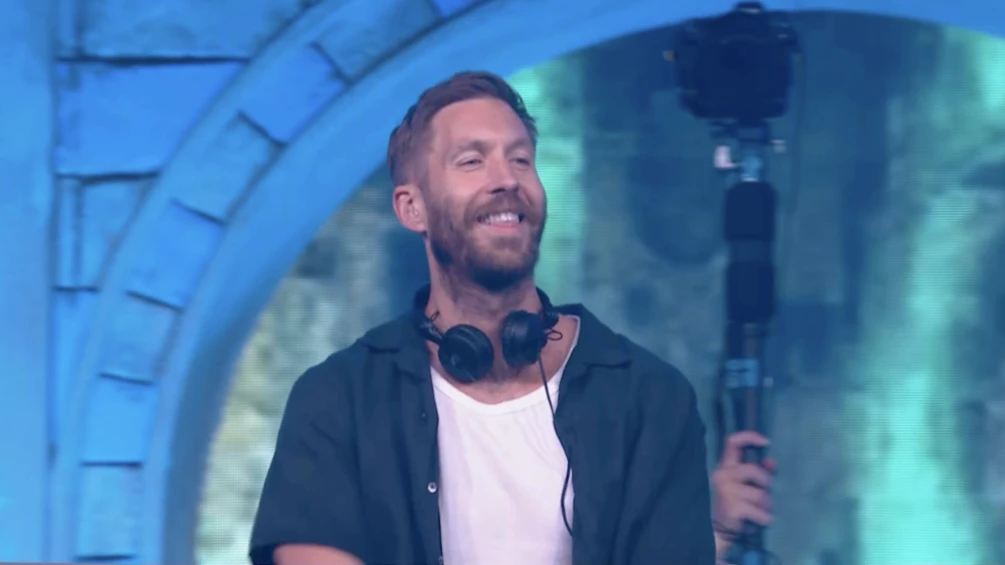
HangupsMusic.com – Boom, Belgium, The landscape of electronic dance music is often defined by its most iconic stages and the legendary figures who grace them. For over two decades, Tomorrowland has served as the ultimate pilgrimage for fans of the genre, while Calvin Harris has remained one of the most influential and commercially successful figures in the history of modern music. However, despite their parallel rises to global dominance, their paths had never crossed in a performance capacity—until now. On the closing night of Tomorrowland 2026’s first weekend, the Scottish producer and DJ finally made his long-anticipated debut on the festival’s legendary Mainstage, delivering a career-defining performance that bridged the gap between nostalgic EDM anthems and contemporary dance floor innovation.
The atmosphere in Boom was electric long before Harris took to the decks at 22:50 CEST. The final day of the festival’s opening weekend had already seen a masterclass in diverse programming, featuring a high-energy lineup that kept the massive crowd at a fever pitch. Early in the day, the Mainstage played host to B Jones, whose return to the festival carried significant emotional weight following her public battle with cancer. Her set was a testament to resilience, setting a tone of celebration and gratitude that resonated throughout the day. As the sun began to set over the Belgian countryside, the energy shifted toward the underground with a surprise appearance by techno royalty Charlotte de Witte, whose uncompromising sound provided a stark, driving contrast to the melodic offerings earlier in the day.
As the night progressed, the transition toward the mainstream heavyweights began. John Summit, a man who has rapidly ascended to the upper echelons of the industry, delivered a set characterized by his signature blend of house and tech-infused energy. He was followed by Alesso, a Tomorrowland veteran whose progressive house anthems have become synonymous with the festival’s identity. By the time the clock approached 11:00 PM, the anticipation for Harris had reached a boiling point. For many in attendance, the fact that Harris—a man who has headlined every major festival from Coachella to Glastonbury—had never performed at Tomorrowland felt like a missing chapter in the festival’s history.
When the lights finally dimmed and the massive Mainstage production flared to life, Harris appeared behind the decks to a roar that seemed to shake the very foundations of the De Schorre park. He did not waste time, diving straight into a set that served as a chronological and stylistic journey through his twenty-year career. The performance was a masterclass in crowd control, balancing the radio-friendly hits that made him a household name with the club-focused sensibilities he has honed in his recent residencies and "Love Regenerator" project.
One of the early highlights of the night was the inclusion of "Sweet Nothing," his 2012 collaboration with Florence Welch. The track, which remains a cornerstone of the big-room era, elicited a massive sing-along, reminding the audience of Harris’s unique ability to blend powerhouse vocals with high-energy production. This was followed by a seamless transition into "This Is What You Came For," his multi-platinum collaboration with Rihanna. Even years after its release, the track’s minimalist yet infectious hook proved to be a perfect fit for the grand scale of the Tomorrowland Mainstage.
However, Harris was not merely content to play a "greatest hits" set. He utilized the platform to showcase his current creative direction, most notably through his recent single "Blessings," featuring the vocals of Clementine Douglas. The track, which leans into a more soulful, house-inspired aesthetic, demonstrated Harris’s continued relevance in a shifting musical landscape. It was a moment of sophistication amidst the high-octane energy of the night, showing a producer who is as comfortable with deep grooves as he is with stadium-sized drops.
In a nod to the pioneers of the genre, Harris also surprised the crowd by dropping The Chemical Brothers’ timeless classic "Hey Boy, Hey Girl." The inclusion of such a seminal track was a respectful tip of the hat to the history of electronic music, bridging the gap between the 90s rave scene and the modern festival era. It served as a reminder that while Harris is a pop juggernaut, his roots are firmly planted in the culture of the dance floor.
As the set neared its conclusion, Harris turned back the clock to the very beginning of his journey. He performed "Feel So Close," a track that arguably served as the catalyst for his transition from a quirky synth-pop artist to a global DJ superstar. The sight of tens of thousands of people jumping in unison to the track’s iconic guitar-led melody was one of the most visual highlights of the entire weekend. Finally, he closed the night with "I’m Not Alone," his 2009 breakthrough single. The 2026 version of the track, bolstered by modern production values and the sheer scale of the Tomorrowland sound system, provided a poignant full-circle moment. It was the song that first introduced him to the world, and it was only fitting that it served as the final note of his historic debut.
While Harris’s set was the primary focus of the Sunday finale, the weekend as a whole was filled with moments of technical and creative brilliance. On Friday, the festival witnessed a truly unique collaboration when Martin Garrix was joined on stage by The Edge, the legendary guitarist from U2. Together, they premiered their new collaborative single, "Fireflies," a track that blends Garrix’s melodic dance sensibilities with the atmospheric, soaring guitar work that has defined U2’s sound for decades. The performance was a testament to Tomorrowland’s ability to facilitate cross-genre collaborations that would be impossible anywhere else.
Saturday offered a different kind of spectacle on the Freedom stage, where Miss Monique debuted her "Biorhythm" audiovisual show. This performance represented the cutting edge of festival technology, utilizing generative industrial visuals that interacted with organic elements in real-time. The show was designed to explore the intersection of the natural world and the mechanical nature of electronic music, providing a deep, immersive experience that stood in contrast to the high-energy pyrotechnics of the Mainstage. It was a reminder that while Tomorrowland is a place for massive hits and celebrity DJs, it is also a hub for artistic experimentation and visual innovation.
The significance of Calvin Harris finally joining the Tomorrowland family cannot be overstated. For the festival organizers, securing Harris for a debut set after two decades represents the closing of a major loop. For Harris, it serves as a validation of his enduring legacy. In an industry where trends change with dizzying speed, Harris has managed to remain at the top of his game by constantly evolving while never losing sight of the core elements that make a great dance track.
As the first weekend of Tomorrowland 2026 came to a close, the conversation among attendees and industry insiders alike centered on the Scottish producer’s performance. It was a set that managed to feel both like a celebration of the past and a bold statement about the future. By successfully navigating the expectations of a debut performance while delivering a set that felt fresh and contemporary, Harris proved why he remains one of the most sought-after acts in the world.
The festival now looks ahead to its second weekend, but the impact of the opening three days—and particularly the closing hours of Sunday night—will likely be felt for years to come. From the emotional returns of artists like B Jones to the high-tech audiovisual journeys of Miss Monique and the historic debut of Calvin Harris, Tomorrowland continues to cement its reputation as the epicenter of the electronic music universe. As the lights dimmed over Boom and the crowds began their journey home, the consensus was clear: the wait for Calvin Harris was long, but the performance he delivered was more than worth the two-decade delay.
