
 By admin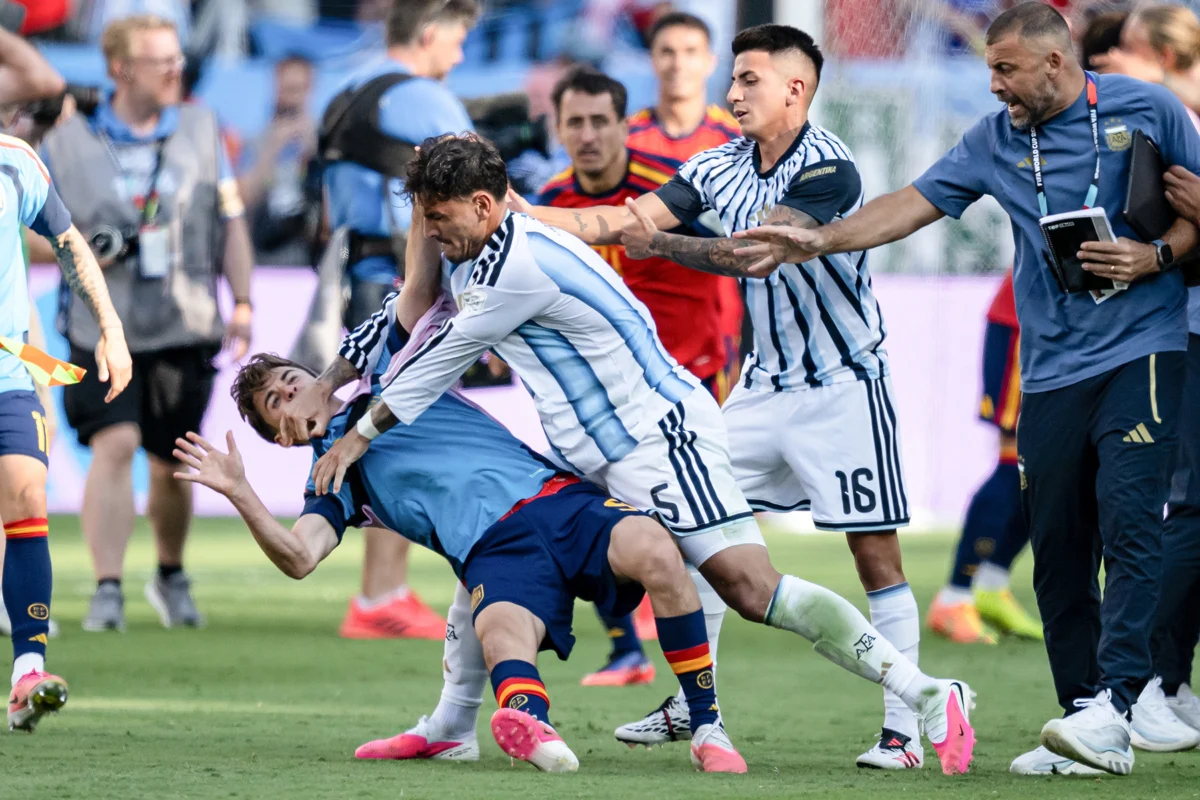
HangupsMusic.com – In a dramatic conclusion to what had been a fiercely contested FIFA World Cup final, jubilant celebrations for Spain were momentarily overshadowed by an ugly post-match altercation involving Argentina’s Leandro Paredes. The colossal arena, which had just witnessed Spain secure a narrow 1-0 extra-time victory over Argentina, transformed from a scene of sporting glory into one of heated confrontation as the final whistle reverberated through the stands on Sunday. The incident, captured by numerous cameras and witnessed by millions globally, quickly became a dominant talking point, diverting attention from Spain’s hard-fought triumph.
The culmination of weeks of intense competition, the World Cup final had been a spectacle of strategic prowess, raw athleticism, and unwavering national pride. Both nations had navigated a demanding tournament, overcoming formidable opponents to reach football’s grandest stage. The tension was palpable from the opening whistle, with neither side willing to concede an inch. The match itself was a tactical masterclass, a testament to the high stakes involved. Goalless through 90 minutes of regulation play, the game extended into extra time, amplifying the already immense pressure on the players. It was in this extended period that Spain managed to break the deadlock, netting the decisive goal that would ultimately crown them world champions. The final score of 1-0, a slender margin, underscored the fine line between victory and defeat and the immense effort expended by both squads.
However, the euphoria of Spain’s historic win was quickly tainted by the eruption of a physical skirmish immediately following the referee’s final signal. As the Spanish players embraced in victory and the Argentinian squad grappled with the crushing disappointment of defeat, a flashpoint ignited on the pitch. Argentinian midfielder Leandro Paredes, visibly overcome with emotion and frustration, was observed initiating a direct confrontation with Spanish players. Eyewitness accounts and broadcast replays clearly depicted Paredes shoving Spanish defender Eric García. The interaction rapidly escalated as Paredes then gripped García by the throat, a clear act of aggression that sent shockwaves through the stadium and among viewers.
The incident did not conclude there. Paredes, seemingly unbridled, swiftly turned his attention to Spain’s captain, Rodrigo Hernández Cascante, widely known as Rodri. What began as an isolated shove quickly morphed into a more widespread physical engagement. Another Argentinian player, defender Nahuel Molina, was seen joining the fray, throwing jabs and contributing to the burgeoning chaos. The pitch, typically a stage for athletic grace and sportsmanship, momentarily descended into a chaotic scene of pushing, shoving, and aggressive posturing.
The swift intervention of various personnel was crucial in preventing the situation from spiraling further out of control. Argentina’s manager, Lionel Scaloni, known for his composed demeanor, was among the first to react. Rushing onto the field, Scaloni was seen actively attempting to separate his players from the Spanish squad, physically interposing himself between the warring factions. His efforts, though commendable, highlighted the profound emotional toll and pressure that had culminated in such an unsportsmanlike display. The manager’s immediate response underscored the severity of the situation and the urgent need to restore order amidst the post-match pandemonium.
The incident drew immediate and sharp condemnation from pundits and commentators alike. Among the most vocal was BBC soccer analyst Alan Shearer, a respected figure in the football world. Shearer, providing his analysis shortly after the event, unequivocally pointed the finger at Paredes for instigating the confrontation. He vividly described Paredes’ actions, stating that the Argentinian midfielder "went for them" and recounted seeing him throw "two or three haymakers into someone’s face." Such strong language from a seasoned analyst underscored the gravity of Paredes’ conduct and the unacceptable nature of the violence. The consensus among many observers was that Paredes’ actions were a clear violation of sportsmanship, particularly on such a prestigious platform.
In the immediate aftermath, the referee wasted no time in addressing Paredes’ role in the altercation. A red card was issued to the Argentinian midfielder, an indisputable disciplinary measure for his aggressive conduct. This red card carries an automatic suspension, meaning Paredes will be ineligible to participate in the next match he is scheduled to play. However, the incident’s high profile and the severity of the actions have led to widespread calls for more stringent penalties. Football’s governing bodies, including FIFA, are now under pressure to review the footage and consider additional disciplinary action beyond the standard automatic suspension. The precedent set by such incidents, especially in a World Cup final, demands a thorough investigation and potentially a lengthier ban to uphold the integrity of the sport.
The potential ramifications for Paredes extend beyond a mere match suspension. Such a high-profile act of aggression at the pinnacle of international football could significantly impact his reputation and career trajectory. Football, while a passionate sport, prides itself on fair play and respect. Violations of these core tenets, particularly when broadcast globally, often lead to public scrutiny and internal club disciplinary measures. The incident also casts a shadow on the Argentinian team, forcing them to address questions of discipline and sportsmanship at a moment when their focus should be on reflecting on their valiant effort in the final.
Historically, post-match altercations, while not unheard of in the heated world of professional football, are particularly rare and shocking at the World Cup final level. The immense emotional investment and the stakes involved can sometimes push individuals to their limits, but the expectation remains that professional athletes maintain composure, regardless of the outcome. Previous incidents of note, though perhaps not reaching the intensity of a World Cup final brawl, serve as reminders of the fine line between competitive passion and outright aggression. FIFA’s disciplinary committee has a history of taking firm action in such cases, aiming to send a clear message that unsportsmanlike conduct, especially violence, will not be tolerated. The decision they make regarding any additional sanctions for Paredes will be closely watched, as it will inevitably set a benchmark for future incidents.
The incident serves as a stark reminder of the intense emotional landscape of elite sports. The World Cup final represents the zenith of a player’s career aspirations, and the devastation of coming so close only to fall short can be overwhelming. Yet, the expectation for professional athletes, particularly those representing their nations on the global stage, is to manage these emotions within the bounds of sporting conduct. While the thrill of victory and the agony of defeat are inherent to competition, the integrity of the game demands that passion never devolves into violence. Spain’s victory, a monumental achievement for the nation, will forever be etched in the annals of football history, but for a moment, the regrettable actions on the pitch threatened to overshadow the true spirit of the beautiful game. The football world now awaits FIFA’s judgment, hoping that the focus can soon return to the athletic brilliance that typically defines the sport’s greatest showcase.
