
 By admin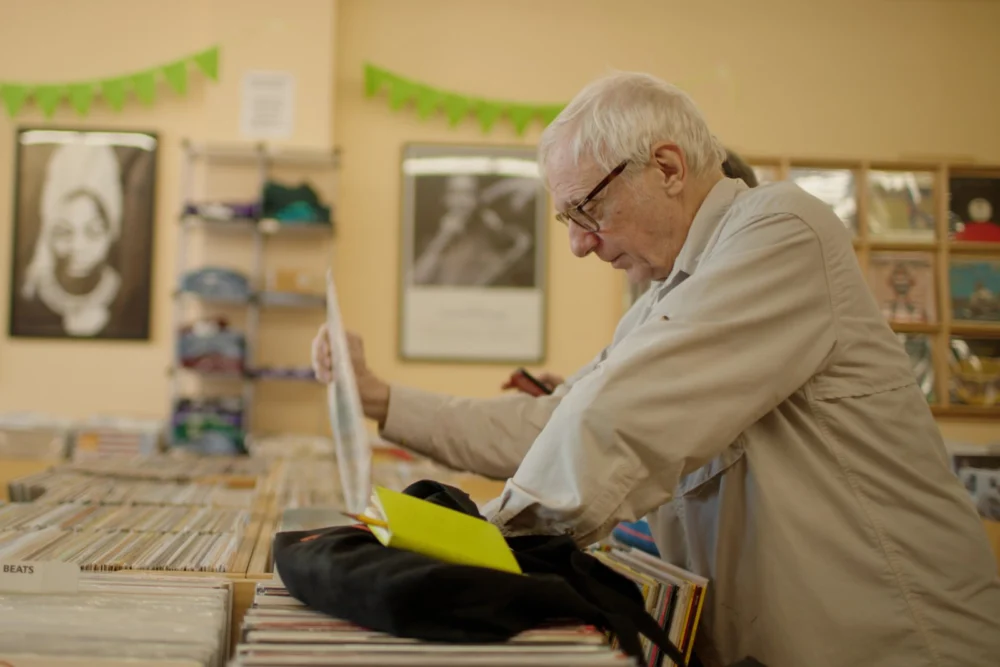
HangupsMusic.com – The recent premiere of Matty Wishnow’s documentary, The Last Critic, at SXSW has ignited fresh conversations about the indelible legacy of Robert Christgau, the self-proclaimed "dean of rock criticism." More than just a biographical tribute to an 83-year-old luminary who continues to dispense his famously terse and incisive musical judgments via Substack, the film serves as a potent reminder of the fundamental role criticism plays in understanding, appreciating, and even challenging art – a role arguably more crucial today than ever before.
For generations of music enthusiasts, Christgau’s distinctive "Consumer Guide" reviews were a cultural touchstone. These meticulously crafted, often acerbic, yet always thought-provoking capsules, which first graced the pages of the Village Voice in 1969, were instantly recognizable by their signature letter grades. From the earliest days of rock to the sprawling genres of contemporary music, Christgau’s voice has been an unwavering beacon, guiding, provoking, and illuminating. His ability to distill complex musical narratives into a few potent sentences, often laced with laconic wit or pointed critique, cemented his status as an unparalleled interpreter of sound and cultural resonance.
The documentary skillfully highlights the profound impact Christgau’s work has had on a diverse array of artists and intellectuals. Boots Riley, the acclaimed filmmaker and musician from The Coup, recalls a review of his 2012 album, Sorry to Bother You, noting how Christgau’s prose uniquely conveyed the act of deep listening. Pulitzer Prize-winning novelist Colson Whitehead finds satisfaction in Christgau’s sharp dismissal of the Eagles’ Desperado, a review that famously skewered its "barstool-macho equation of gunslinger and guitarschlonger." Yasi Salek, host of the insightful podcast Bandsplain, points to his analysis of Hole’s seminal Live Through This, particularly the observation that Courtney Love was "also [being] exploited by Courtney Love, and not only does she know it, she thinks about it," as a masterclass in psychological insight. Critic Jessica Hopper frequently revisits Christgau’s concise yet comprehensive capture of Joni Mitchell’s Blue. Perhaps most famously, his appraisal of Prince’s Dirty Mind concluded with the unforgettable line, "Mick Jagger should fold up his penis and go home," a pronouncement that instantly became part of rock criticism lore.
The author of this piece, too, found a personal connection resurfacing through the film. After years immersed in Christgau’s collected works, a forgotten gem from his vast catalog was brought back into focus: his take on Van Morrison’s relatively obscure 1986 album, No Guru, No Method, No Teacher. The review, delivered in its entirety as "No soap radio, no particular place to go, no man is an island. No spring chicken, No-Doz, no can do," earned a B-. Yet, as is often the case with Christgau’s evaluations, the grade itself felt almost secondary. The sheer comedic timing, the clever reappropriation of clichés, the biting sarcasm, and the almost beat-poet rhythm of the words spoke volumes, embodying the distinct voice that transcended mere numerical assessment.

Matty Wishnow’s The Last Critic does not attempt to redefine the parameters of documentary filmmaking, nor does it need to. Its strength lies in its directness and its overdue recognition of Christgau’s singular career. While the title might initially prompt a knowing chuckle from those familiar with the hyperbole often associated with such tributes, it avoids falling into the trap of self-important nostalgia. The film meticulously charts Christgau’s biographical milestones, exploring his personal life, his marriage to fellow writer Carola Dibbell, and his family dynamics – topics he has always approached with candor, as evidenced in his memoir. It gathers testimonials from the legion of writers he mentored during his decades at the Voice, showcasing their profound gratitude. Crucially, it also gives airtime to his detractors – a sizable contingent, including figures like Lou Reed and Thurston Moore – who articulate their grievances against the critic who wasn’t afraid to challenge sacred cows.
Beyond the biographical tapestry, the documentary elevates itself as a profound meditation on the very craft of criticism. An archival clip of Christgau himself outlines what he considers the two essential tenets of effective criticism. First, he asserts, "you have to know what you like." This seemingly simple dictum, Christgau clarifies, demands immense effort: concentrated listening, deep engagement, and a passionate, renewable curiosity. It requires a harmonious interplay of intellect and emotion, a synchronized activation of all senses. While not strictly necessary, Christgau’s personal "rock-crit sanctuary"—a labyrinthine space overflowing with towering stacks of books, endless rows of albums, and shelves crammed with various media formats—underscores his belief in the value of a rich, tangible resource environment for cultivating thought. The film offers viewers an immersive glimpse into this intellectual haven, a sight that simultaneously inspires envy and, for some, perhaps a touch of bibliophilic anxiety.
The second essential, articulated with Christgau’s characteristic precision, is that "you have to be able to honestly explain why you like it, even if the reason is completely disgraceful." This principle underscores the paramount importance of articulate honesty and rigorous self-reflection. Christgau understood that, as a prominent voice at a revered journalistic institution like the Village Voice, his subjective opinions often took on the weight of an organizational stance. As Thurston Moore points highlights in the film, the Voice was widely regarded as the ultimate arbiter of downtown taste, making a negative review from its pages a potential nightmare for any aspiring artist. Yet, Christgau’s genius lay in his unwavering commitment to articulating his feelings, his expertise, and his intellectual and emotional rigor with unparalleled clarity.
For many, Christgau, along with his equally eloquent contemporaries, provided a foundational framework for how to write about music, how to truly listen, how to engage in meaningful dialogue about sound, and how to think critically about the arts. His personal tastes might not align with everyone’s, but his methodological approach empowered countless individuals to develop and articulate their own aesthetic sensibilities beyond mere knee-jerk reactions or unexamined fandom. In an era saturated with information and fragmented opinions, the ability to engage in such thoughtful, critical analysis remains profoundly valuable.
The creators of The Last Critic likely chose its provocative title to honor both Christgau’s singular standing and to lament the perceived decline in support for rigorous criticism, often overshadowed by burgeoning fan communities and algorithmic curation. While it is true that finding truly discerning voices amidst the digital din requires greater effort today than in the perceived "Golden Age" of gatekeepers, dedicated critics persist. Many have learned directly under Christgau’s tutelage, others have absorbed his lessons through his prolific writing, and still more have drawn inspiration from equally gifted critics across various artistic disciplines. Christgau is not, in the literal sense, "the last critic." He may be the last titan of his generation, a towering figure whose influence continues to shape the discourse. The Last Critic, however, provides an exemplary blueprint for the practice of profound artistic judgment, offering an undeniably inspirational testament to the enduring power and necessity of critical thought. That, at least, is one person’s opinion. A-.
