
 By Azzam Bilal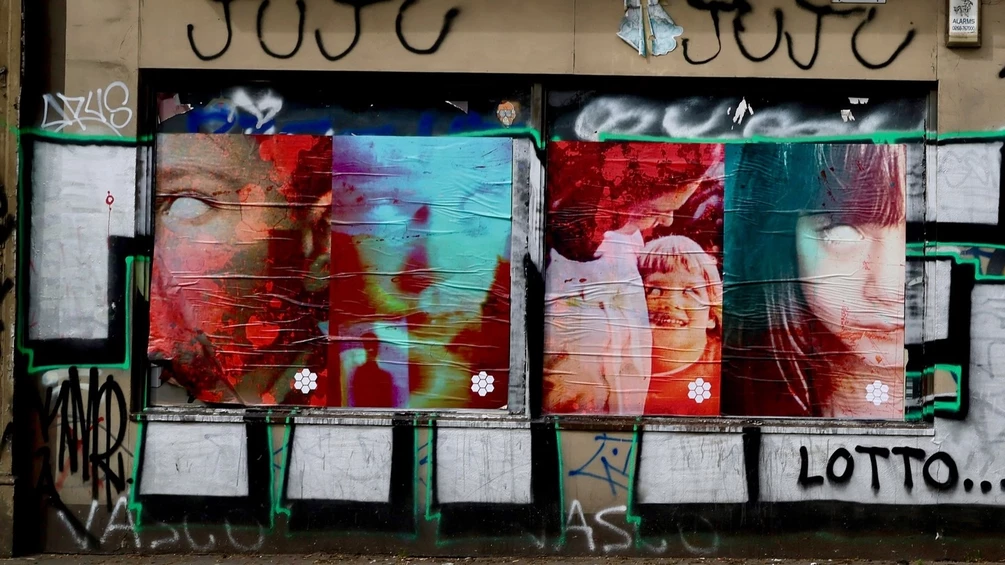
HangupsMusic.com – London, the streets of the world’s most bustling metropolises have recently become the canvas for a hauntingly familiar aesthetic, signaling the potential end of a thirteen-year silence from one of electronic music’s most reclusive and revered acts. For over a decade, the Scottish duo known as Boards of Canada has existed primarily in the echoes of their past discography and the fervent speculation of a dedicated global fanbase. However, the atmosphere of mystery that surrounds Mike Sandison and Marcus Eoin has shifted from passive absence to active engagement. A meticulously coordinated, multi-city guerrilla marketing campaign has emerged, utilizing the grain and grit of analog nostalgia to suggest that the "Hexagon Sun" is rising once again.
The first tangible signs of a return appeared not on digital streaming platforms or through traditional press releases, but on the weathered brick walls and construction hoardings of cities like London, Los Angeles, and New York. Starting around April 10th, mysterious posters began to appear, immediately catching the eyes of those familiar with the duo’s cryptic visual language. These artworks are quintessential Boards of Canada: hazy, colorful, and deeply unsettling. They feature manipulated images of children’s faces, a recurring motif in the band’s work that taps into a specific brand of "hauntology"—the artistic mourning for a lost future or a distorted past. In these new iterations, the children are depicted with whited-out eyes, rendered in a grainy, lo-fi texture that looks like a frame-grab from a decaying 1970s educational film.
The confirmation of the duo’s involvement came shortly thereafter from their long-time label home, Warp Records. The legendary independent label used its official Instagram account to publish a gallery of these posters, effectively validating the theories circulating within fan communities. Each poster prominently features the Hexagon Sun symbol tucked into a corner. This emblem is more than just a logo; it is the signifier for the Scottish art collective and studio space helmed by the Sandison brothers. Its appearance serves as a seal of authenticity, linking these new visuals to the same creative wellspring that produced genre-defining albums like Music Has the Right to Children and Geogaddi.
The geography of the campaign highlights the global reach of the band’s influence. In London, the four-panel designs were first documented in the creative hub of Soho, before spreading to Hackney and Brixton. Across the Atlantic, sightings were reported in the Lower East Side of Manhattan and throughout various neighborhoods in Los Angeles. This physical presence in the real world mirrors the band’s historical preference for tangible media and "found" artifacts over the ephemeral nature of the modern internet.
While the posters are the most visible element of the current campaign, they were preceded by an even more cryptic occurrence. On April 6th, a select number of fans reported receiving unsolicited packages in the mail. Inside were unmarked VHS tapes, a medium that has become synonymous with the Boards of Canada brand of analog decay. These tapes were traced back to return addresses associated with Warp Records’ distribution networks, further cementing the legitimacy of the delivery.
The content of the VHS tapes is a fever dream of sensory triggers. According to those who have digitized the footage, the videos consist of grainy, distorted visuals paired with shortwave radio transmissions and fragmented vocal samples. Crucially, eagle-eyed listeners on the "BOC Pages" wiki and the Boards of Canada subreddit noted that segments of the audio appear to match the Societas x Tape, a two-hour mix the duo produced for NTS Radio’s "WxAxRxP" 30th-anniversary celebrations in 2019. At the time, that broadcast was seen as a rare transmission from a dormant source; in retrospect, it may have been the first movement in a very long-form composition leading toward a new era.
The timing of this campaign is significant, as it marks thirteen years since the release of their last full-length studio album, 2013’s Tomorrow’s Harvest. That record was itself the result of an eight-year hiatus following 2005’s The Campfire Headphase. The rollout for Tomorrow’s Harvest was a masterclass in the "Alternate Reality Game" (ARG) style of promotion, involving a limited-edition Record Store Day 12-inch that contained a series of numbers, which fans eventually used to unlock a password-protected website. The current campaign, while different in execution, shares that same DNA of rewarding the "detective fan"—the listener who is willing to look closer and listen longer to find the hidden meaning in the static.
The comparison to other Warp Records alumni is inevitable. In 2018, Aphex Twin (Richard D. James) utilized a similar tactic to announce his Collapse EP. Mysterious 3D versions of his iconic "A" logo began appearing in London Underground stations and on the sides of buildings in Tokyo and New York. This method of "stealth marketing" creates a sense of community and excitement that a standard social media announcement cannot replicate. It transforms the act of being a fan into a collaborative hunt for information.
To understand why this campaign is generating such a profound reaction, one must understand the unique space Boards of Canada occupies in the musical landscape. Often categorized under the broad umbrella of IDM (Intelligent Dance Music), their sound is actually something far more organic and psychological. They are the architects of a specific kind of nostalgia—one that feels like a half-remembered childhood spent watching nature documentaries on a flickering cathode-ray tube television. By utilizing vintage synthesizers, heavy tape saturation, and field recordings of children playing or wind howling through the Scottish Highlands, they evoke a sense of "pastoral electronica."
The "Hexagon Sun" collective, which includes the brothers and a tight-knit circle of artists, operates out of a studio located in the hills near Edinburgh. This isolation has allowed them to cultivate a mythos that is rarely interrupted by the outside world. They do not tour, they rarely grant interviews, and their social media presence is almost non-existent outside of these curated promotional windows. This scarcity of information makes every new piece of the puzzle—whether it is a poster in Manhattan or a grainy VHS tape—feel like a transmission from another dimension.
As fans continue to compile a master list of sightings on Reddit and the BOC Pages wiki, the question remains: what is the ultimate goal? The consensus among the community is that a new album or significant EP is imminent. The "2026 Promo Campaign" label used by some fans suggests a long-term rollout, but given the frequency of the recent sightings, a release later this year seems more likely. The archival nature of the VHS footage and the 2019 NTS links suggest that the duo may be bridging the gap between their unreleased "old tunes" and a new sonic direction.
In an age where the music industry is dominated by the need for constant "content" and algorithmic visibility, Boards of Canada’s approach is a radical act of patience. They understand that mystery is a form of currency. By forcing their audience to engage with physical locations and obsolete media formats, they are reclaiming the sense of wonder that once accompanied the discovery of new music.
For now, the world watches the walls of Soho and the Lower East Side, waiting for the next symbol to appear. Whether this leads to a sprawling double album or another brief, brilliant transmission, the return of Boards of Canada serves as a reminder that some of the most powerful voices in electronic music are the ones that know exactly when to stay silent—and exactly how to break that silence when the time is right. The Hexagon Sun is visible once more, and for those who have spent thirteen years in the shade, the warmth of this new dawn is more than welcome.
