
 By admin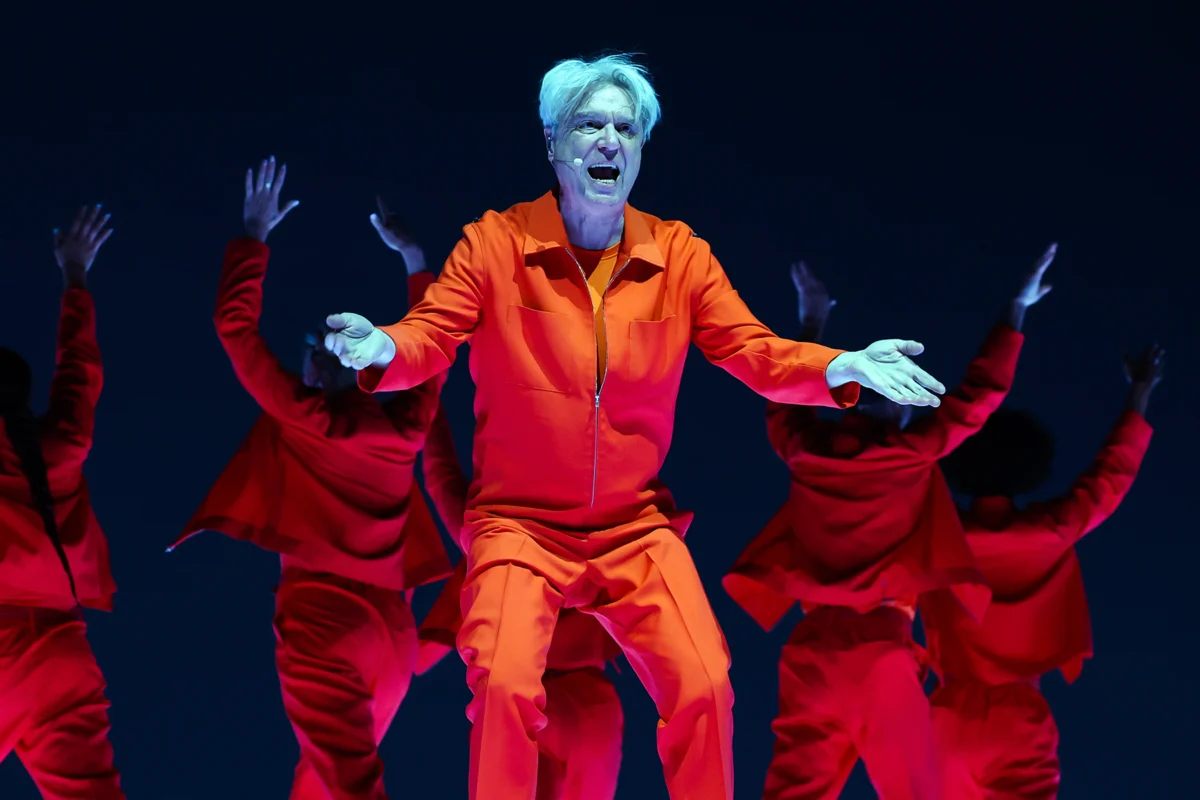
HangupsMusic.com – Indio, California, David Byrne, the visionary architect of avant-pop and perennial explorer of the human condition, delivered a profound and exhilarating performance at the Coachella Valley Music and Arts Festival on Saturday. Amidst the vast, arid expanse of the Colorado Desert, Byrne orchestrated a masterclass in theatricality and sonic artistry, transforming the Outdoor Theatre stage into a crucible where introspection met communal ecstasy. His set was not merely a concert but a meticulously crafted odyssey, navigating the intricate tapestry of contemporary anxieties while simultaneously illuminating pathways to collective joy and unwavering human connection. It served as a powerful reminder that even in an era often characterized by pervasive uncertainty and disquiet, art possesses an unparalleled capacity to both acknowledge hardship and ignite an enduring flame of optimism, fostering a shared sense of purpose and resilience among thousands.
The unique power of music lies in its transcendent ability to offer solace and inspiration, particularly when the world outside feels overwhelmingly complex and challenging. Byrne, an artist renowned for his intellectual curiosity and deep engagement with societal nuances, has consistently embraced this very principle throughout his illustrious career. His body of work, spanning decades, frequently delves into the existential questions of life, the intricacies of human emotion, and the sometimes-conflicting realities of modern existence. At Coachella, alongside his ensemble of exceptionally fluid musicians and dancers, Byrne chose not to sidestep these challenging truths. Instead, he plunged headlong into them, using the shared vulnerability and inherent imperfections of humanity as a fertile ground from which to cultivate a profound sense of hope and solidarity. His performance became an act of collective affirmation, a celebration of our shared journey through highs and lows, all underscored by an unshakable belief in our common humanity.
Despite a slight delay in its commencement, the moment Byrne and his collaborators took the stage, they whisked the audience away from the sun-drenched desert landscape, transporting them into an intricately constructed, immersive theatrical realm. This wasn’t a conventional rock show; it was an intricately woven narrative where kinetic movement, evocative soundscapes, and profound lyrical meditations converged. The stage itself was a minimalist canvas, often bathed in stark, dynamic lighting that sculpted the performers into living tableaux. For those who had witnessed Byrne’s previous appearance at Coachella in 2018 or experienced his globally acclaimed "American Utopia" tour, the expectation of a perfectly choreographed and deeply conceptual experience was high, and this latest iteration exceeded even those lofty benchmarks.
The spectacle began with Byrne emerging solo, a solitary figure clad in a striking, utilitarian orange jumpsuit. This choice of attire, simultaneously humble and iconic, immediately set a tone—a blend of the ordinary and the extraordinary, a uniform that could signify labor, incarceration, or simply a blank slate. As the opening notes of "Everybody Laughs" from his latest album, Who Is the Sky?, filled the air, his bandmates gradually materialized from the wings, seamlessly integrating themselves into the unfolding scene. Their appearance was less an entrance and more an organic unfolding, contributing to the sense of a world being built piece by piece before the audience’s eyes. Each musician and dancer, similarly attired, became an extension of Byrne’s vision, moving with a synchronized grace that blurred the lines between performer and instrument.
The setlist masterfully blended new material with beloved classics, showcasing Byrne’s enduring creative vitality. From Who Is the Sky?, the audience was treated to the introspective "When We Are Singing" and the thought-provoking "What Is the Reason for It?". These newer tracks, characterized by their intricate rhythms and philosophical lyricism, demonstrated Byrne’s continued exploration of human connection and existential inquiry, grounding the performance in contemporary relevance. The inclusion of "Strange Overtones," his vibrant collaboration with Brian Eno, further enriched the sonic palette, offering a moment of infectious, polyrhythmic joy that bridged his experimental past with his present explorations. Yet, it was the generous infusion of Talking Heads classics that truly ignited the fervent crowd. Anthems like "And She Was," "This Must Be the Place (Naive Melody)," and the enduringly unsettling "Psycho Killer" were delivered with renewed vigor, prompting a massive singalong that reverberated across the Outdoor Theatre, a testament to the timeless appeal and emotional resonance of these iconic tracks. The performance of "Psycho Killer," in particular, was a masterclass in controlled chaos, with Byrne’s signature jerky movements and the band’s tight, propulsive rhythm creating a sense of manic energy that was both captivating and slightly disquieting.
A poignant moment arrived before "What Is the Reason for It?", a song that delves into the profound mysteries and motivations behind love. Byrne paused to share an anecdote, recounting a conversation with actor-director John Cameron Mitchell. Mitchell had imparted a seemingly simple yet profoundly radical idea: "Love and kindness are the most punk thing we can do right now." Byrne confessed that the profundity of this statement hadn’t immediately registered with him, but in the intervening time, its truth had crystallized. He then delivered the line, "Love and kindness are a form of resistance," not as a mere platitude, but as a deeply considered philosophical stance. This declaration resonated deeply, contextualizing the entire performance as an act of defiance against apathy, a call to arms for empathy in an often-cynical world. It positioned the joy and connection fostered by the music as a deliberate, powerful counter-narrative to prevailing discord.
The political undercurrents of Byrne’s message became even more explicit during the electrifying performance of "Life During Wartime." As the band launched into the iconic track, the massive screens flanking the stage flickered to life, projecting raw, unvarnished footage depicting acts of resistance against Immigration and Customs Enforcement (ICE). These powerful, often visceral images of protest and human struggle served as a stark, visual counterpoint to the song’s lyrics, which describe mundane acts performed under the shadow of conflict. The juxtaposition was impactful, eliciting a fervent roar of approval from the diverse Coachella audience. It transformed the classic song from a commentary on generalized anxiety into a direct, urgent statement on contemporary social justice issues, demonstrating Byrne’s unwavering commitment to using his platform for meaningful commentary and solidarity.
The set culminated in an absolutely breathtaking finale, a one-two punch that cemented its status as one of the weekend’s most unforgettable experiences. "Once in a Lifetime," with its meditative lyrics on routine and existential questioning, built to a powerful crescendo, its famous refrain inviting collective introspection and release. The entire ensemble, musicians and dancers alike, moved with an almost trance-like intensity, embodying the song’s themes of gradual awakening and sudden realization. Then, without missing a beat, the stage erupted into the explosive energy of "Burning Down the House." The iconic opening riff was met with an immediate, thunderous response from the crowd, who transformed into a unified, pulsing entity. Lights flashed, bodies swayed, and voices soared in unison, creating an atmosphere of unbridled, cathartic joy. It was a fiery, exhilarating conclusion that perfectly encapsulated the show’s core message: even amidst the complexities and challenges of existence, there remains an undeniable, powerful impulse for connection, celebration, and an enduring belief in the transformative power of shared human experience. Byrne’s desert sermon was a testament to art’s capacity to illuminate, challenge, and ultimately, uplift.
