
 By admin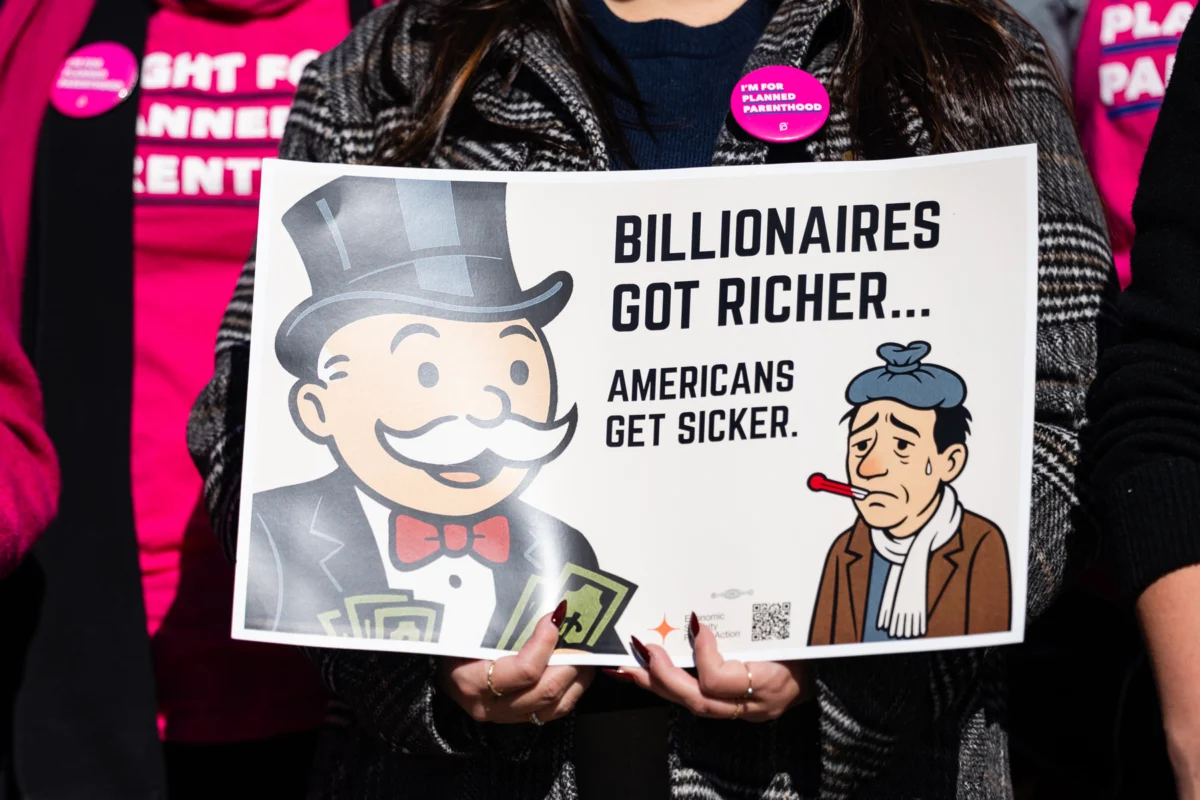
HangupsMusic.com – A groundswell of public sentiment across the United States is challenging conventional political wisdom regarding economic policy and taxation. A year-long journey spanning the breadth of the nation, from the sun-drenched valleys of Arizona to the rugged expanses of Alaska, and from the agricultural heartland of Iowa to the vibrant communities of Georgia, has revealed a consistent and compelling message from everyday Americans. Through more than 55 town hall meetings, the resounding demand was not for individual tax cuts, but for a fundamental rebalancing of the economic scales. Citizens expressed deep frustration with escalating costs of living and a palpable sense that the affluent and large corporations are not contributing their equitable share, thereby shifting the burden onto working families. This widespread call for fiscal fairness suggests a public far ahead of its political representatives in understanding the true nature of the nation’s economic challenges.
Yet, this urgent message appears to be navigating a complex path through the corridors of power in Washington. Recent legislative proposals from Democratic Sens. Chris Van Hollen of Maryland and Cory Booker of New Jersey, while ostensibly well-intentioned, advocate for tax reductions aimed at low- and middle-income Americans. However, these initiatives risk being characterized as a reactive approach, reminiscent of past economic battles rather than addressing the contemporary realities faced by millions. The core issue, as articulated by citizens across the country, is not merely the annual tax bill that arrives in April, but the relentless, daily struggle against an escalating affordability crisis. This crisis manifests not as a matter of personal income tax rates, but as a systemic failure to provide accessible and affordable essential services.
The heart of the matter lies in the everyday financial pressures that erode the stability of households nationwide. Childcare, for instance, has become an insurmountable financial hurdle for many, often exceeding the cost of monthly rent or being entirely unavailable in numerous communities. Healthcare, a fundamental necessity, remains a luxury for a significant portion of the population, with prohibitive costs rendering vital medical services out of reach. Higher education, once a pathway to upward mobility, now burdens young people with crippling debt, effectively pricing out working-class families from pursuing crucial skills and knowledge. These are not isolated incidents but symptoms of a deeply entrenched, "rigged system" that has systematically stifled supply and accessibility in critical sectors. The profound disconnect here is that individual tax cuts, however welcome they might be, simply cannot resolve these foundational supply-side issues. They do not build new childcare centers, fund more medical clinics, or reduce university tuition fees.
What Americans are vociferously communicating, whether at their doorsteps, in bustling diners, or during candid town hall discussions, is a profound sense of injustice. They perceive that their hard-earned tax dollars yield diminishing returns in terms of public services and infrastructure, while those who have disproportionately benefited from the existing economic framework appear to evade their fiscal responsibilities, sometimes paying little to nothing at all. This sentiment is not merely a call for less taxation, but a demand for a complete overhaul of who bears the tax burden and how that revenue is strategically deployed to serve the common good. To offer modest tax cuts as a remedy for such deep-seated structural issues is akin to applying a small bandage to a gaping wound, failing to address the underlying systemic damage.
Crucially, this perspective transcends partisan divides, revealing a remarkable consensus among the electorate. A national survey conducted in February 2026 on behalf of Families Over Billionaires unveiled compelling data: more than four out of five likely voters express strong support for increasing taxes on corporations, while over seven out of ten advocate for higher contributions from the wealthiest individuals. This is far from a niche liberal viewpoint; it represents a broad societal agreement. Two-thirds of independent voters endorse higher taxation for the rich, and even within the Republican base, a significant portion aligns with this view. A robust 51 percent of President Donald Trump’s voters support raising taxes on wealthy individuals, and an even higher 67 percent favor increased corporate taxes. This pervasive support persists even after voters are exposed to common arguments against raising taxes on the wealthy, underscoring the deep-seated nature of this belief.
Moreover, this stance is not just popular; it is a potent political advantage. The same polling data indicates that a substantial 60 percent of voters would be more likely to cast their ballot for a candidate who champions higher taxes on billionaires. This inclination is particularly pronounced among Republican voters, who express increased support for such candidates by nearly a two-to-one margin. The reasoning behind this widespread sentiment is straightforward: Americans are increasingly weary of an economic system that appears to operate with a distinct set of rules for the "haves" and the "have-nots." The stark chasm of economic inequality has grown so vast that many diligent, hardworking families feel perpetually trapped, unable to keep pace with rising costs, let alone achieve financial advancement. Unsurprisingly, the survey also revealed a predominantly negative perception of "billionaires," with 59 percent of respondents holding unfavorable views, and the abstract concept of "the billionaire class" faring even worse, with 66 percent expressing unfavorable opinions.
This firsthand observation of public sentiment has been corroborated by extensive grassroots outreach. Canvassers, representing Families Over Billionaires, engaged with over 146,000 households across eight diverse congressional districts. Their efforts were deliberately designed to reach beyond the traditional Democratic base, targeting independents and soft conservatives. Across this broad spectrum, the message advocating for the wealthy to contribute their fair share resonated with remarkable potency. In fact, conservative-leaning voters often demonstrated the strongest engagement, comprising approximately 15 percent of the target audience but nearly 20 percent of those who committed to taking action. The refrain, "The system is rigged," was not perceived as a partisan talking point, but as an accurate reflection of their daily economic realities.
Consider the compelling case of Kenneth, a 72-year-old resident of Bakersfield, California. A lifelong Republican voter, Kenneth’s experiences illustrate the personal impact of these policy debates. Having bravely overcome cancer twice and now living with his third pacemaker, he unequivocally credits Medicaid with saving his life. His direct experience with the healthcare system has endowed him with little patience for policies like the so-called "Big Beautiful Bill," which he viewed as detrimental to the very services that secured his well-being. "Millionaires need to pay their fair share," Kenneth asserted, articulating a conviction that transcended political allegiance. For him, the issue was not abstract political ideology but the tangible imperative of ensuring that vital healthcare funding remained robust for himself and his community.
The "Big Beautiful Bill," which controversially delivered significant tax breaks to the wealthiest Americans while simultaneously enacting cuts to critical programs like Medicaid and food assistance designed to aid everyday citizens, garnered a substantial 64 percent disapproval rating across party lines when it was passed by congressional Republicans. Yet, despite this clear public rejection, some Democratic strategists appear to inadvertently adopt the premise put forth by the right: that the tax burden itself is the primary problem. This misdiagnosis overlooks the fundamental truth that the issue is not the existence of taxation, but its equitable distribution and purposeful utilization.
The proposals put forth by Senators Van Hollen and Booker, while well-intentioned, fundamentally miss the mark. The true problem is that the essential services and societal safeguards that taxes are intended to provide – reliable healthcare, accessible childcare, quality education, and secure retirement – are progressively slipping out of reach for the majority of Americans. Private markets are demonstrably failing to deliver these services at affordable prices, and in some instances, failing to deliver them at all. The appropriate response to the cry, "I can’t afford healthcare," is not a tax cut, but the provision of comprehensive, affordable healthcare. Similarly, the answer to "childcare costs more than my mortgage" is the establishment of widely accessible and affordable childcare options. A modest tax cut, however welcome, does not magically conjure a new pediatric clinic or open a single new childcare slot. When essential public services vanish, no individual tax rebate, however generous, can adequately replace them.
Therefore, the imperative to more aggressively tax wealthy individuals and corporations should not be viewed merely as a means to balance budgets, but as the foundational starting point for constructing robust systems that genuinely serve the interests of all citizens. If the ambition is to foster a comprehensive suite of middle-class benefits and opportunities, then an honest and transparent dialogue about revenue generation is indispensable. Restoring the vital programs that were severely curtailed by the "Big Beautiful Bill" will necessitate a renewed commitment to requiring the wealthiest to contribute their fair share. Furthermore, new tax initiatives should be explicitly and transparently linked to the specific programs they are designed to fund, allowing citizens to clearly understand the direct benefits they receive in return for their contributions.
The current political landscape reveals a striking dynamic: the public has already arrived at a consensus that the rich should pay more. The critical question now facing Democratic leadership is whether they will align their policies with this clear public mandate or continue to propose incremental, half-measures that inadvertently concede the core argument to the very forces that dismantled the system in the first place. Democrats are presented with a unique opportunity to refresh their policy playbook and expand their vision for what government can achieve. It is not only feasible but profoundly beneficial to implement taxation strategies targeting the wealthy and corporations that empower the government to deliver tangible services, meaningfully improve the lives of ordinary citizens, and ultimately strengthen the fabric of the nation. The crucial revenue required to transform meaningful policy into tangible reality need not be sacrificed; it simply needs to be collected equitably.
Kristen Crowell is the executive director of Families Over Billionaires.
