
 By Azzam Bilal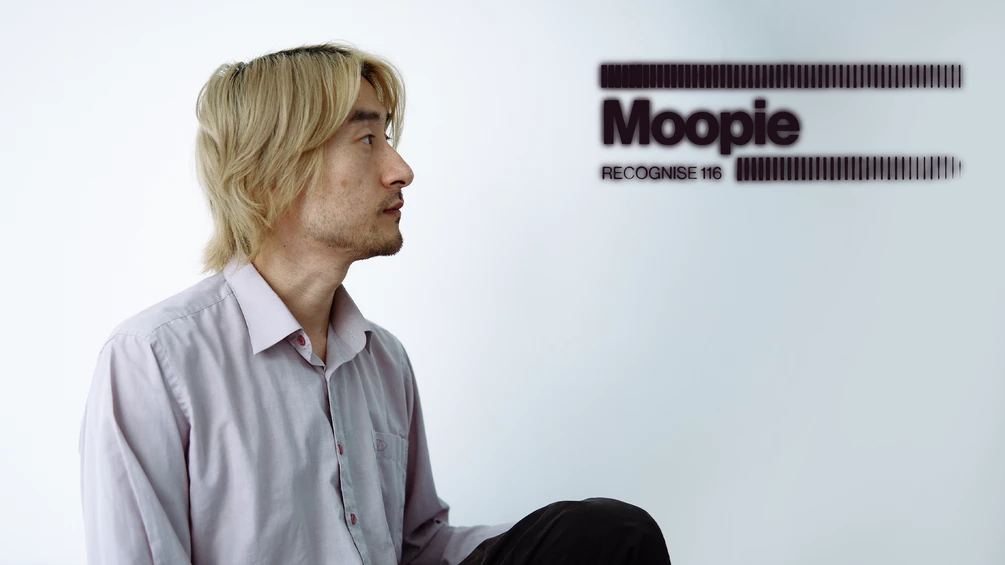
HangupsMusic.com – Melbourne, In the quiet, sun-drenched corners of a Melbourne apartment, Matthew Xue operates at the intersection of two seemingly irreconcilable worlds. To the global clubbing community, he is Moopie, a DJ capable of navigating the high-octane demands of 10,000-capacity festival stages with a technical precision that spans techno, breaks, and house. To the devotees of the avant-garde, he is the visionary A&R mind behind A Colourful Storm, a label that serves as a sanctuary for everything from hushed spoken-word poetry and bleary-eyed classical compositions to archival IDM and international folk. While many artists feel pressured to choose a lane, Xue’s career is built on the refusal to do so, driven by a singular, unwavering principle: art must evoke a profound feeling, or it simply isn’t doing its job.
For Xue, the worst sin an artist can commit is indifference. He approaches music not as a collection of genres, but as a series of emotional landscapes. Whether he is hammering out functional four-to-the-floor tools in a dark club or curating a reissue of ethereal Enya remixes, the goal remains the same—to find the "heart laid bare." This philosophy has guided him through fifteen years of exploration, taking him from the rigid discipline of classical music training to the rebellious fringes of alternative rock, and finally into the boundless possibilities of electronic synthesis. It is a journey that mirrors his own migration from Beijing to Melbourne as a child, a move that set the stage for a life defined by the bridging of disparate cultures and sounds.
Xue’s academic background in architecture provides a fitting metaphor for his musical output. In architecture, one must balance the cold reality of rebar and concrete with the ephemeral dreams of those who will inhabit the space. Similarly, Xue’s work as a DJ and label boss balances the functional requirements of the dancefloor with a deep, almost romantic interest in history and storytelling. He views a DJ set or a label catalog as a world-building exercise—a chance to construct a utopia that exists only within the vibration of a speaker or the grooves of a vinyl record. This "architectural" approach allows him to see the beauty in formulaic club music, recognizing that for a dancer immersed in an eight-hour session, the repetition is not a limitation but a necessary structural component of the experience.
The evolution of Moopie is a testament to the power of curiosity over convention. Growing up in a household that prized discipline, Xue was funneled into piano and violin lessons—a "classic Chinese family means of discipline," as he describes it. However, the seeds of rebellion were sown early. He recalls smudging fingerprints on the piano keys to make it appear as though he had practiced, while his actual interests were drifting toward the jagged edges of alternative music. The turning point came in 2007, when Daft Punk’s legendary Alive tour landed in Melbourne. Witnessing the economy of their sound—the ability to create massive, immersive environments with synthesized minimalism—sparked a realization that electronic music was a medium where one could achieve maximum impact with minimal resources.
This spark was further fanned by the discovery of influential mixtapes, such as Erol Alkan’s "A Bugged Out Mix / A Bugged In Selection." For Xue, these weren’t just collections of songs; they were narratives that proved you could splice M83 with Nirvana and DJ Koze to write an entirely new story. This "mixtape as a skeleton key" philosophy remains central to his work today. It informed his early days playing opening sets for the late Silent Servant, where he watched in awe as the veteran producer blended industrial grit with the deep, cavernous echoes of dub techno. These experiences taught Xue that the dancefloor could handle cognitive dissonance if the emotional throughline remained intact.
The birth of A Colourful Storm in 2011 marked a formalization of this eclectic vision. Originally conceived as a blog and mix series with friends, the platform was designed to defy expectations. One week might feature the abrasive noise of William Bennett, while the next would offer a fifteen-minute ambient drone piece. This unpredictability became the label’s signature when it transitioned into a physical imprint in 2016. The label’s debut release—a reissue of Denial’s 1982 coldwave cover of "California Dreaming"—happened almost by accident, the result of a serendipitous meeting with an original label owner. It set a precedent for a catalog that refuses to be pinned down, spanning DIY folk compilations, vintage Japanese psychedelia, and trance-inflected house.
Xue’s refusal to let "good taste" become a conservative cage is perhaps his most radical stance. He argues that the obsession with maintaining a curated, "cool" identity can actually hinder an artist’s growth. Instead, he advocates for a form of creative naivety—a desire to experience music with the openness of a child. This mindset allows him to appreciate "bro-y tech-house" parties with the same sincerity he brings to a high-brow experimental festival. In his view, the crowd at a mainstream event doesn’t need to know about his label’s hushed folk releases, and vice versa. The two worlds don’t need to be forced together; they simply need to be allowed to exist as different rooms in the same house.
This duality is on full display in his recent contribution to the Recognise mix series. The recording is a masterclass in tension and release, weaving through heads-down techno, intricate breaks, and daydreamy electro. At one moment, the listener is submerged in a blissed-out IDM cut, only to be jolted awake by a gust of Drexciyan electro sizzle. It is a mix that values geometry and alchemy, showing how decades of drum science can still be used to conjure something that feels entirely contemporary. It also reflects his penchant for "trapdoor" DJing—the ability to find an 80s synth-pop track or an old EBM cut by Front 242 that can seamlessly slide into a modern techno set.
Despite his growing international profile—with recent and upcoming appearances at institutions like Berghain, Bassiani, and Dimensions Festival—Xue remains grounded in the low-stakes joy of experimentation. He speaks fondly of the moments when a set goes "wrong," such as when the lights come on early or the floor clears. To him, these are not failures but opportunities to play the weirdest, most unclassifiable music in his bag. It is in these moments of low pressure that the true heart of a DJ is revealed.
As he looks toward the future, Xue’s ambitions remain characteristically broad. He dreams of hosting bills that feature German electronic producers alongside indie-pop bands, continuing his quest to bridge the gaps between genres. Whether he is releasing a hardcore punk record or digging for archival folk, the mission remains the same: to avoid the "worst" fate of indifference. For Matthew Xue, every record played and every track released is an invitation to look into someone else’s heart. In the world of Moopie and A Colourful Storm, the map is always changing, but the compass is always pointed toward feeling. It is a reminder that in an era of algorithmic curation and rigid branding, there is still immense power in the unpredictable, the emotional, and the purely human.
