 By Azzam Bilal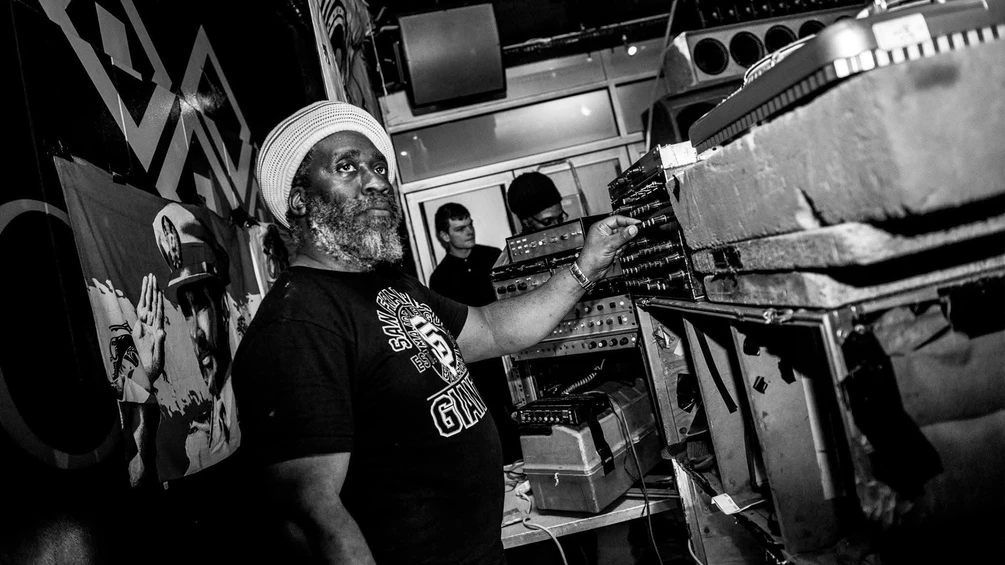
HangupsMusic.com – London,
The August Bank Holiday in West London is defined by a specific frequency—a low-end thrum that rattles windowpanes and resonates deep within the ribcage of anyone standing near the intersection of Leamington Road Villas and Westbourne Park Road. For over four decades, this specific corner has served as the unofficial headquarters for one of the most significant cultural exports in British history: Channel One Sound System. Led by brothers Mikey Dread and Jah T, the hand-built wooden stacks of Channel One have become more than just a source of music; they are a monument to Caribbean resilience, a classroom for the youth, and a spiritual sanctuary for those seeking the "consciousness vibration" of roots rock reggae.
As the Notting Hill Carnival prepares to celebrate its landmark 60th anniversary, the significance of Channel One’s presence cannot be overstated. Since the 1980s, Mikey Dread (born Michael Bailey) and Jah T (Trevor Bailey) have maintained their post, channelling heavyweight bass into the heart of a festival that has grown from a local community gathering into the world’s second-largest street celebration. While the festival itself is a vibrant tapestry of mas dancers, steel bands, and Caribbean cuisine, it is the sound systems that provide the heartbeat. For Mikey Dread, the mission has remained remarkably consistent since the duo first took over their father’s "Admiral Bailey" system in 1979: to spread the message of unity through the power of sound.
The origins of Channel One are rooted in a pivotal era for the Black British experience. In the early 1970s, Caribbean music in London was largely a subterranean affair. Facing systemic exclusion from mainstream venues and bars, the community turned to "shebeens"—unlicensed basement parties where the music could play without interference. A seismic shift occurred in 1973 when Leslie "Teacher" Palmer, a visionary director, integrated sound systems into the Notting Hill Carnival. This move effectively pulled the culture out of the shadows and onto the streets, transforming the festival into a public declaration of identity.
Mikey and Jah T were teenagers during this transition, witnessing firsthand the raw energy of amplified music in a public space. It was a revolutionary moment that suggested a different future for UK bass music. By 1979, the brothers had rebranded their father’s system as Channel One, a tribute to the legendary Kingston, Jamaica recording studio that produced the hits of Sister Nancy and The Mighty Diamonds. Their first official Carnival appearance in 1983 was a massive undertaking, featuring a 22-foot, 7.5-tonne truck and speaker stacks that filled the air with a clarity and depth that immediately drew crowds.
However, the path to becoming a global institution was not without its trials. The 1970s and 80s were marked by intense social friction and police brutality. Mikey recalls the 1976 Carnival riots, a period of civil unrest where the "SUS" laws were used to unfairly target young Black men. Even as the streets became a literal battleground between the establishment and the local community, the music remained a constant. This history of resistance is baked into the very wood of the Channel One speakers. To play reggae on a London street corner was, and remains, an act of cultural preservation.
In the mid-1980s, Channel One began to expand its reach beyond the traditional confines of the Black community. They took their sound system on the road, playing at universities and polytechnics across the United Kingdom. From the industrial north in Bradford to the conservative halls of Westfield University—where Margaret Thatcher once studied—the brothers introduced a generation of white students to the physical sensation of dub. Mikey notes with a sense of irony how "rich kids" would lose themselves in the bass, throwing beer and dancing with an abandon they had never experienced in more traditional settings. This "crossing of the border" was essential in breaking down racial prejudices, as skinheads, ravers, and Rastas found common ground in the vibration of the speakers.
The influence of Channel One eventually bled into the burgeoning rave scene of the late 80s. While many were flocking to the main rooms for high-tempo house and techno, Channel One often provided the "second room" experience, a slower, deeper alternative that anchored the frantic energy of the era. This fusion of audiences—white ravers, Asian youth, and Black Caribbean communities—helped foster a multicultural dialogue that was decades ahead of its time. Today, that influence has gone global, with the brothers having traveled to 38 countries, inspiring a new generation of enthusiasts to build their own hand-crafted systems in places as far-flung as Brazil and Japan.
Despite their international success, the fight to maintain their presence at Notting Hill Carnival has required constant vigilance. In 2014, the future of Channel One was threatened when affluent local residents filed noise complaints, attempting to have the sound system removed from its historic corner. The move was seen by many as a symptom of gentrification—a push to sanitize a festival whose very roots were planted in defiance. The community response was overwhelming; over 8,500 people signed a petition to keep the system in place. Ultimately, Westminster Council granted Channel One and several other systems permanent licenses, recognizing their cultural and historical importance. For Mikey, the victory was not just for his family, but for the entire sound system movement. He maintains that without these systems, the Carnival would lose its soul, becoming a mere parade rather than a living, breathing expression of Caribbean life.
As they look toward the 60th anniversary, the brothers are increasingly focused on the future. Mikey acknowledges that while their generation kept the flame alive for nearly half a century, the responsibility will eventually shift to the "Gen Z" crowd. He views his role now as both an educator and a bridge between eras. At their Carnival corner, it is common to see three generations of a single family standing together—elders who remember the shebeens of the 70s, parents who grew up with the university tours of the 80s, and children experiencing the weight of the bass for the first time.
The philosophy of Channel One remains rooted in the Rastafari movement, a spiritual foundation that emphasizes peace, love, and consciousness. While the world of electronic music has become increasingly digital and commercialized, Channel One remains committed to the analog warmth of their hand-built boxes. There is a tangible, human element to their performance—the physical act of lifting records, the manual adjustment of the EQ, and the direct interaction with the crowd. It is a "spiritual movement" that Mikey invites everyone to join, regardless of their background.
When asked if they have anything "special" planned for the 60th anniversary, Mikey Dread remains characteristically humble. To him, the act of showing up, setting up the stacks, and sharing the music is enough. The event is already special by virtue of its existence and its endurance. The legacy of Channel One is not found in flashy pyrotechnics or celebrity guest spots, but in the unwavering consistency of their message and the deep, rattling bass that has echoed through the streets of Notting Hill for forty years.
As the sun sets over Westbourne Park Road this August, and the last records are spun on the turntable, the vibration will linger long after the power is cut. It is the sound of a community that refused to be silenced, a history that refused to be forgotten, and a family that continues to believe in the unifying power of a well-tuned speaker stack. Channel One Sound System is not just a part of Notting Hill Carnival; it is the frequency upon which the festival’s heart beats.
