
 By admin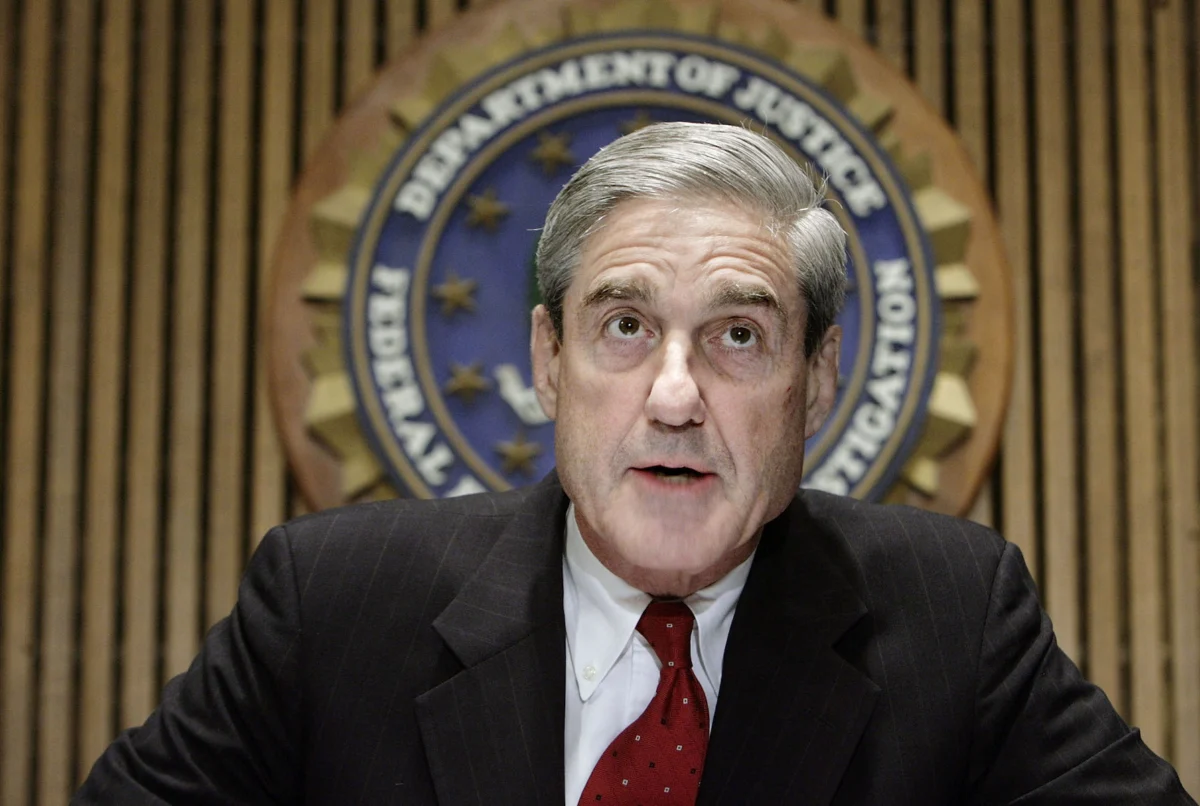
HangupsMusic.com – Robert Swan Mueller III, a figure whose distinguished career spanned combat heroism, top-tier federal prosecution, a transformative leadership of the Federal Bureau of Investigation, and a pivotal role as a special counsel in a politically charged investigation, has passed away at the age of 81. His family confirmed the news to The New York Times, though a specific cause of death was not immediately disclosed. Mueller had publicly revealed his diagnosis with Parkinson’s Disease in 2021, a condition that marked his later years after decades of intense public service.
Mueller’s journey was one defined by an unwavering commitment to duty, often placing him at the epicenter of national crises and controversial moments. Born in New York City, the son of a prominent DuPont executive, his upbringing instilled in him a strong sense of civic responsibility. He pursued higher education at Princeton University, followed by a Master’s degree in international relations from New York University. However, his academic pursuits were soon overshadowed by the call of military service during the tumultuous Vietnam War era. Mueller enlisted in the Marine Corps, serving as an officer, and distinguishing himself with exceptional valor. His service earned him both the Bronze Star, recognizing his heroic achievement, and the Purple Heart, awarded for wounds sustained in combat. This period of his life profoundly shaped his character, imbuing him with a reputation for courage, discipline, and a steadfast resolve that would define his subsequent legal and public career.
Upon returning from Vietnam, Mueller transitioned to the legal field, embarking on a path that would see him rise through the ranks of the American justice system. He served as a federal prosecutor, honing his skills in the courtroom, before a brief foray into private practice. His dedication to public service, however, proved irresistible, drawing him back to the Department of Justice, where he quickly ascended to the esteemed position of chief of the criminal division. In this critical role, Mueller oversaw some of the nation’s most complex and high-profile cases, including the prosecution of Panamanian dictator Manuel Noriega and the painstaking investigation into the 1988 bombing of Pan Am Flight 103 over Lockerbie, Scotland. These experiences solidified his reputation as a meticulous investigator and an unyielding advocate for justice, preparing him for even greater responsibilities.
The defining chapter of Mueller’s early public service arrived in September 2001, when he was appointed Director of the Federal Bureau of Investigation, just one week before the devastating terrorist attacks of September 11th. His tenure at the helm of the FBI, which lasted for an extraordinary twelve years, was nothing short of transformative. He inherited an agency primarily focused on traditional law enforcement, but the post-9/11 landscape demanded an immediate and dramatic pivot towards counter-terrorism and intelligence gathering. Mueller skillfully navigated this seismic shift, restructuring the FBI to confront a new generation of threats while simultaneously striving to uphold civil liberties in an era of heightened surveillance and national security concerns.
During his directorship, Mueller’s commitment to principle was famously tested. The FBI under his leadership played a role in revealing the existence of secret CIA black sites where prisoners were subjected to enhanced interrogation techniques, and the controversial warrantless wiretapping program initiated by the National Security Agency. In a particularly dramatic episode, Mueller, alongside then-Attorney General James Comey, stood ready to resign in 2004 over President George W. Bush’s decision to reauthorize the illegal eavesdropping program. This bold act of defiance, rooted in a deep respect for constitutional boundaries and the rule of law, ultimately compelled President Bush to back down. This incident cemented Mueller’s image as a man of unimpeachable character, willing to sacrifice his career for his convictions—a reputation that would prove crucial in his later appointment as special counsel.
It was this very reputation for integrity and non-partisanship that led to his second major national appointment in 2017. Following the contentious 2016 presidential election, allegations of Russian interference cast a long shadow over American democracy. The political climate became increasingly fraught after President Donald Trump’s abrupt dismissal of FBI Director James Comey. In the ensuing turmoil, Deputy Attorney General Rod Rosenstein, with Attorney General Jeff Sessions having recused himself due to his own contacts with Russian officials during the campaign, appointed Robert Mueller as special counsel. His mandate was clear: to investigate Russian interference in the 2016 election and any potential links or coordination with the Trump campaign, as well as any matters that arose directly from the investigation, including possible obstruction of justice.
The appointment was initially met with a rare bipartisan consensus, with many seeing Mueller, a lifelong Republican and decorated veteran, as the ideal individual to navigate such a sensitive and politically charged inquiry. His team, composed of seasoned prosecutors and investigators, embarked on an intensive, nearly two-year probe that captivated the nation. The investigation operated under intense public and political scrutiny, facing constant criticism from President Trump and his allies, who frequently denounced it as a "witch hunt" and a politically motivated "deep-state plot."
In March 2019, the special counsel’s final report was released, offering a comprehensive account of its findings. The report unequivocally concluded that the "Russian government interfered in the 2016 presidential election in sweeping and systematic fashion," detailing sophisticated efforts through hacking Democratic entities, disinformation campaigns, and social media manipulation, all designed to favor the Trump campaign and undermine Hillary Clinton’s candidacy. On the critical question of coordination, Mueller’s team stated that while the Trump campaign "expected that it would benefit from the information stolen and released through Russian efforts," the investigation "did not establish that members of the Trump Campaign conspired or coordinated with the Russian government in its election interference activities."
The second volume of the report focused on the contentious issue of obstruction of justice. Here, Mueller’s findings were notably critical of President Trump’s actions, cataloging numerous instances where the president sought to influence or impede the investigation. The report’s conclusion on this matter became a lasting point of contention: "While this report does not conclude that the President committed a crime, it also does not exonerate him." This nuanced phrasing reflected the special counsel’s adherence to long-standing Department of Justice policy, which advises against indicting a sitting president. Instead, Mueller left the question of presidential culpability to Congress.
Despite the report not establishing criminal conspiracy between the Trump campaign and Russia, the investigation led to significant legal consequences for many individuals. In total, 34 individuals and three Russian entities were indicted, including seven Americans closely affiliated with the Trump campaign. Among the most prominent were retired General Michael Flynn, President Trump’s former National Security Advisor; political operative Roger Stone; former Trump attorney Michael Cohen; and Trump campaign chair Paul Manafort. Their charges ranged from making false statements to federal investigators and Congress, to witness tampering, and conspiracy against the United States, underscoring the legal ramifications unearthed by the probe.
In the years following the investigation’s conclusion, Mueller largely retreated from the public eye, his once-ubiquitous presence in national headlines fading. However, the legacy of his special counsel investigation continued to reverberate through American politics, shaping debates about presidential power, foreign interference, and the integrity of democratic institutions. President Trump, unwavering in his condemnation, continued to characterize Mueller as a corrupt agent of a Democratic conspiracy, even after the special counsel’s retirement from public life. This animosity tragically culminated in a deeply controversial reaction from the former president on Truth Social upon news of Mueller’s passing, where he wrote, "Good, I’m glad he’s dead."
This starkly contrasting sentiment to the widespread acknowledgments of Mueller’s long and honorable career underscored the deep political polarization that marked his final public role. From the battlefields of Vietnam to the highest echelons of federal law enforcement and ultimately to the crucible of a special counsel investigation, Robert Mueller dedicated his life to serving the United States. His unwavering commitment to the rule of law, his personal integrity, and his quiet determination to pursue facts, regardless of political consequence, leave behind a profound and indelible mark on American history. He represented an enduring ideal of public service, a legacy forged in dedication, sacrifice, and an unyielding belief in justice.
