
 By admin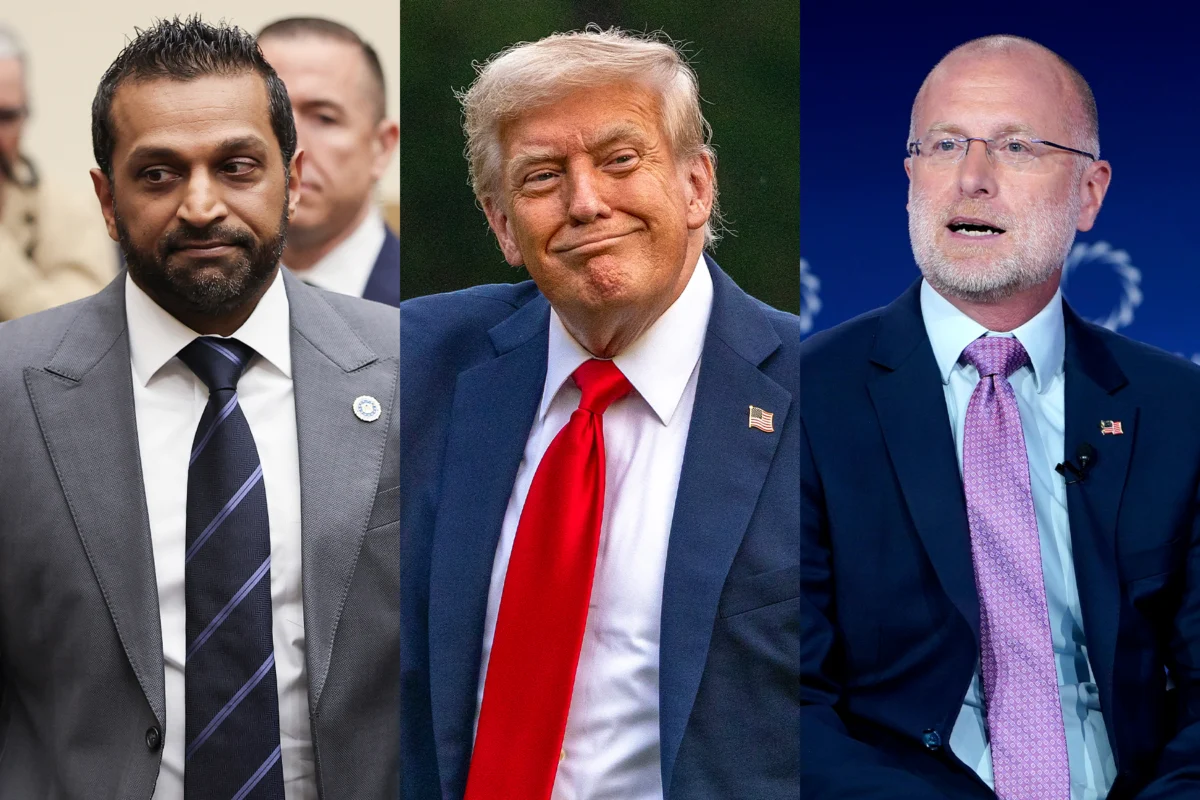
HangupsMusic.com – As the glitterati of Hollywood convened for their annual cinematic self-congratulations, a distinctively different kind of awards ceremony unfolded, orchestrated by Turning Point USA (TPUSA). Following their earlier foray into alternative programming with a Super Bowl halftime show, the conservative youth organization presented its inaugural "Freedom Fest Film Honors," a parallel event designed to offer a counter-narrative to the mainstream cultural establishment. The evening, a robust display of political commentary wrapped in entertainment, aimed to redefine excellence in media through a decidedly populist lens.
The lavish affair was hosted by Federal Communications Commission Chairman Brendan Carr, who presided over the proceedings at the opulent Trump-Kennedy Center for the Performing Arts. Carr’s opening monologue, a blend of advanced AI algorithms and the unfiltered wit of an eight-year-old nephew, set a light yet pointed tone for the night. The unique collaboration behind the script, which TPUSA proudly highlighted, showcased an unconventional approach to comedic writing, diverging sharply from the often politically charged monologues typical of traditional awards shows. Viewers noted the host’s earnest delivery, navigating lines that oscillated between folksy charm and pointed political jabs, a performance that resonated with the evening’s distinct aesthetic.
A significant deviation from established awards formats was immediately apparent in the categories presented. Several traditional accolades were conspicuously absent, supplanted by new distinctions personally curated by former President Trump himself. Among these fresh categories were "Hottest Makeup and Hairstyling," an award that seemed to prioritize aesthetic appeal over artistic innovation, and the elaborately titled "A-Plus-Plus Best Ever in the History of the World Most Beautiful Cinematography," which left little room for subjective interpretation. Perhaps the most commented-upon alteration was the complete omission of the Best Actress category. In its place, a second "Best Supporting Actress" honor was introduced, explicitly designated for "any pregnant wife with a nice roast in the oven." This particular criterion underscored a clear thematic departure, seemingly emphasizing domesticity and traditional familial roles within the entertainment landscape, sparking considerable discussion both inside and outside the venue. Even the realm of animated comedy saw a unique award, with the long-running satirical series South Park clinching the "Most Begrudgingly Amusing Animated Comedy" award, a nod that surprised many given the show’s often provocative and bipartisan critiques.
Despite these dramatic shifts, certain classic categories remained, though with a distinctly different roster of nominees and winners. The coveted Best Director award was bestowed upon FBI Director Kash Patel, who made a memorable entrance, carried to the stage by a formidable phalanx of UFC fighters. His acceptance speech focused on the "direction" of national security and the importance of decisive leadership, drawing parallels between filmmaking and governance. The category for Best Original Song saw an unexpected victor in "We Are Charlie Kirk," a self-referential anthem that resonated deeply with the TPUSA audience, underscoring the organization’s focus on its figureheads. The "Achievement in Casting" award bypassed traditional ensemble works, instead recognizing "all movies starring Sydney Sweeney," a choice that appeared to celebrate a specific, popular aesthetic appeal.
A particularly noteworthy entry was the documentary Sinners, which found itself nominated for several awards. However, this was not the critically acclaimed vampire film starring Michael B. Jordan, but rather a TPUSA-produced exposé focusing on the political actions of Senator Chuck Schumer and Representative Hakeem Jeffries. The contrast between the two projects bearing the same title highlighted the chasm between the two awards ceremonies’ perspectives.
The question of whether to include a Best International Feature Film category reportedly sparked internal debate within TPUSA. Ultimately, the organization opted to retain the award, albeit with a presentation that carried its own political statement. The honor was presented by a contingent of U.S. Immigration and Customs Enforcement (ICE) agents, a visual choice that left an indelible impression and served as a stark reminder of the political undertones of the entire event.
One of the evening’s most anticipated moments came when host Brendan Carr playfully pressed former President Trump on his personal pick for Best Original Screenplay. With a coy demeanor, Trump confessed to having "actually been working on a little something." He then, somewhat bashfully, presented a letter he had penned to Jeffrey Epstein for his 50th birthday, framed as a "fictional dialogue" between the two. The unconventional submission, immediately put to an on-the-spot audience vote after a brief, spirited debate among the judges, ultimately saw the former president claim the prize, much to the enthusiastic applause of the attendees.

The Best Documentary category witnessed a significant upset. For weeks, Amazon’s high-budget vanity project, Melania, had been widely considered the overwhelming frontrunner. However, in a surprising turn of events, the award was snatched by a forthcoming documentary titled Donald, suggesting a prevailing internal preference for narratives centered directly on the former president’s persona and achievements.
The race for Best Film Editing was described as one of the closest of the night, with the White House press office entering multiple, highly stylized video packages. Among the nominations were clips depicting "deranged domestic terrorists obstructing ICE raids," dramatic footage of "bald eagles flying fighter jets in the Middle East," and a compilation showcasing "Pam Bondi absolutely owning Democratic congressmen during her deposition." These entries, clearly designed for maximum political impact, reflected a specific vision of media manipulation and messaging. The former president, never one to miss an opportunity for a defiant gesture, had already declared that he would not remove his hat during the celebration, regardless of the outcome, adding another layer to the evening’s performance.
Breaking from the mainstream Oscars’ tradition of a pre-show, untelevised lifetime achievement award, the TPUSA event prominently featured its "Lifetime Achievement Award" as a main event. Presented personally by President Trump, the honor was, unsurprisingly, bestowed upon President Trump himself. When prompted to reflect on his contributions to the entertainment industry, he remarked, "I’ve had so many achievements in film – that scene in Home Alone 2 where I help that poor little street boy find his way back to Brooklyn, for example. Not to mention The Apprentice. You know, if you put all those episodes together, it’s actually longer than a movie." His remarks underscored a deep-seated belief in his own pervasive cultural impact, both on and off the screen.
Musical interludes punctuated the extended ceremony, featuring what were billed as "the greatest musical artists of our generation." Kid Rock delivered a memorable, if linguistically challenging, performance, attempting to sing the English translation of every song from Bad Bunny’s popular album, DeBÁ TiRAR MÁS FOToS. The cross-genre, cross-cultural effort was met with a mix of bemusement and applause. Nicki Minaj also took to the stage, performing a heavily censored, "Christian-approved" rendition of her hit song "Anaconda," reportedly stripped down to a mere fourteen words, a performance that highlighted the evening’s commitment to specific moral and cultural guidelines.
A powerful "In Memoriam" segment was dedicated solely to Charlie Kirk, the founder of Turning Point USA. The presentation, spanning an extensive 45-page slideshow, featured Kirk’s likeness meticulously edited onto various iconic figures from American history. These ranged from Confederate General Robert E. Lee and conservative commentator Dennis Prager to, notably, civil rights leader Martin Luther King, Jr. The segment was a striking visual testament to the organization’s unique historical interpretations and its veneration of its leader.
To inject an element of spontaneity, several "unplanned" moments were meticulously choreographed throughout the evening, echoing some of the most dramatic incidents in Oscars history. In an homage to the infamous Moonlight-La La Land Best Picture mix-up, South Dakota Governor Kristi Noem was initially awarded the new "Best Homeland Security Secretary" prize. However, midway through her acceptance speech, it was dramatically revealed that the award actually belonged to Oklahoma Representative Markwayne Mullin, creating a moment of palpable, if manufactured, tension. And in a nod to the controversial 2022 Will Smith-Chris Rock altercation, former President Trump was granted license to "hit J.D. Vance in the face as many times as he liked," a staged spectacle that played into a certain brand of aggressive, performative politics.
In a final departure from tradition, the TPUSA sound team opted against conventional play-off music for winners whose speeches ran too long. Instead, they played soundbites from Hillary Clinton’s 2016 presidential debate, effectively encouraging winners to continue speaking over her voice for as long as they wished, transforming the wrap-up into a final act of political defiance. The marathon event, clocking in at an astounding fifteen hours plus commercial breaks, tested the endurance of both attendees and viewers, solidifying its place as a truly unique spectacle in the awards show calendar.
The most anticipated award of the night, Best Picture, ultimately went to an image of former President Trump following what was described as an "assassination attempt" from the previous year. The powerful, emotionally charged photograph resonated deeply with the TPUSA audience, embodying resilience and strength in the face of perceived adversity. It ultimately triumphed over other notable contenders, including a crudely photoshopped depiction of a "demonic Hillary eating a baby" and a popular "cute dog meme," underscoring the evening’s preference for politically charged and ideologically resonant imagery above all else.
