
 By Azzam Bilal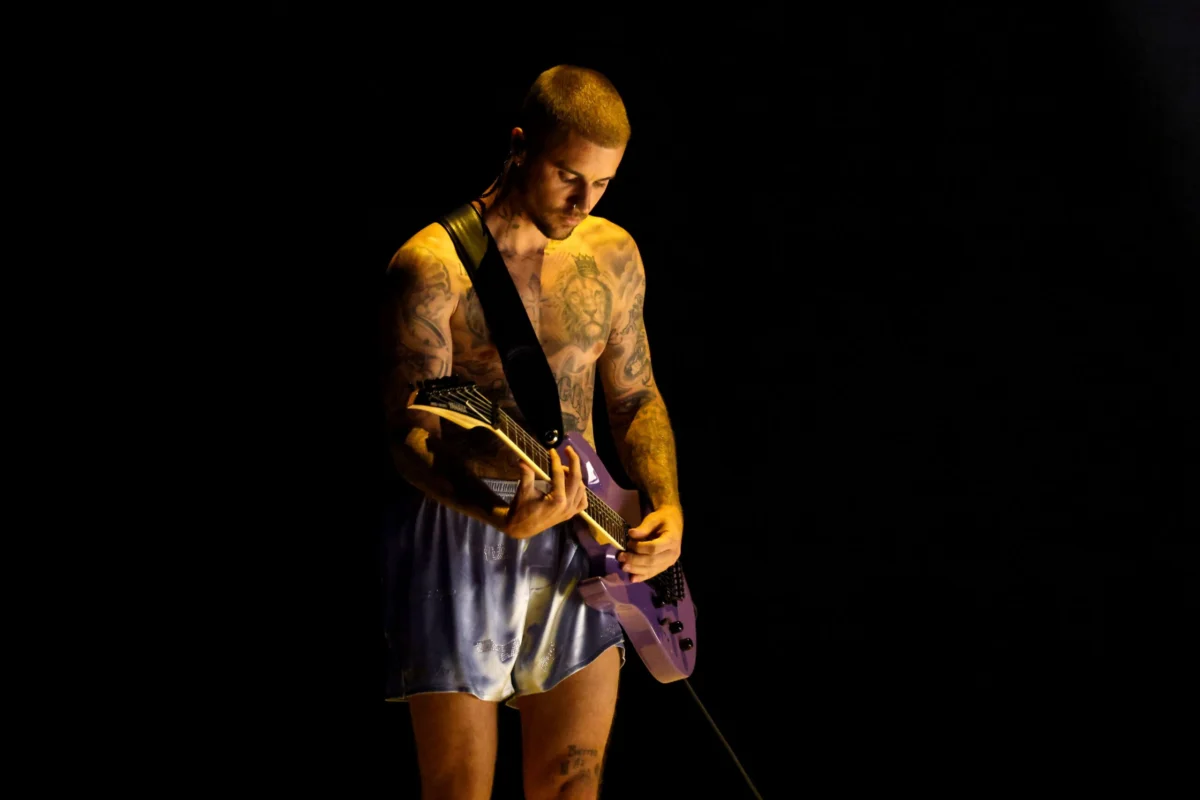
HangupsMusic.com – INDIO, CALIFORNIA, The Indio desert has long served as a backdrop for artistic rebirth, but few transformations have felt as earned or as sonically adventurous as the one currently unfolding under the neon glow of the Coachella Valley Music and Arts Festival. On Saturday night, April 11, 2026, the Empire Polo Club witnessed a milestone nearly two decades in the making. Justin Bieber, a figure who has grown up in the relentless glare of the public eye, finally took his place as a Coachella headliner, delivering a performance that was less about reclaiming a crown and more about redefining what it means to be a pop titan in the mid-2020s.
While Bieber is no stranger to the Coachella stage—having made memorable surprise appearances over the years, most notably during Ariana Grande’s 2019 headlining set—this year marks his first official billing at the top of the poster. The weight of the moment was not lost on the audience, which stretched as far as the eye could see toward the back of the main stage grounds. For Bieber, this headline slot serves as the definitive exclamation point on a career resurgence that began in earnest in early 2025, following a period of relative quiet and personal reflection.
The Saturday night set was a meticulously curated journey through Bieber’s extensive discography, though it was heavily anchored by the experimental, critically acclaimed sounds of his most recent output. The show opened with a cinematic intro that transitioned into a suite of songs from his 2025 twin-album cycle, SWAG and its immediate successor, SWAG II. These projects, which signaled a radical departure from the polished R&B-pop of his previous era, were brought to life with a live band that emphasized the raw, soul-infused textures that have come to define his "comeback" aesthetic.
The road to Coachella 2026 began in the studio throughout late 2024, where Bieber began collaborating with a new guard of sonic architects. By recruiting producers like Dijon and Mk.gee, Bieber signaled a desire to move away from the chart-topping formulas of his youth and toward a more organic, lo-fi, and harmonically complex sound. This shift was first teased in his unexpected appearance on Rob49’s viral hit "WTHelly," a track that baffled and then delighted fans with Bieber’s gritty, rhythmic delivery. That momentum carried into the release of SWAG, an album that eventually earned Bieber four Grammy nominations, including a nod for the prestigious Album of the Year.
Although the 2026 Grammy Awards did not see Bieber taking home any trophies, his presence at the ceremony was arguably the night’s most discussed moment. His performance of "YUKON"—a haunting, mid-tempo ballad that serves as the emotional core of SWAG—was famously "stripped-down," featuring the singer alone on a revolving platform with nothing but a guitar and a spotlight. It was a masterclass in vocal control and vulnerability, proving that the former teen idol had matured into a vocalist of significant depth. It was that same sense of intimacy that he managed to translate to the massive Coachella main stage on Saturday night.
The Coachella setlist was a study in contrasts. Bieber masterfully wove together the avant-pop of his new era with the nostalgia of his early career. Fans who have followed him since the beginning were treated to reimagined versions of hits from the My World 2.0 days. Songs that once defined the "Bieber Fever" phenomenon were rearranged with jazzy inflections and complex percussion, allowing them to sit comfortably alongside the moodier tracks from SWAG II. This bridge between the past and the present served as a reminder of Bieber’s longevity; he is one of the few artists of his generation who can command a crowd of Gen Z festival-goers while still holding the hearts of the Millennials who grew up alongside him.
Technically, the production was a marvel of modern stage design. Moving away from the heavy LED-screen reliance of many contemporary pop tours, Bieber’s team opted for a more tactile, architectural approach. The stage was filled with physical structures that resembled a desolate, beautiful landscape, echoing the themes of isolation and discovery found in his recent lyrics. The lighting design focused on warm, amber hues and deep shadows, creating a visual language that felt more like an indie-film aesthetic than a traditional stadium show.
The atmosphere in Indio was electric, bolstered by the success of the festival’s opening night. On Friday, Sabrina Carpenter "held things down" with a high-energy, theatrical set that solidified her status as a new pillar of pop. With Karol G set to close out the festival on Sunday night, the 2026 lineup represents a diverse cross-section of the current musical landscape, highlighting the global reach of Latin music, the rise of "new-school" pop icons, and the enduring relevance of established stars like Bieber.
Beyond the music, Bieber’s Coachella headline set is being viewed by industry analysts as a triumphant return to form after years of health challenges and public scrutiny. Throughout the performance, he appeared relaxed and genuinely engaged with the audience, often pausing between songs to share anecdotes about the writing process for the SWAG albums or to express gratitude for the fans who stayed by him during his hiatus. This transparency has become a hallmark of his new public persona, which prioritizes authenticity over the manicured perfection of his earlier years.
The inclusion of tracks like "YUKON" and "WTHelly" in the setlist highlighted his willingness to take risks. In an era where many legacy acts are content to play the hits, Bieber is actively pushing his sound forward. His work with Dijon and Mk.gee has introduced him to a new demographic of listeners—those who frequent "indie" circles and might have previously dismissed his work. By blending his undeniable pop sensibilities with experimental production, he has carved out a unique space in the industry that few other artists of his stature occupy.
As the set drew to a close with a sprawling, ten-minute rendition of a new, unreleased track, the desert air was filled with a sense of collective awe. Bieber’s return to the festival circuit is not just a win for his "Beliebers," but a win for the concept of the "pop star" itself. He has shown that it is possible to evolve, to fail, to retreat, and to return with something that is not only commercially viable but artistically significant.
The pop star is scheduled to return to the Indio desert for a second weekend on April 18, where he will undoubtedly look to build on the momentum of this first performance. For those unable to attend in person, the festival’s livestream has provided a window into what many are already calling the performance of the year. Coachella 2026 has already delivered plenty of highlights, from Sabrina Carpenter’s Friday night triumph to the anticipation surrounding Karol G’s Sunday finale, but Saturday belonged unequivocally to Justin Bieber.
As the dust settles on the first weekend of Coachella, the narrative surrounding Bieber has shifted from "comeback kid" to "elder statesman of pop." He has navigated the transition from a teenage phenomenon to a thirty-something artist with grace and a surprising amount of grit. If the SWAG era is any indication of where he is headed next, the music world should be prepared for an artist who is no longer interested in playing it safe. Saturday night was more than just a concert; it was a declaration of independence from the expectations of the past and a bold step into a future where Justin Bieber defines the terms of his own success. Pitchfork and other major outlets will continue to provide exhaustive coverage of the 2026 festival, but for now, the conversation remains centered on the man who turned the Indio desert into his own personal cathedral of sound.
