
 By Rose Miami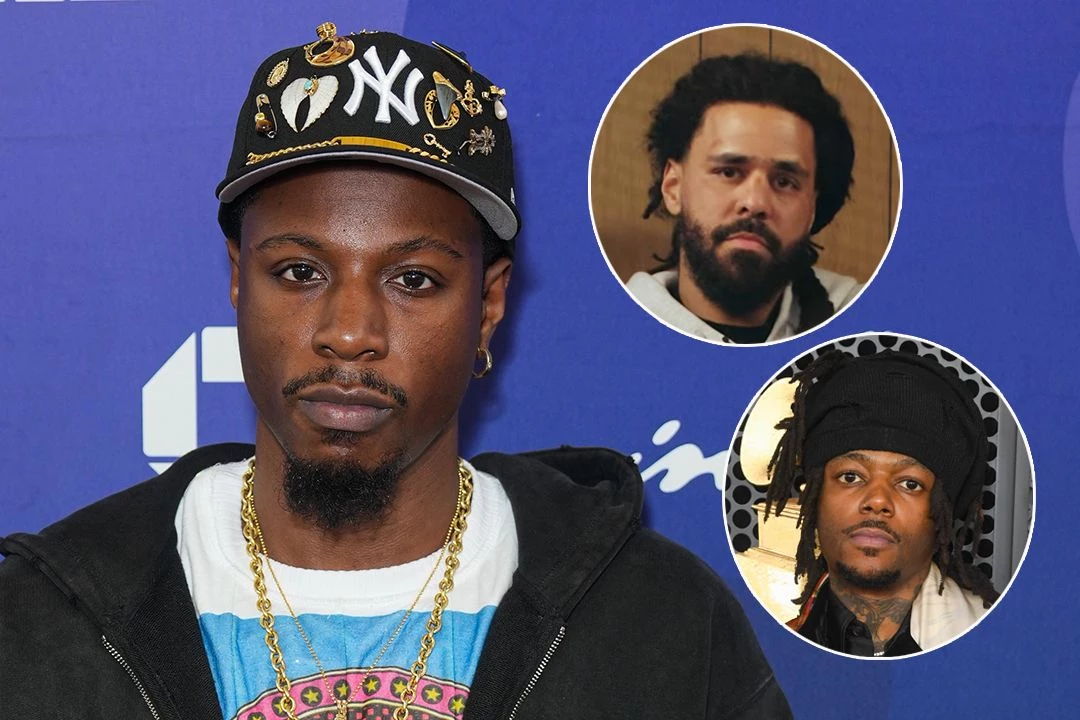
HangupsMusic.com – The intricate landscape of hip-hop, often characterized by its competitive spirit and lyrical prowess, is currently abuzz with a nuanced discussion sparked by Joey Bada$$. The Brooklyn-bred emcee has ignited a conversation around why highly skilled lyrical rappers might be hesitant to engage in collaborative projects, suggesting that the fear of being outshone on their own turf plays a significant role. His candid remarks, shared via social media, specifically pointed to the absence of J.I.D on J. Cole’s album The Fall Off as a prime example, further fueling the debate about artistic integrity versus strategic collaboration in the modern hip-hop era.
The impetus for Joey Bada$$’s commentary appears to stem from a broader discourse within the genre, notably Jay-Z’s recent musings on the evolving nature of hip-hop collaborations. While Jay-Z expressed a preference for artists uniting on tracks rather than engaging in adversarial battles, Joey Bada$$ offered a counterpoint, suggesting that the underlying tension isn’t necessarily a lack of desire for unity, but rather a deeply ingrained self-preservation within the highly competitive lyrical subgenre. "Everybody talks about how we shouldn’t beef and we should spar more on records but truth is niggas don’t wanna be wanting to collab out of fear of getting bodied on they own record," Joey tweeted, articulating a perspective that resonates with the high stakes of lyrical one-upmanship.
Joey Bada$$ elaborated on this point by referencing J.I.D’s non-appearance on The Fall Off, J. Cole’s anticipated project. He expressed a personal bewilderment at this omission, believing that J.I.D, known for his formidable lyrical dexterity, would have not only met but exceeded expectations, or as he put it, "OVERSTOOD the assignment." While acknowledging his admiration for the album itself, Joey underscored his belief that this particular absence was conspicuous and warranted discussion. He later clarified his stance, emphasizing that his comments were not intended as a diss towards J. Cole, whom he holds in high regard. Instead, his focus remained on the broader phenomenon within the lyrical rap community.
"Let’s stay focused on the sentiment of lyrical rap as a subgenre and friendly sparring," Joey continued, seeking to refine the narrative. "It’s the most scarcity mindset lane of rap. There’s a lot of brand protection going on which is understandable lol." This statement highlights a perceived insularity within the circle of technically gifted MCs, suggesting that the pursuit of lyrical perfection can foster an environment where artists are more concerned with maintaining their established reputation and perceived dominance than with the potential creative synergy of a collaboration. The "scarcity mindset" implies a belief that there’s a limited amount of lyrical glory to go around, and any misstep or perceived weakness in a collaborative setting could diminish an artist’s standing.

The context of Jay-Z’s remarks adds another layer to this discussion. In a rare interview with GQ, the hip-hop mogul voiced his reservations about the current trajectory of battle rap, acknowledging its inherent excitement and the quality of music it can produce, but lamenting the accompanying negativity. "We love the excitement and I love the sparring and the music you get," Jay-Z stated. "But in this day and age, it’s so much negative that comes with it that you almost wish it didn’t happen." This sentiment from a foundational figure in hip-hop underscores a generational shift in how the competitive aspects of the genre are perceived and valued. While battles have historically been a proving ground for lyrical skill, the potential for personal attacks, public humiliation, and the amplification of beef through social media has made some artists, and observers like Jay-Z, question their overall benefit.
Joey Bada$$’s perspective, therefore, can be seen as a commentary on how this underlying competitive drive, even when channeled into non-adversarial contexts like album features, can still lead to apprehension. For an artist who has built a career on sharp lyricism and intricate wordplay, the prospect of appearing on another rapper’s track, particularly one helmed by an equally talented peer, presents a unique challenge. The pressure to deliver a verse that is not only impactful but also demonstrably superior or at least on par with the host artist’s contribution can be immense. This potential for a perceived "loss" in a lyrical exchange could be a significant deterrent, leading some to opt out of such opportunities altogether.
The concept of "brand protection" that Joey Bada$$ mentions is also crucial. In an era where an artist’s image and public perception are heavily curated, a less-than-stellar feature can have a disproportionately negative impact. Unlike a battle where the outcome is explicitly defined, a collaborative track leaves more room for subjective interpretation. If a rapper’s verse is perceived as weak or uninspired compared to their counterpart, it can lead to widespread criticism and damage their reputation as a lyrical heavyweight. This fear of professional vulnerability, amplified by the ever-present spotlight of social media and music blogs, creates a strong incentive for caution.
Furthermore, the notion of J.I.D being "bodied" on The Fall Off is a vivid illustration of the perceived stakes. It suggests that the lyrical arena, even in a collaborative setting, is still viewed by some as a zero-sum game. The idea that an artist might "overstand the assignment" implies a level of performance so exceptional that it eclipses the host artist, which, while potentially exciting for listeners, could be seen as a strategic misstep by the host. This highlights a tension between artistic ambition and the desire to maintain a secure position within the hierarchy of lyrical talent.
Ultimately, Joey Bada$$’s commentary offers a compelling insight into the internal dynamics of lyrical hip-hop. It moves beyond the surface-level calls for more collaborations and delves into the underlying anxieties and strategic considerations that might be influencing artists’ decisions. His perspective suggests that while the desire for artistic growth and connection may exist, the deeply ingrained competitive spirit and the high stakes of lyrical reputation can create a climate of apprehension, leading some of the genre’s most talented wordsmiths to carefully weigh the risks and rewards before stepping into the collaborative arena. The fear of not just participating, but of being outmatched on one’s own platform, remains a potent force in shaping the modern landscape of hip-hop features.
