
 By admin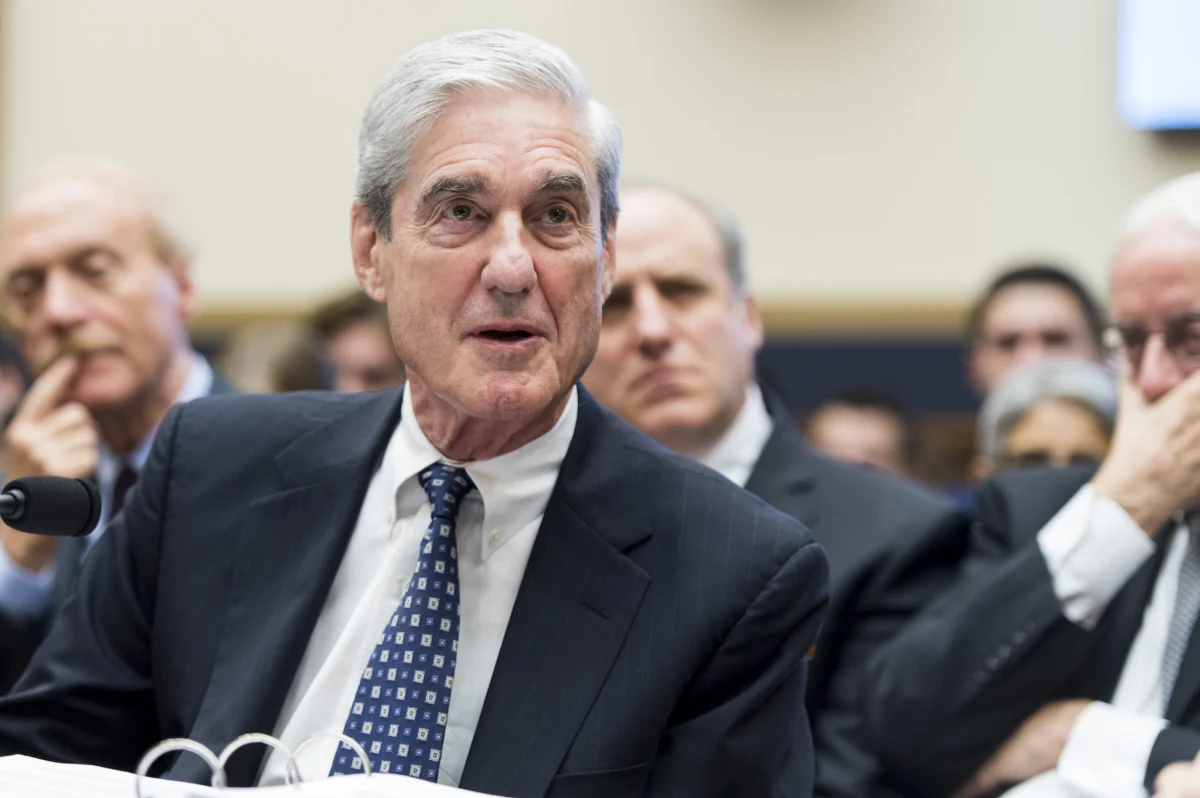
HangupsMusic.com – Washington D.C., The nation paused this Saturday as news broke of the passing of Robert S. Mueller III, a figure whose distinguished career in public service spanned decades and whose name became inextricably linked with one of the most contentious periods in recent American political history. Mueller, a decorated Marine Corps veteran, former FBI director, and ultimately, the Special Counsel who investigated Russian interference in the 2016 presidential election, died at the age of 81. His passing, reported by MS Now, was later confirmed to be a consequence of complications arising from Parkinson’s disease, a diagnosis he had publicly disclosed the previous year. Yet, this moment of national reflection was abruptly shattered by a stark and unvarnished reaction from former President Donald J. Trump, who took to his Truth Social platform to express an unreserved sense of satisfaction at Mueller’s demise.
Trump’s post, published shortly after the news surfaced, read: “Robert Mueller just died. Good, I’m glad he’s dead. He can no longer hurt innocent people!” This incendiary statement immediately ignited a firestorm of commentary across the political spectrum, underscoring the deep ideological fissures that continue to define American society. For many, Trump’s words represented a shocking breach of decorum, an unprecedented public celebration of a political adversary’s death, particularly one who had dedicated his life to upholding the law. For others within Trump’s fervent base, it was merely another defiant expression from a leader they believe was unjustly targeted.
Mueller’s journey to becoming a polarizing figure began in May 2017, when he was appointed by then-Deputy Attorney General Rod Rosenstein to lead an investigation into Russian interference in the 2016 election and any potential coordination between the Trump campaign and the Russian government. This appointment followed the abrupt dismissal of FBI Director James Comey by President Trump, an act that raised immediate concerns about obstruction of justice. Mueller’s reputation preceding his appointment was one of unimpeachable integrity and non-partisanship. A Republican appointed by President George W. Bush, he served as FBI Director for 12 years, navigating the agency through the immediate aftermath of the September 11th attacks and earning bipartisan respect for his stoicism and dedication to institutional independence. His selection as Special Counsel was initially met with a sense of relief by many who hoped his gravitas would bring credibility to the politically charged inquiry.
However, the investigation, which stretched over nearly two years, quickly became a constant source of friction between the White House and the Department of Justice. President Trump consistently denounced the probe as a "witch hunt," a "hoax," and a politically motivated attempt to delegitimize his presidency. This rhetoric, amplified through rallies and social media, cultivated an environment of intense distrust around Mueller and his team. The Special Counsel’s report, ultimately released in April 2019, detailed extensive efforts by the Russian government to interfere in the election through disinformation campaigns and hacking. While Volume I of the report did not establish that the Trump campaign had "conspired or coordinated" with the Russian government, it meticulously documented numerous contacts between campaign officials and individuals linked to Russia. Volume II of the report delved into potential instances of obstruction of justice by President Trump, presenting a detailed account of his actions and intentions, but ultimately concluding that it "did not establish that the President committed a crime, but it also does not exonerate him."
The Mueller investigation yielded a significant number of indictments, guilty pleas, and convictions of prominent figures associated with the Trump campaign and administration. These included Paul Manafort, Trump’s campaign chairman, who was convicted on charges related to financial fraud and lobbying; Michael Flynn, former National Security Advisor, who pleaded guilty to lying to the FBI; Rick Gates, Manafort’s deputy; George Papadopoulos, a foreign policy adviser; and Roger Stone, a longtime political operative, convicted of witness tampering and lying to Congress. These legal outcomes, often overshadowed by the larger political narrative, highlighted serious breaches of law by individuals within Trump’s orbit, even if the central question of campaign coordination remained inconclusive in the eyes of the Special Counsel.
Trump’s vitriolic reaction to Mueller’s passing mirrors a recurring pattern in his public engagement with those he perceives as adversaries. His use of Truth Social, a platform he co-founded, has become a primary conduit for unfiltered pronouncements, allowing him to bypass traditional media gatekeepers and communicate directly with his base. This approach, while celebrated by his supporters as authentic and courageous, is frequently criticized for its disregard for conventional political discourse and civility. The former president has a history of not only criticizing living opponents but also of expressing contentious views regarding the misfortunes or deaths of those he opposed. A notable example occurred in December when beloved director and outspoken Trump critic Rob Reiner passed away. At that time, Trump reportedly quipped that Reiner had succumbed to an "incurable" case of "Trump Derangement Syndrome," a term he often uses to dismiss criticism as irrational hatred. This consistent rhetorical strategy serves to reinforce his narrative of being a victim of politically motivated attacks, consolidating loyalty among his supporters by framing his opponents as malevolent forces.
The celebration of a public servant’s death, particularly one who served with distinction across multiple administrations, raises profound questions about the state of civility in contemporary American politics. Mueller’s quiet demeanor throughout the investigation, his steadfast refusal to engage in political rhetoric, and his insistence on letting the facts speak for themselves, stood in stark contrast to the daily barrage of criticism he faced. His dignified public service, often described as a model of non-partisan commitment to the rule of law, is now juxtaposed against a public farewell marked by intense animosity.
As the nation grapples with the legacy of Robert Mueller and the implications of the political climate surrounding his passing, the episode serves as a potent reminder of the deep divisions that persist. It underscores the challenges of maintaining respect for institutions and individuals in an era where political discourse frequently descends into personal attacks. Mueller’s life was a testament to dedication and principle; his death, however, has become another flashpoint in America’s ongoing political saga, echoing the unresolved conflicts that defined much of his final, high-profile chapter of service.
