
 By Azzam Bilal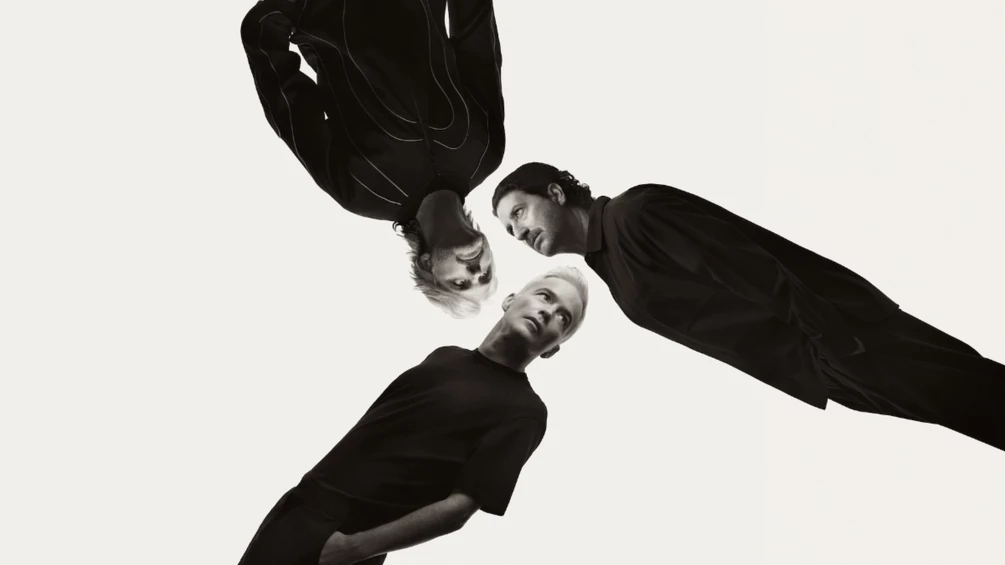
HangupsMusic.com – Melbourne, The landscape of modern electronic music has long been shaped by the hands of those who can find beauty in the discarded. Perhaps no group embodies this ethos more thoroughly than the Australian duo The Avalanches. After a six-year hiatus that saw the world change in ways both subtle and seismic, Robbie Chater and Tony Di Blasi have officially announced their return. Their forthcoming fourth studio album, titled No Bad Memories, is set for a global release on October 16th. It is a massive undertaking, spanning 31 tracks and promising to delve into the complex, often contradictory relationship between human memory and the ubiquitous sounds of corporate marketing.
For over two decades, The Avalanches have functioned as sonic archaeologists. Their debut, Since I Left You, remains a high-water mark for plunderphonics, constructed from thousands of disparate samples to create a seamless, sun-drenched dreamscape. Their subsequent efforts, Wildflower and We Will Always Love You, moved toward a hybrid model of live instrumentation, high-profile collaborations, and the signature crate-digging that defined their early career. With No Bad Memories, the group appears to be narrowing their focus onto a specific psychological phenomenon: the way commercial jingles and advertisements become permanently etched into the subconscious.
In a press release accompanying the announcement, the band articulated the philosophical core of the new project. They described the album as an exploration of the "simultaneously magical and insidious" nature of advertising. As adults looking back on the media landscape of their youth, Chater and Di Blasi noted a profound realization regarding the creative machinery of the past. They reflected on a "stunning period of marketing" defined by high-level filmmaking, photography, and music, while simultaneously acknowledging that this aesthetic brilliance was often used to sell a "completely unobtainable dream."
This duality—the beauty of the art versus the manipulation of the intent—serves as the engine for the 31-track collection. The band’s statement further elaborated on how we, as a society, value products and devices as markers of "a life lived." By revisiting the jingles and imagery of childhood, The Avalanches are attempting to reclaim these sounds from their "corporate framework." The goal, they suggest, is to flip these fragments into a "joyous pop music," essentially liberating the melodies from the products they were originally designed to sell.
To mark the announcement, the group has released a new single titled "Can’t Get Over Losing You." The track features a collaboration with Portraits of Tracy, a rising artist from Louisiana known for a genre-blurring approach that fits naturally within the Avalanches’ kaleidoscopic sound. The single acts as a gateway into the album’s world, blending a sense of wistful melancholy with the vibrant, rhythmic energy that has become the band’s trademark. It follows the previously released "Together," a track that saw the band teaming up with an eclectic trio of contributors: Nikki Nair, Jessy Lanza, and Prentiss.
The visual component for "Together" offered a glimpse into the album’s aesthetic preoccupation with technology and nostalgia. The music video featured a cartoon floppy disc and an iPad walking side-by-side, a poignant metaphor for the bridging of analog and digital eras. It underscored the band’s fascination with how we represent our history through the devices we once considered cutting-edge, but which now serve as relics of a bygone time.
The guest list for No Bad Memories suggests a project of immense scale and variety. Beyond the aforementioned artists, the album features contributions from Karen O of the Yeah Yeah Yeahs, whose distinctive vocals have long been a favorite of the indie-rock world. Jamie xx, a fellow pioneer in the realm of sample-heavy electronic music and a member of The xx, also lends his talents to the project. The inclusion of Jessy Lanza and Nikki Nair points toward a contemporary electronic influence, while Prentiss adds a layer of youthful energy to the mix.
The 31-track runtime is particularly notable. In an era of shrinking attention spans and algorithm-friendly EPs, The Avalanches are doubling down on the long-form experience. This expansive structure suggests a return to the collage-like flow of their earlier work, where short interludes and vignettes serve to connect larger, more traditional song structures. It creates an immersive environment, a "world" as the band calls it, where the listener is encouraged to lose themselves in the stream of consciousness.
This new chapter comes after the critical success of their 2020 album, We Will Always Love You. That record marked a departure from the purely sample-based approach of their debut, focusing instead on themes of cosmic connection, radio waves, and the eternal nature of human vibration. It was a dense, star-gazing masterpiece that featured everyone from MGMT to Perry Farrell and Leon Bridges. No Bad Memories seems to be a logical progression, moving from the celestial themes of the third album back down to the terrestrial, specifically the living rooms and television screens of the late 20th century.
The band’s recent activities have also leaned into the intersection of art and science. Last year, The Avalanches participated in a highly publicized art installation titled Picadilly Un:Plugged. The project involved sending music to the Moon, literally broadcasting a message of human creativity into the vacuum of space. The band contributed their track "We Will Always Love You (feat. Blood Orange)" to the installation, further cementing their reputation as artists who view music not just as entertainment, but as a permanent record of human existence.
The transition from sending music to the Moon to analyzing the "insidious" nature of toothpaste commercials might seem like a sharp turn, but for The Avalanches, it is all part of the same tapestry. Both represent the ways in which sound transcends its immediate context. A radio signal sent to space and a jingle stuck in a child’s head are both forms of transmission that outlast their original broadcast.
As the October 16th release date approaches, anticipation within the music community is high. The Avalanches have always been a band that rewards patience. The sixteen-year gap between Since I Left You and Wildflower became a legend in the music industry, and while the four-year gap between their second and third albums was shorter, it showed a band that had found a new, more prolific rhythm. This current six-year interval has allowed them to refine their concept, resulting in what appears to be their most ambitious thematic work to date.
The title No Bad Memories itself is a fascinating choice. It carries a sense of irony, given the band’s acknowledgment of the "insidious" nature of the marketing they are sampling. It suggests a curated version of the past—the way nostalgia filters out the mundane or the uncomfortable, leaving only the "magical" glow of a half-remembered childhood. By using the very tools of corporate persuasion to create something joyous and artistic, The Avalanches are performing a kind of cultural alchemy.
The upcoming LP will likely be a litmus test for the state of sample-based music in the 2020s. With copyright laws becoming increasingly stringent and the "everything is a remix" philosophy becoming mainstream, the band’s ability to weave together disparate sounds into a cohesive narrative remains unparalleled. They are no longer just making "dance music" or "indie-electronic"; they are creating a sonic archive of the human experience.
For fans, the wait for No Bad Memories represents more than just a new set of songs. It is an invitation to look at the world around them—the screens, the ads, the digital noise—and find the hidden melodies within. As The Avalanches prepare to drop 31 new tracks into the cultural consciousness, they remind us that even in the heart of a corporate framework, there is room for wonder, for reflection, and for the deep, resonant power of sound. Through their lens, even a forgotten jingle can become a vessel for a "life lived," and the echoes of the past can be transformed into the pop music of the future.
