
 By Azzam Bilal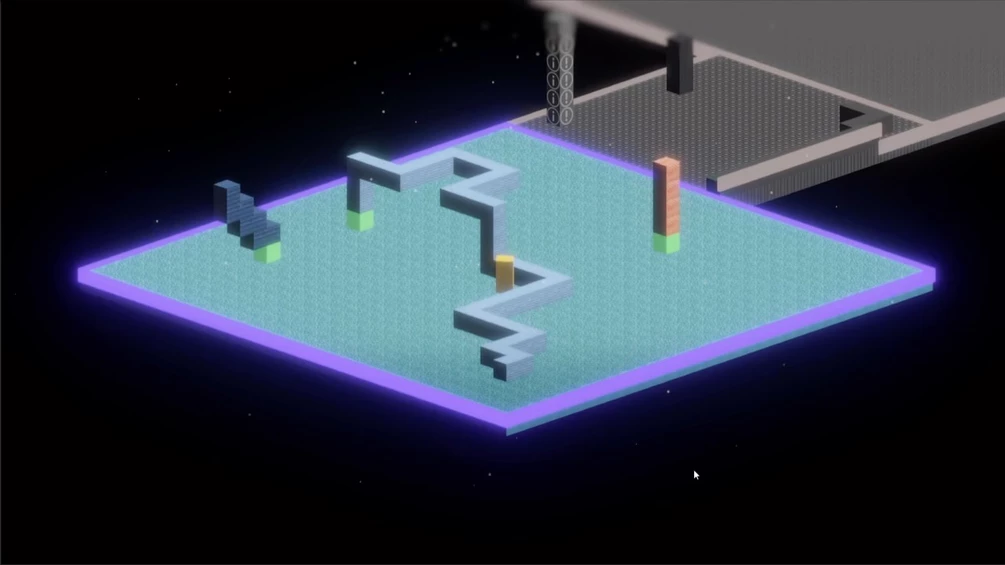
HangupsMusic.com – The traditional landscape of the Digital Audio Workstation (DAW) has long been defined by steep learning curves, complex menu diving, and a visual language rooted in the professional recording studios of the 20th century. However, a transformative shift is occurring at the intersection of creative software and interactive entertainment. Leading this charge is a project currently capturing the imagination of both the gaming and electronic music communities: Chunk DAW. Developed by the multi-talented producer, engineer, and graphic designer sila mack, this innovative platform seeks to strip away the clinical intimidation of professional music production, replacing it with a tactile, voxel-based environment that feels as intuitive as building with plastic bricks.
Chunk DAW represents a bold departure from the linear timelines and spreadsheet-style arrangements that dominate software like Ableton Live or Logic Pro. Instead, it invites users into a Minecraft-inspired modular grid system. In this world, music is not merely a waveform on a screen; it is a physical entity. The "chunks" within the game act as sound-carrying blocks, each possessing specific sonic properties. By loading these blocks and placing them in proximity to one another within a 3D grid, users create sequences that loop and interact in real-time. This spatial approach to composition allows for a more experimental and visual method of songwriting, where the physical layout of the environment directly dictates the rhythm, melody, and texture of the track.
The genius of Chunk DAW lies in its ability to balance playful exploration with genuine utility. While the aesthetic is decidedly "lo-fi" and gamified, the underlying engine is built for actual music creation. Users are not restricted to simple playback; the system offers robust mixing capabilities. Within the game environment, creators can adjust volume levels, manipulate the master BPM, and apply various modifications to individual chunks to alter their character. The developer has already integrated hundreds of different materials for the blocks, each presumably corresponding to different timbres, instruments, or percussive elements. This variety ensures that the "game" provides a deep palette for sound design, rather than being a mere novelty.
Perhaps the most significant feature that elevates Chunk DAW from a toy to a tool is its export functionality. Historically, music-making mini-games within larger titles have been "closed loops"—users could create within the game, but their compositions were trapped there. Chunk DAW breaks this barrier by allowing users to save their projects and export their music. This functionality bridges the gap between a casual gaming session and a professional workflow. A producer might find a unique rhythmic pattern while playing on their laptop, export the audio, and then bring that file into a traditional DAW for final mixing and mastering. This synergy suggests a future where the initial spark of creativity happens in a high-play, low-pressure environment, while the technical refinement occurs in specialized software.
The developer behind the project, sila mack, brings a unique pedigree to the table. As an engineer and designer, mack understands the technical requirements of high-quality audio, but as a creator, they also recognize the "creative block" that often comes with staring at a blank, professional-grade arrangement window. By gamifying the process, Chunk DAW taps into the "flow state" that gamers often experience. When the act of placing a block feels like a game mechanic rather than a technical chore, the barrier to entry for non-musicians drops significantly, while experienced producers are given a fresh perspective on their craft.
The rise of Chunk DAW is not an isolated phenomenon but rather part of a broader cultural trend where the worlds of gaming and music are becoming inextricably linked. In recent years, we have seen a massive surge in the popularity of video game soundtracks and the recognition of gaming as a primary medium for music discovery. For instance, Classic FM recently launched its dedicated video game music radio show, "Next Level," hosted by the prominent YouTuber Daniel Middleton, better known as DanTDM. The show has highlighted the orchestral and electronic brilliance of scores from titles like The Legend of Zelda and Minecraft, proving that the music of these virtual worlds holds significant cultural and artistic weight.
Furthermore, established musical icons are increasingly looking toward gaming to expand their creative universes. In early 2025, the virtual band Gorillaz—pioneers of the intersection between animation and music—relaunched their Kong Studios online experience. This interactive digital space allows fans to explore the rooms and personal environments of band members 2D, Murdoc, Noodle, and Russel. Much like Chunk DAW, the Kong Studios game uses a gaming interface to deepen the audience’s connection to the music, turning the act of "listening" into an act of "exploration." These projects signify a move away from passive consumption toward an era of interactive fandom.
The history of dance music and video games is also deeply intertwined, a relationship that has evolved from the simple 8-bit chirps of early arcade machines to the massive virtual festivals hosted within platforms like Fortnite and Roblox. Early titles like Mario Paint on the SNES or the MTV Music Generator on the PlayStation provided the first glimpses of what "gamified" production could look like. Chunk DAW feels like the spiritual successor to those early experiments, updated for a generation that grew up on the "sandbox" logic of the 2010s. It recognizes that for many young creators, a 3D grid is a more natural interface than a 2D piano roll.
Currently, Chunk DAW is in an open beta phase, reflecting the modern "community-first" approach to software development. By facilitating testing through a dedicated Discord channel, sila mack is able to gather real-time feedback from a diverse group of users—ranging from hardcore gamers to seasoned studio engineers. This iterative process is crucial for a tool that sits between two different industries. The feedback loop ensures that the game remains fun and engaging while the "DAW" side of the project becomes increasingly powerful and stable.
As we look toward the future of music technology, the success of projects like Chunk DAW suggests a democratization of creativity. For decades, the high cost of equipment and the complexity of software acted as gatekeepers to the world of music production. While the "bedroom producer" revolution of the 2000s lowered those gates, the "gamified producer" revolution of the 2020s may dismantle them entirely. If a teenager can build a chart-topping beat using the same logic they use to build a castle in a voxel world, the potential for new, unheard sounds is limitless.
Chunk DAW is more than just a clever aesthetic choice; it is a manifestation of the "playful" nature of sound. At its core, making music is about the arrangement of patterns and the exploration of textures—concepts that are fundamental to game design. By removing the clinical layers of traditional software and returning to a world of blocks, colors, and physical space, sila mack is reminding us that at the heart of every great track is a sense of play. Whether you are a professional looking to break out of a creative rut or a curious gamer who has never touched a synthesizer, Chunk DAW offers a new way to see, touch, and build sound. As the beta continues to evolve, the industry will be watching closely to see if this voxel-based experiment becomes a staple in the toolkit of the next generation of digital artists.
