
 By admin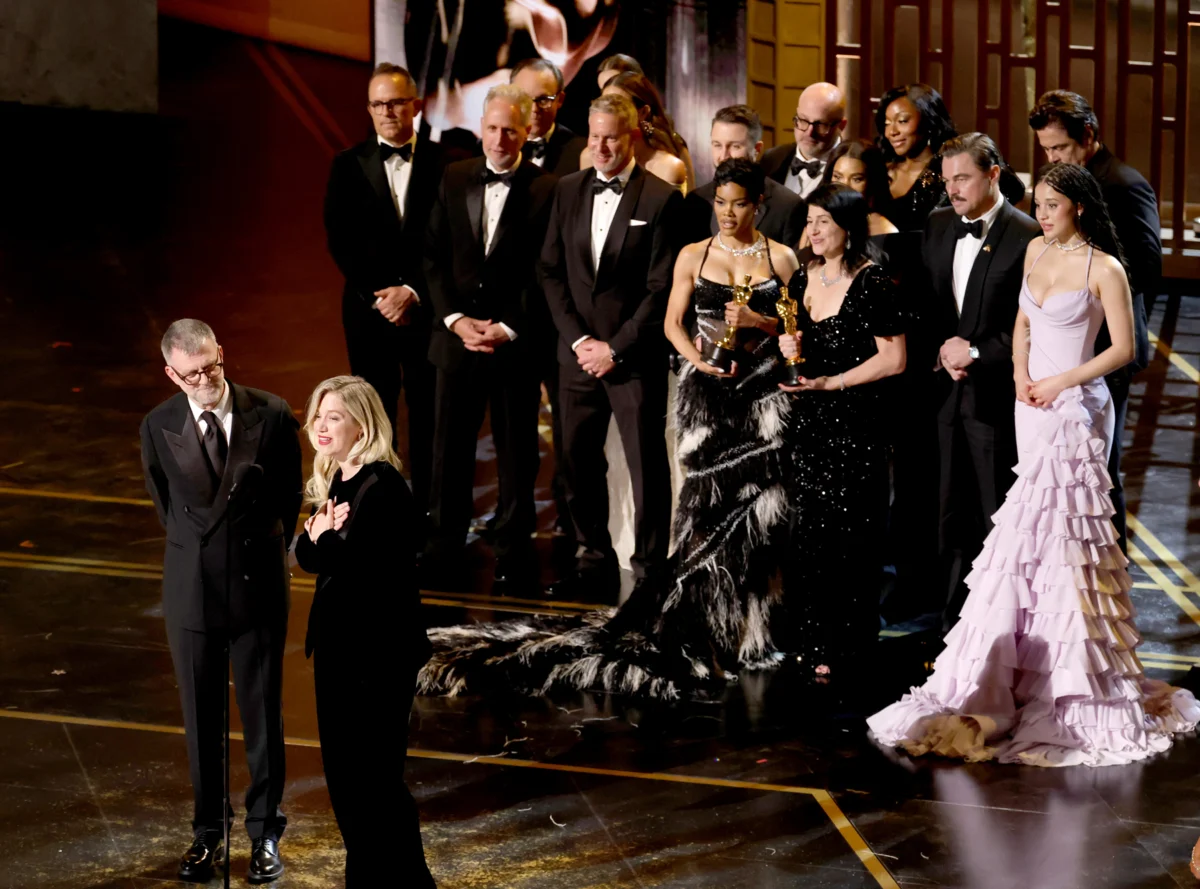
HangupsMusic.com – Los Angeles, The glittering Dolby Theatre in Hollywood became the epicenter of the cinematic universe on Oscar night, 2026, as Paul Thomas Anderson’s sprawling epic, One Battle After Another, ascended to the pinnacle of industry recognition, securing the coveted Best Picture award. The highly anticipated 98th Academy Awards ceremony culminated in a decisive triumph for Anderson’s latest masterpiece, which captivated audiences and critics alike with its intricate narrative, breathtaking visuals, and a constellation of powerhouse performances. The film’s victory was a crowning achievement in a night that celebrated the boundless artistry of filmmaking, ultimately seeing it take home six statuettes, including Best Director for Anderson himself and Best Supporting Actor for the indelible Sean Penn.
The atmosphere leading up to the announcement of Best Picture was charged with a palpable tension, befitting a year rich with cinematic innovation. When the golden envelope was finally opened, and One Battle After Another was declared the victor, a collective roar erupted, a mix of exhilaration and affirmation for a film that had been heralded as a groundbreaking work since its debut. Anderson, a filmmaker long celebrated for his distinctive vision and meticulous craft, ascended the stage alongside his esteemed cast and crew, a picture of quiet humility amidst the thunderous applause.
In his acceptance speech, Anderson, ever the cinephile, began with a reflective nod to cinema history, invoking a golden era of filmmaking. "In 1975," he mused, "the Oscar nominees for Best Picture were Dog Day Afternoon, One Flew Over the Cuckoo’s Nest, Jaws, Nashville, and Barry Lyndon. There is no best among them. There is just what that mood might be that day, but we’re happy to be part of this wonderful, wonderful journey with our fellow nominees, our fellow filmmakers, our fellow filmmakers that even weren’t recognized by the Academy. So many great films this year." This opening set a tone of profound respect for the art form itself, acknowledging the subjective nature of artistic merit while expressing immense gratitude for the collective journey. It was a poignant reminder of the enduring power of storytelling, a sentiment that resonated deeply with the assembled luminaries.
One Battle After Another had been a critical darling, praised by Rolling Stone as both an "act of resistance" and a "stone cold masterpiece." Critic David Fear had presciently declared it "the single greatest film of 2025," describing it as a multifaceted narrative: "a parable about fathers and daughters, a conspiracy thriller for the ICE age, an ensemble comedy that encourages all-stars to get their best eccentricity on." This ambitious blend of genres and themes proved to be the film’s unique strength, offering viewers a layered and intellectually stimulating experience that defied easy categorization. The film delved into the complexities of familial bonds against a backdrop of geopolitical turmoil, exploring the erosion of trust in a rapidly changing world while still finding moments of dark humor and profound human connection.
The ensemble cast was undeniably central to the film’s success. Teyana Taylor, Leonardo DiCaprio, Chase Infiniti, Benicio del Toro, Regina Hall, and Sean Penn delivered performances that were uniformly lauded for their depth and intensity. Taylor, known for her dynamic presence, brought a raw vulnerability to her character, navigating a landscape fraught with peril. DiCaprio, a perennial favorite, embodied a nuanced intensity that anchored the film’s more dramatic elements. Benicio del Toro, with his signature gravitas, delivered a performance that was both menacing and tragically human. Regina Hall showcased her versatility, balancing comedic timing with dramatic heft. And then there was Chase Infiniti, whom Anderson affectionately referred to as "my American girl, Chase," dedicating a special thank you to her on stage, adding, "You are the heart of this movie." Infiniti’s portrayal of a pivotal character, likely the daughter in the "fathers and daughters" parable, was hailed as a breakout performance, injecting the narrative with a youthful spirit and emotional core.
However, it was Sean Penn’s transformative turn that earned him the Oscar for Best Supporting Actor. Penn’s portrayal of his character was widely cited as a masterclass in subtlety and power, a performance that added significant emotional weight to the film’s complex tapestry. His win was met with enthusiastic applause, acknowledging a career defined by fearless choices and unwavering commitment to his craft.
Beyond the major categories, One Battle After Another garnered additional recognition, affirming its technical and artistic brilliance. The film also secured awards for Best Original Screenplay, a testament to Anderson’s intricate and resonant storytelling, and Best Cinematography, acknowledging the visually stunning landscapes and intimate character shots that immersed audiences in the film’s world. Its precise pacing and artful transitions were also recognized with an award for Best Film Editing, cementing its status as a meticulously crafted cinematic achievement. These wins, alongside Best Picture, Best Director, and Best Supporting Actor, brought its total to six, underscoring its comprehensive excellence across multiple disciplines.
The path to victory was by no means an easy one. One Battle After Another faced formidable competition from a slate of ten exceptionally strong films, each bringing its own unique vision to the screen. The nominees included the high-octane racing drama F1, the futuristic comedy Bugonia, a modern reinterpretation of Frankenstein, the historical epic Hamnet, the vibrant character study Marty Supreme, the espionage thriller The Secret Agent, the emotionally charged Sentimental Value, the dark drama Sinners, and the poetic Train Dreams. Each of these films had garnered significant buzz and critical acclaim, making the 2026 race one of the most hotly contested in recent memory.
Notably, the film Sinners made history by receiving a stunning 16 nominations, making it the most nominated film in Oscars history. While it didn’t ultimately claim Best Picture, its unprecedented number of nods highlighted its immense artistic scope and the Academy’s deep appreciation for its craft. One Battle After Another was right behind with 13 nominations, a testament to its broad appeal and the exceptional work of its cast and crew. Teyana Taylor, Leonardo DiCaprio, Benicio del Toro, and Sean Penn all received acting nominations, further underscoring the strength of the film’s performances.
The evening was punctuated by memorable moments, from the dazzling red carpet arrivals to the heartfelt acceptance speeches and vibrant musical performances that celebrated the year in film. As Anderson concluded his speech, he raised a hand to his cast, expressing genuine joy, "What a night, you guys. Let’s have a martini!" It was a quintessential Anderson sign-off, a blend of casual sophistication and celebratory camaraderie, perfectly encapsulating the spirit of a night that belonged to a truly deserving masterpiece. The triumph of One Battle After Another is not just a win for Paul Thomas Anderson, but a powerful affirmation of bold, intelligent, and deeply human storytelling in an ever-evolving cinematic landscape. The film’s legacy, much like the iconic works Anderson referenced, is now cemented in the annals of film history, promising to inspire future generations of filmmakers and cinephiles alike.
