 By Azzam Bilal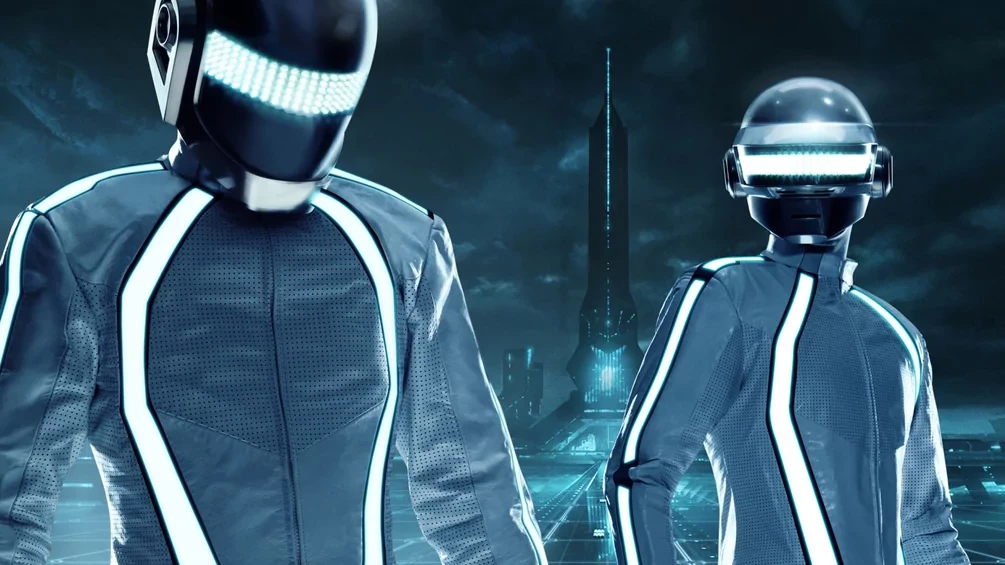
HangupsMusic.com – Paris, the neon-soaked landscape of Disney’s 2010 cult classic Tron: Legacy is inseparable from its pulsating, symphonic heartbeat, yet the man behind the curtain has recently revealed that the creation of that iconic soundscape was a process fraught with creative friction and technical compromise. Thomas Bangalter, one half of the legendary and now-defunct electronic duo Daft Punk, recently sat down with polymath musician Dev Hynes (better known as Blood Orange) for an in-depth conversation on the A24 Podcast. During the exchange, Bangalter peeled back the chrome plating on one of the most celebrated film scores of the 21st century, describing the experience as both "depressing" and "limiting," offering a rare glimpse into the psychological toll of high-stakes Hollywood composition.
For over a decade, the Tron: Legacy soundtrack has occupied a unique space in the Daft Punk discography. To some, it was a masterstroke that bridged the gap between the duo’s club-heavy roots and the organic, studio-musician grandeur of their final album, Random Access Memories. To others, particularly those who craved the distorted grit of Human After All, the score felt too polished, perhaps even sanitized by the Disney machine. Bangalter’s recent reflections suggest that the tension felt by the audience was a direct reflection of the tension in the studio. The project was not merely a matter of plugging in synthesizers and matching them to visuals; it was an ambitious attempt to subvert expectations that was eventually curtailed by the pragmatic realities of film sound design.
According to Bangalter, the initial vision for the film’s audio identity was a point of contention between the artists and director Joseph Kosinski. In the early stages of production, Kosinski—who would later go on to helm Top Gun: Maverick—envisioned a score that was purely electronic, leaning into the digital aesthetic of the Grid. However, Bangalter and his partner Guy-Manuel de Homem-Christo were at a crossroads in their own career. Having spent fifteen years at the vanguard of electronic music, the duo felt that returning to a purely synthesized palette would be a step backward. Instead, they proposed something far more audacious: a marriage of the digital and the classical, inspired by the legacy of Disney’s Fantasia.
Bangalter recalled telling the director that they wanted to embrace the "Hollywood" of it all, utilizing a full symphony orchestra to provide a sense of scale and timelessness that synthesizers alone could not achieve. This desire to work with a massive orchestral ensemble was part of a larger evolution for Bangalter, who has increasingly moved toward classical composition in his solo career. The goal was to create a "cinematic" experience in the most traditional sense, using the orchestra as the primary engine of the film’s emotional arc, with electronic elements acting as an atmospheric layer rather than the foundation.
However, the transition from theory to practice proved to be a sobering experience. As the duo began to marry their orchestral arrangements with the actual footage of the film, they encountered the "limiting" reality of the "medium range" frequency. In film mixing, the mid-range frequencies are where the human voice lives. Because Tron: Legacy was a dialogue-heavy action film, any complex orchestral arrangements or rich synth pads that occupied those same frequencies threatened to drown out the actors. Bangalter explained to Hynes that they were forced to strip away many of their more intricate melodic and harmonic ideas to ensure the dialogue remained intelligible.
This technical bottleneck led to a radical simplification of the score. "We ended up only using this pulsing bass," Bangalter admitted, noting that the duo was largely restricted to the lower end of the frequency spectrum to avoid clashing with the film’s performance elements. For an artist known for meticulous sound design and layered production, this was a difficult pill to swallow. Bangalter revealed that he had prepared a massive, vintage modular synthesizer system specifically for the project, hoping to weave complex, experimental textures into the film’s fabric. Ultimately, much of that hardware went unused, as the demands of the film required a more "traditional" and functional approach to scoring.
The frustration Bangalter described is a common sentiment among "auteur" musicians who transition into the world of film scoring. In the studio, a musician is the director, the actor, and the cinematographer of their own sound. In film, the music is a secondary component—a servant to the image and the narrative. Bangalter’s realization that he had to "take a step back for the performance" was, by his own account, a "depressing" conclusion. It marked a moment where artistic ambition was forced to yield to the utilitarian requirements of a blockbuster production.
Despite Bangalter’s personal misgivings about the "traditional" path the score eventually took, the Tron: Legacy soundtrack remains a landmark achievement. Tracks like "The Game Has Changed" and "Adagio for TRON" are hailed as masterclasses in how to blend the rigidity of a 4/4 electronic pulse with the sweeping emotionality of a 100-piece orchestra. The score did not just accompany the film; it defined its atmosphere, turning the digital world of the Grid into a place of mythic, Wagnerian importance.
The timing of these revelations is particularly poignant as Bangalter continues to distance himself from the Daft Punk "Robot" persona. Since the duo’s high-profile split in 2021, Bangalter has pivoted almost entirely toward the classical and avant-garde worlds. His recent solo album, Mirage – Ballet For 16 Dancers, serves as a spiritual successor to his work on the ballet Mythologies, further cementing his departure from the dance floor and his embrace of the orchestral textures he fought for during the Tron sessions.
In the same interview cycle, Bangalter has been firm about the future—or lack thereof—for Daft Punk. He recently dismissed any rumors of a reunion, stating simply that "there are other things to explore." This sentiment was underscored by his recent surprise appearance at Art Basel 2026, where he performed a DJ set with Rampa. While the set delighted fans, it was viewed more as a fleeting nod to his past rather than a sign of a return to the electronic mainstream. Bangalter seems more interested in the "human" element of music now, a theme he explored in depth during the Random Access Memories era and one that continues to drive his work today.
The A24 Podcast conversation with Dev Hynes serves as a reminder that even the most successful creative endeavors are often born from compromise. While fans hear a seamless blend of man and machine in the Tron: Legacy score, Bangalter hears the echoes of ideas that never made it to the final cut. He hears the "pulsing bass" that was chosen over the "vintage modular" experiments. He hears the "limitations" of a medium that requires the music to stay out of the way.
Yet, it is perhaps those very limitations that made the Tron: Legacy score so effective. By stripping away the clutter and focusing on the primal, rhythmic pulse of the lower frequencies, Daft Punk created a sound that felt both ancient and futuristic. It was a score that understood the "less is more" philosophy of tension, even if the artists themselves were mourning the "more" they had to leave behind.
As Bangalter moves forward with projects like Mirage, he carries with him the lessons of the Grid. His current work is no longer bound by the frequencies of dialogue or the requirements of a director’s vision. He is finally free to explore the full spectrum of his orchestral ambitions, unencumbered by the "depressing" compromises of Hollywood. For the audience, however, the Tron: Legacy score remains a perfect moment in time—a snapshot of two geniuses wrestling with a machine and, in the process, creating something that sounded like the future.
